Moisture can cause significant problems for products during storage, transportation and packaging. From corrosion in metal components to mould growth in food packaging and damage to sensitive electronic equipment, excess humidity can affect product quality, safety and shelf life. Businesses that need to protect moisture-sensitive products often rely on silica gel desiccant as a practical and effective moisture-control solution.
Silica gel is widely used in industrial packaging, pharmaceuticals, electronics, food storage, logistics and many other applications. Its ability to adsorb moisture from surrounding air makes it particularly useful for protecting products inside sealed containers and packages.
However, not all desiccants work in the same way, and selecting the right product requires an understanding of its properties, available forms, moisture adsorption capacity and intended application.
Whether you are a manufacturer, packaging company, distributor or business owner, understanding how silica gel works can help you make better decisions about moisture protection.
This guide explains what silica gel desiccant is, how it works, its different types, major applications, benefits and the factors to consider when choosing the right solution.
What Is Silica Gel Desiccant?
Silica gel desiccant is a moisture-adsorbing material manufactured primarily from silicon dioxide (SiO₂). Despite its name, silica gel is not a conventional liquid gel. It is a porous, solid material containing an extensive network of microscopic pores that attract and hold water vapour from the surrounding environment.
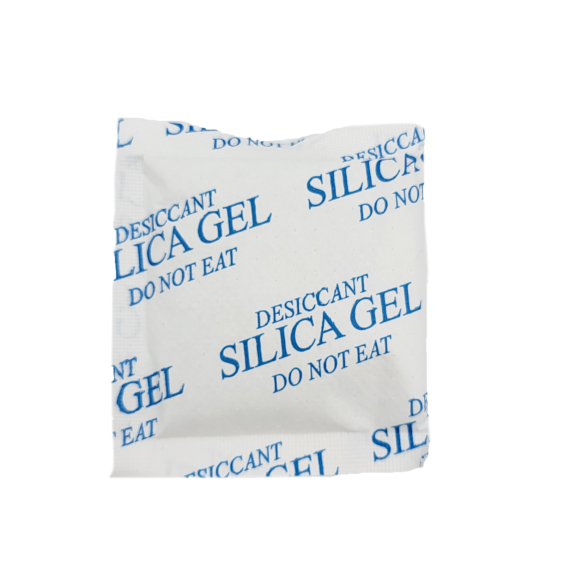
It is commonly supplied in small packets, sachets, canisters, cartridges and bulk quantities.
The primary purpose of silica gel is to control humidity inside enclosed spaces. By reducing excess moisture, it helps protect products from deterioration, corrosion, mould and other humidity-related damage.
Silica gel is generally chemically stable, odourless and non-corrosive. Standard silica gel is also not intended to dissolve or release moisture under normal storage conditions.
Its performance depends on several factors, including:
- Ambient temperature.
- Relative humidity.
- Exposure time.
- Particle size and pore structure.
- Quantity of silica gel used.
- Packaging permeability and sealing quality.
Because of these properties, silica gel is suitable for many moisture-sensitive applications across commercial and industrial environments.
How Does Silica Gel Desiccant Work?
Silica gel controls moisture through a process known as adsorption.
Adsorption occurs when water vapour molecules attach to the surface of a material. It is different from absorption, where a substance takes moisture into its internal structure or volume.
Silica gel contains millions of microscopic pores that provide a large internal surface area. When humid air comes into contact with the material, water vapour molecules attach to these surfaces.
As a result, the amount of moisture circulating inside the enclosed environment decreases.
<AsyncImage query=”silica gel desiccant moisture adsorption scientific illustration porous silica particles water vapor educational diagram” aspectRatio=”16:9″ width=”100%”/>
The Moisture Adsorption Process
The moisture-control process generally involves four stages.
- Exposure to Humid Air
When silica gel is placed inside a package or storage container, it is exposed to the surrounding air and its water vapour.
- Attraction of Water Molecules
The porous structure of silica gel provides a large surface area where water molecules can attach.
- Moisture Adsorption
Water vapour accumulates on the internal surfaces of the silica gel, reducing humidity inside the enclosed space.
- Humidity Control
As moisture is adsorbed, the relative humidity within the package can be maintained at a lower level, depending on the quantity of desiccant and the surrounding conditions.
The silica gel continues adsorbing moisture until it approaches its adsorption capacity under the prevailing conditions.
Once saturated, it may need replacement or regeneration, depending on the product specification.
Different Types of Silica Gel Desiccant
Silica gel is available in several forms to meet different moisture-control requirements. The right selection depends on the application, packaging design and required humidity level.
1. White Silica Gel
White silica gel is one of the most common forms used for general moisture control.
It consists of white or translucent granules that adsorb moisture without a visible colour-change indicator.
Its widespread use makes it suitable for various commercial and industrial applications.
Common applications include:
- Electronic product packaging.
- Shoe and leather goods packaging.
- Clothing storage.
- Industrial equipment protection.
- General-purpose moisture control.
- Export packaging.
White silica gel is often selected when businesses need reliable moisture adsorption without requiring a visual indication of saturation.
2. Blue Indicating Silica Gel
Blue indicating silica gel contains a colour-changing indicator that helps users identify changes in its moisture condition.
Traditional blue indicating silica gel may contain cobalt chloride, which presents health and environmental concerns. Businesses should verify the indicator composition and applicable safety documentation before purchasing.
As moisture is adsorbed, the material changes colour according to the indicator formulation.
This visual feature makes it easier to monitor the desiccant without specialised testing equipment.
Blue indicating silica gel has traditionally been used in:
- Laboratory equipment.
- Instrument storage.
- Industrial containers.
- Moisture-sensitive equipment.
- Reusable desiccant systems.
3. Orange Indicating Silica Gel
Orange indicating silica gel is commonly used as an alternative to traditional cobalt chloride-based blue indicating products.
Its colour changes as moisture is adsorbed, although the exact colour transition depends on the indicator formulation.
Many orange indicating products are designed without cobalt chloride, but buyers should confirm the manufacturer’s composition and safety information rather than assuming all orange products are cobalt-free.
Typical applications include:
- Industrial storage.
- Laboratory environments.
- Electronic equipment.
- Reusable desiccant containers.
- Moisture-sensitive packaging.
4. Silica Gel Beads and Granules
Silica gel is also available in different particle sizes and shapes.
Beads and granules are selected according to airflow, packaging requirements, handling preferences and moisture adsorption performance.
Smaller particles may provide greater exposed surface area per unit mass, while larger particles can offer different airflow and handling characteristics.
Manufacturers commonly supply these materials in bulk for industrial applications and desiccant sachet production.
Major Applications of Silica Gel Desiccant Across Industries
Silica gel plays an important role in protecting products from humidity-related damage. Its versatility allows businesses to use it in different packaging systems and storage environments.
1. Electronics and Electrical Equipment
Electronic components can be sensitive to moisture, particularly during storage and transportation.
Excess humidity may contribute to corrosion, oxidation and other forms of damage. Certain electronic components may also experience moisture-related problems during manufacturing and soldering processes.
Silica gel sachets are commonly included in packaging for:
- Printed circuit boards.
- Computer components.
- Mobile phones and accessories.
- Electrical equipment.
- Cameras and optical devices.
- Industrial electronic instruments.
By reducing moisture inside packaging, silica gel helps protect sensitive components during distribution and storage.
2. Pharmaceutical and Medical Packaging
Moisture can affect the stability, physical properties and shelf life of certain pharmaceutical products.
Some tablets, capsules and medical formulations require controlled humidity conditions to maintain their intended quality.
Silica gel desiccants are used in pharmaceutical packaging to reduce moisture exposure.
Common applications include:
- Tablet bottles.
- Capsule packaging.
- Medical diagnostic kits.
- Healthcare products.
- Selected pharmaceutical containers.
For pharmaceutical applications, manufacturers must ensure that the desiccant and its packaging meet applicable regulatory, safety and compatibility requirements.
3. Food Packaging and Storage
Moisture can affect the texture, quality and storage stability of certain dry food products.
Silica gel may be used in suitable food packaging applications to help maintain a dry internal environment.
It can be found in packaging for:
- Dried foods.
- Certain confectionery products.
- Powdered food ingredients.
- Nutritional supplements.
- Selected packaged snacks.
However, silica gel is not suitable for every food product or packaging situation. Businesses should use food-contact-compliant desiccant packaging and follow the manufacturer’s recommendations.
Silica gel packets must also be clearly labelled where required and kept separate from food intended for consumption.
4. Leather, Footwear and Textile Packaging
Leather goods, shoes and textiles can absorb moisture during storage and transportation.
In humid conditions, excessive moisture may contribute to unpleasant odours, mould development and deterioration of materials.
Silica gel packets are commonly placed inside shoe boxes, handbags, clothing packages and storage containers.
They help reduce humidity and protect products during long-distance shipping and warehouse storage.
5. Automotive and Industrial Equipment
Metal components and mechanical equipment may experience corrosion when exposed to moisture for extended periods.
Silica gel can help reduce humidity inside suitable sealed packaging, making it useful for protecting selected automotive and industrial products.
Examples include:
- Automotive spare parts.
- Bearings and mechanical components.
- Precision instruments.
- Industrial tools.
- Metal components.
- Electrical assemblies.
For long-term corrosion protection, silica gel may be combined with other packaging methods, such as corrosion-inhibiting materials and moisture-barrier films.
6. Shipping Containers and Export Packaging
International shipping exposes goods to changing temperatures and humidity levels.
Temperature fluctuations inside shipping containers can contribute to condensation, sometimes called container rain.
This can damage cartons, textiles, machinery and other moisture-sensitive goods.
Specialised container desiccants are used to reduce excess humidity during transportation.
Depending on the cargo and container conditions, businesses may use silica gel-based products or other high-capacity desiccants designed specifically for container applications.
The correct choice depends on container volume, cargo moisture content, voyage duration, ventilation and packaging conditions.
Key Benefits of Using Silica Gel Desiccant
Silica gel offers several advantages that make it a popular choice for moisture protection.
Effective Moisture Adsorption
Its porous structure provides a large surface area for capturing water vapour.
This makes silica gel useful in enclosed environments where controlling humidity is essential.
Chemically Stable Material
Silica gel is generally chemically stable and does not react with most products under normal storage conditions.
However, compatibility should still be evaluated for specialised industrial and pharmaceutical applications.
Easy to Use
Silica gel is available in convenient sachets, packets, canisters and bulk forms.
Businesses can incorporate it into existing packaging processes without requiring complicated equipment.
Available in Different Grades
Different grades and formulations are available for specific applications.
These include standard white silica gel, indicating silica gel and products manufactured for specialised packaging requirements.
Reusable Options
Certain silica gel products can be regenerated by heating under manufacturer-specified conditions.
The regeneration process removes previously adsorbed moisture and allows the material to be used again.
However, not every sachet or desiccant product is designed for reuse. The packaging material, indicator chemistry and product specifications must be considered.
Helps Protect Product Quality
By reducing moisture exposure, silica gel can help prevent humidity-related product deterioration.
This can reduce packaging losses and help businesses maintain product quality during storage and transportation.
Silica Gel vs Other Types of Desiccants
Silica gel is not the only material used for moisture control. Other desiccants, including activated clay and molecular sieves, are also widely used.
Understanding their differences can help businesses select the most suitable option.
| Desiccant type | Main characteristics | Common applications |
| Silica gel | Porous material with good moisture adsorption | Electronics, packaging, pharmaceuticals |
| Activated clay | Mineral-based moisture adsorbent | Industrial packaging and shipping |
| Molecular sieve | Highly controlled pore structure and strong adsorption at low humidity | Gas drying, industrial applications |
| Calcium chloride | High moisture absorption capacity and can form liquid brine | Shipping containers and large-scale moisture control |
When Should You Choose Silica Gel?
Silica gel is a practical choice when you need a clean, convenient moisture-control material for enclosed packaging and storage environments.
It is particularly useful for protecting electronics, pharmaceuticals, leather goods and various industrial products.
When Are Molecular Sieves More Suitable?
Molecular sieves are commonly used when extremely low moisture levels are required.
Their controlled pore structure allows them to adsorb water molecules effectively, including under relatively low humidity conditions.
They are frequently used in industrial gas drying and specialised manufacturing applications.
When Should You Consider Calcium Chloride?
Calcium chloride is often selected for applications requiring high moisture absorption capacity, particularly in shipping containers and large storage environments.
Unlike silica gel, it absorbs moisture and forms a liquid brine, which must be contained appropriately.
The best material depends on the required humidity level, operating conditions, product sensitivity and overall packaging design.
How to Choose the Right Silica Gel Desiccant
Selecting an appropriate silica gel product requires more than choosing a packet size. Businesses should consider their actual moisture-control requirements.
Identify Your Application
Start by determining what you need to protect.
For example, pharmaceutical packaging may require a different grade and level of documentation than general industrial storage.
Determine the Required Quantity
The amount of silica gel required depends on several variables:
- Internal packaging volume.
- Initial humidity.
- Desired relative humidity.
- Storage duration.
- Product moisture content.
- Packaging material permeability.
- Environmental temperature.
Manufacturers and desiccant suppliers can help calculate the required desiccant quantity using the specific packaging conditions.
Choose the Correct Type
Select white, indicating or specialised silica gel according to your application.
If visual moisture monitoring is important, an indicating product may be appropriate.
If the desiccant is intended for food or pharmaceutical packaging, ensure the selected product meets the relevant requirements.
Check Product Specifications
Before purchasing, review:
- Moisture adsorption capacity.
- Particle size.
- Bulk density.
- Packaging material.
- Recommended operating conditions.
- Safety documentation.
- Available product sizes.
These details help determine whether the product meets your technical requirements.
Consider Packaging and Storage
Silica gel can adsorb moisture before it is even used if left exposed to humid air.
Therefore, proper storage is important.
Keep unopened desiccant products in suitable moisture-barrier packaging and follow the manufacturer’s storage instructions.
Once opened, use the material promptly or reseal it appropriately.
Common Mistakes to Avoid When Using Silica Gel
Although silica gel is easy to use, incorrect handling and product selection can reduce its effectiveness.
Using Too Little Desiccant
An insufficient quantity may not control moisture effectively, particularly during extended storage or transportation.
Calculate the required amount based on the packaging conditions rather than selecting sachet sizes randomly.
Using Damaged Sachets
Torn or damaged sachets may release particles into the surrounding packaging.
Always inspect sachets before use and select packaging materials suitable for the intended application.
Ignoring Storage Conditions
Leaving silica gel exposed to humid air can reduce its remaining moisture adsorption capacity.
Store it in sealed packaging until it is ready for use.
Choosing the Wrong Desiccant Type
Standard silica gel may not be suitable for every application.
For example, specialised industrial gas drying may require molecular sieves, while large shipping containers may benefit from purpose-designed container desiccants.
Reusing Products Without Checking Specifications
Not all silica gel sachets are reusable.
Attempting to regenerate products that are not designed for heating may damage their packaging or create safety concerns.
Always follow the manufacturer’s instructions.
Frequently Asked Questions About Silica Gel Desiccant
1. What Is Silica Gel Desiccant Used For?
Silica gel desiccant is used to control moisture in enclosed environments. It is commonly included in packaging for electronics, pharmaceuticals, food products, footwear, leather goods, industrial equipment and other moisture-sensitive items.
2. Does Silica Gel Absorb or Adsorb Moisture?
Silica gel adsorbs moisture rather than absorbing it. Water vapour molecules attach to the material’s extensive internal surface area and microscopic pores.
3. Is Silica Gel Desiccant Safe?
Standard silica gel is generally considered chemically stable and relatively low in toxicity. However, it should not be eaten, and packets should be kept away from children and pets. Some indicating formulations contain additional chemicals that require specific safety precautions.
Always check the manufacturer’s safety data sheet.
4. How Long Does Silica Gel Last?
Its useful life depends on the surrounding humidity, temperature, quantity, packaging and exposure duration. In a properly sealed package, silica gel may remain effective for an extended period. Once its adsorption capacity is reached, it may need replacement or regeneration if the product is reusable.
5. Can Silica Gel Be Reused?
Some silica gel products can be reused through controlled heating to remove adsorbed moisture. However, regeneration temperatures and procedures vary. Always follow manufacturer instructions and check whether the sachet packaging and indicator material are suitable for regeneration.
6. What Is the Difference Between Blue and Orange Silica Gel?
Blue and orange silica gel are indicating products that change colour as they adsorb moisture. Traditional blue indicating silica gel may contain cobalt chloride, while many orange formulations use alternative indicators. The exact chemical composition should be verified through product documentation.
7. Is Silica Gel Better Than Activated Clay?
Neither material is universally better. Silica gel is commonly selected for packaging applications requiring convenient moisture adsorption, while activated clay is often used for industrial packaging and shipping. The best option depends on humidity conditions, cost, adsorption requirements and intended use.
8. Can Silica Gel Prevent Mould Growth?
Silica gel can help reduce humidity, which may lower the risk of mould development in suitable enclosed environments. However, it does not directly kill mould or remove existing contamination. Effective prevention also requires appropriate cleaning, drying, ventilation and moisture control.
9. Is Silica Gel Suitable for Food Packaging?
Certain silica gel products are suitable for use in food packaging when supplied with appropriate food-contact documentation and packaging materials. They should never be mixed directly with food unless the product is specifically designed and authorised for that application.
10. How Much Silica Gel Do I Need for Packaging?
The required quantity depends on package volume, humidity, storage duration, packaging permeability and product moisture content. Manufacturers typically provide calculation guidance based on these factors. For critical applications, a technical assessment is recommended.
11. What Is the Difference Between Silica Gel and Calcium Chloride?
Silica gel adsorbs water vapour onto its porous surface, while calcium chloride absorbs moisture and can form a liquid brine. Silica gel is widely used in smaller packaging applications, whereas calcium chloride is frequently used in high-capacity moisture-control products.
12. Where Can Businesses Buy Silica Gel Desiccant?
Businesses can purchase silica gel from specialist desiccant manufacturers, industrial packaging suppliers and moisture-control product distributors. When comparing suppliers, review product specifications, adsorption performance, packaging options, safety documentation and bulk purchasing availability.
Final Thoughts
Moisture control is essential for protecting products throughout manufacturing, packaging, storage and transportation. Excess humidity can compromise product quality, increase material damage and create unnecessary operational costs.
Silica gel desiccant offers a practical solution by adsorbing water vapour and helping maintain lower humidity levels inside suitable enclosed environments.
From electronics and pharmaceutical packaging to food processing, automotive components and industrial shipping, its versatility makes it an important material across multiple sectors.
However, achieving effective moisture protection requires selecting the right silica gel type, calculating the appropriate quantity and maintaining suitable packaging and storage conditions.
Businesses should evaluate their specific requirements, compare available desiccant products and work with knowledgeable suppliers to ensure reliable moisture protection.
With the right product and proper application, silica gel can help maintain product quality, reduce moisture-related damage and support more reliable storage and transportation operations.