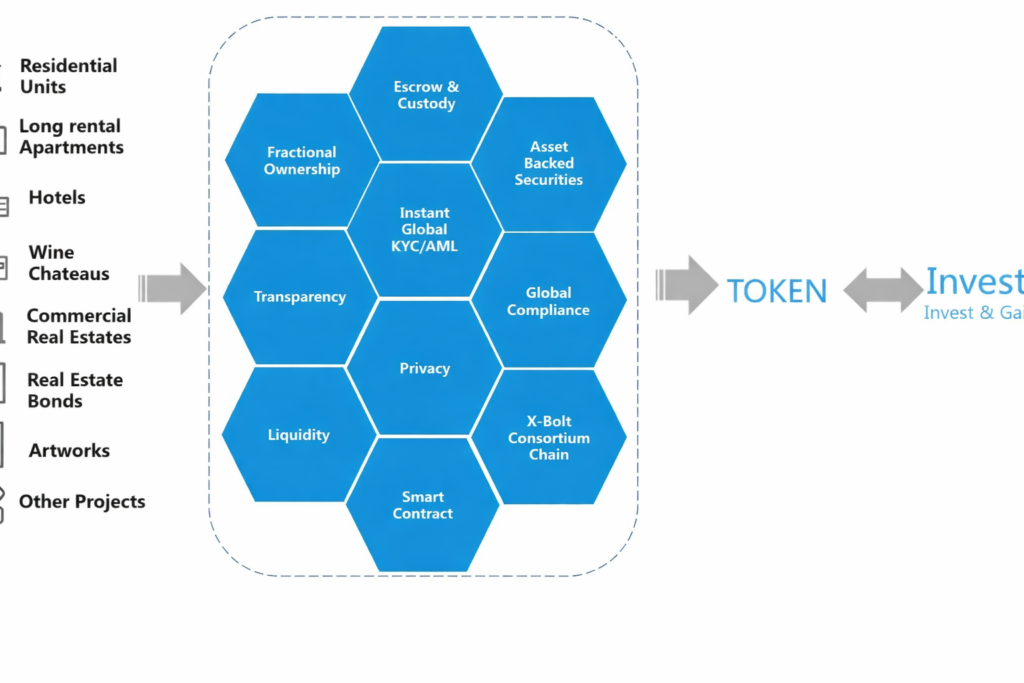
Real estate has always been one of the most popular ways to invest money. People buy land, houses, shops, and buildings to earn rental income or sell them later at a higher price. However, traditional property investment usually requires a large amount of money. Not everyone can afford to buy a full property.
This is where Real estate tokenization becomes important. It is a modern method that allows people to invest in property with smaller amounts of money. In this beginner friendly guide, you will learn what Real estate tokenization is, how it works, its benefits, risks, and why it is becoming popular.
This article is written in simple English so that even a school student can understand it easily.
What Is Real Estate Tokenization
Real estate tokenization is the process of converting property ownership into digital tokens. A token represents a small share of a real estate asset. Instead of buying an entire building, you can buy a small portion of it in the form of tokens.
Each token gives the investor partial ownership rights. If the property earns rental income or increases in value, the token holder may benefit from it.
In simple words, Real estate tokenization divides a big property into small digital pieces so that more people can invest.
Why Real Estate Tokenization Is Important
Traditional real estate investment has some challenges:
It requires large capital
It involves lengthy paperwork
It can be difficult to sell quickly
It may not be accessible to everyone
Real estate tokenization helps solve many of these problems by allowing fractional ownership. This means you do not need huge money to enter the property market.
It also uses digital systems to make transactions faster and more transparent.
How Real Estate Tokenization Works
To understand Real estate tokenization, let us look at a simple example.
Imagine there is a building worth one million dollars. Instead of selling it to one person, the owner divides it into 10,000 digital tokens. Each token represents a small percentage of ownership.
Investors can buy these tokens according to their budget. If someone buys 100 tokens, they own a small share of that building.
When the property earns rent, the profit is distributed among token holders based on the number of tokens they own.
This is how Real estate tokenization makes property investment more flexible and affordable.
Key Features of Real Estate Tokenization
Fractional Ownership
Investors can buy small portions of property instead of purchasing the entire asset.
Digital Records
Ownership information is recorded digitally, which increases accuracy and transparency.
Improved Liquidity
Tokens can often be transferred more easily compared to traditional property sales.
Lower Entry Barrier
People with smaller savings can participate in real estate investment.
These features make Real estate tokenization attractive for new investors.
Benefits of Real Estate Tokenization
There are several advantages of Real estate tokenization.
Accessibility
More people can invest in real estate because the minimum investment amount is lower.
Diversification
Investors can spread their money across different properties instead of investing everything in one asset.
Transparency
Digital systems record transactions clearly, reducing confusion and errors.
Efficiency
Buying and selling tokens can be faster than traditional property transactions.
Global Opportunities
Investors may participate in projects beyond their local area.
These benefits explain why Real estate tokenization is gaining attention.
Risks of Real Estate Tokenization
Although Real estate tokenization offers many advantages, it also has risks.
Market Risk
Property values can increase or decrease depending on economic conditions.
Regulatory Risk
Laws and regulations may change, affecting how tokenized assets operate.
Technology Risk
Digital systems may face technical problems or security threats.
Liquidity Risk
In some cases, selling tokens may not be as easy as expected.
It is important for beginners to understand both benefits and risks before investing.
Who Can Benefit from Real Estate Tokenization
Real estate tokenization is useful for different types of people.
Small Investors
People with limited funds can enter the property market.
Young Investors
Students or young professionals can start investing early with smaller amounts.
Property Owners
Owners can raise funds by dividing their property into tokens.
Businesses
Companies can attract multiple investors without selling full ownership.
This wide range of users shows the flexibility of Real estate tokenization.
Difference Between Traditional Real Estate and Real Estate Tokenization
Traditional Real Estate Investment
Requires high capital
Involves physical paperwork
Property sales take time
Ownership is usually full or shared among a few people
Real Estate Tokenization
Allows small investments
Uses digital systems
Transactions can be faster
Ownership is divided into many small shares
This comparison helps beginners understand the difference clearly.
Why Real Estate Tokenization Is Growing
There are several reasons why Real estate tokenization is becoming more popular.
Digital Transformation
The world is moving toward digital systems in finance and business.
Investor Demand
People want flexible and affordable investment options.
Technological Improvement
Modern technology makes secure digital ownership possible.
Financial Inclusion
More individuals want access to investment opportunities.
As awareness increases, more people are learning about Real estate tokenization.
Steps for Beginners to Start
If you are new to Real estate tokenization, follow these simple steps.
Learn the Basics
Understand how tokenization works and how profits are shared.
Study the Property
Research the real estate asset before investing.
Understand the Risks
Be aware of market and technology risks.
Start Small
Invest a small amount first to gain experience.
Keep Records
Track your investments and earnings carefully.
These steps can help beginners enter the market with confidence.
Important Things to Remember
Do not invest money you cannot afford to lose.
Always read and understand agreements carefully.
Stay updated with regulations and rules.
Focus on long term growth instead of quick profit promises.
Smart decision making is key to success in Real estate tokenization.
The Future of Real Estate Tokenization
The future of Real estate tokenization looks promising. As technology continues to improve, digital ownership may become more common in the property sector.
More investors may join because of low entry requirements. Property owners may prefer tokenization as a modern fundraising method.
With proper regulation and secure systems, Real estate tokenization could become an important part of global real estate markets.
However, growth will depend on trust, transparency, and responsible management.
Conclusion
Real estate tokenization is a modern way to invest in property by dividing ownership into digital tokens. It allows people to buy small shares of real estate instead of purchasing entire buildings.