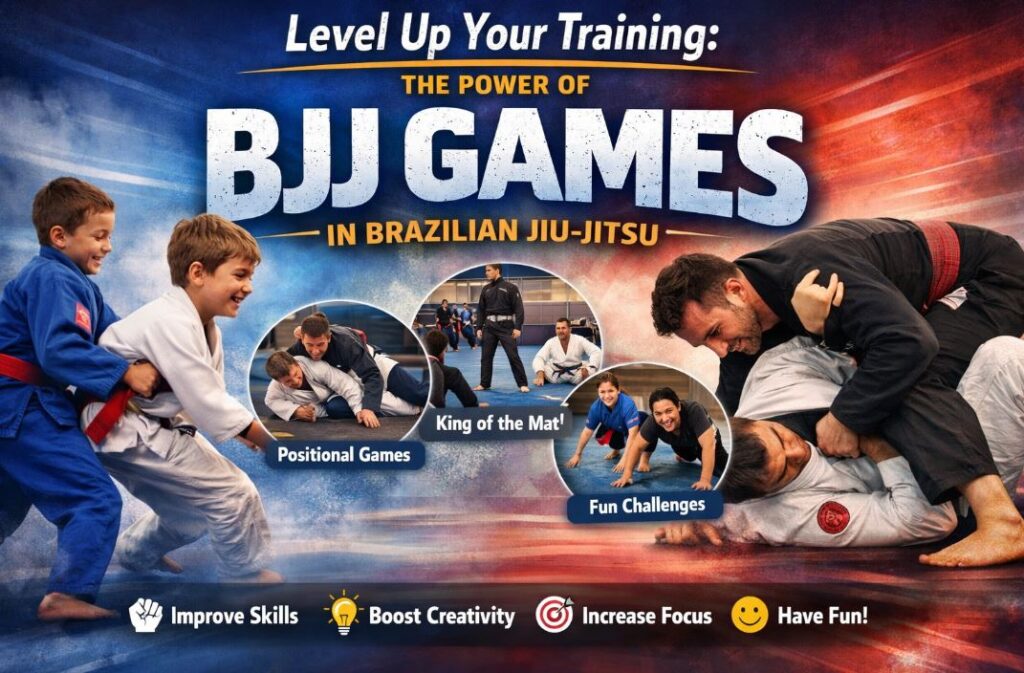
Brazilian Jiu-Jitsu (BJJ) is often described as a physical chess match — a strategic, dynamic battle of wits and technique where anticipation, timing, and adaptability matter just as much as strength. But while the traditional approach to training places heavy emphasis on drilling moves and rolling live, there’s a growing recognition in the grappling world that jiu jitsu games — playful, purpose-built activities — can accelerate learning, sharpen skills, and make training more engaging for practitioners of all levels.
What Are Jiu Jitsu Games?
At their core, jiu jitsu games are structured drills or mini-competitions that inject elements of play, strategy, and constraint into training. They aren’t just “fun and games” — these tools create real training value by simulating specific positions, developing problem-solving under pressure, and encouraging creative movement patterns in ways that traditional drilling sometimes can’t.
Rather than mindlessly repeating a technique thousands of times, players engage with challenges that require adapting to resistance, making decisions on the fly, and exploiting opportunities — much like a real match or roll. This gamified approach brings technique to life and bridges the gap between isolated moves and live performance.
Why Gamify BJJ Training?
Nothing replaces solid technique and repeated practice, but jiu jitsu games add unique benefits to your training regimen:
1. Improves Real-World Application of Skills
Standard drills (e.g., drilling an armbar 50 times) improve muscle memory but don’t always prepare you for resistance or unpredictability. Games, by contrast, often include constraints or goals that compel players to solve problems in a live setting — accelerating the translation of technique into action.
For example, constraint-based games might limit certain grips or moves, forcing players to find creative ways to control, sweep, or submit their partner. This mirrors realistic scenarios where your opponent doesn’t cooperate with your plan.
2. Boosts Engagement and Motivation
Let’s face it — the grind can get monotonous. Whether you’re a beginner still wrapping your head around basic movement, or an experienced belt seeking fresh challenges, incorporating games keeps training fun and stimulating. When learning feels like play, motivation soars — and so do results.
Particularly in kids’ classes, jiu jitsu games are invaluable. Activities like “Animal Walks,” “Jiu-Jitsu Simon Says,” or “Tail Belt Grab” turn technical movement into playful competition, making the mat welcoming and exciting for younger practitioners.
3. Builds Strategic Thinking
BJJ isn’t just a physical contest — it’s tactical. Games that reward positional control, quick escapes, or transition bursts train your mind to think two or three steps ahead. For instance, scoring systems that reward guard passes, sweeps, or reversals encourage you to evaluate positions quickly, similar to the way a chess player must anticipate moves.
Game formats like “King of the Mat,” where winners stay on and challengers rotate in, mimic pressure situations where stamina, adaptability, and strategic adjustments matter most.
4. Accelerates Decision-Making Under Pressure
One of the biggest challenges for BJJ students is reacting swiftly in live rolling, especially when under duress. Games with time limits, point systems, or constrained rule sets demand quick choices. These controlled, competitive environments sharpen instincts and improve performance during full rolls.
Popular Types of Jiu Jitsu Games
While every gym’s culture and coaching style shapes its game selection, certain formats have become especially popular among trainers and competitors alike:
- Warm-Up Games: Quick, dynamic challenges like “BJJ Bulldog” or mat patrol drills that boost movement quality and engagement before class.
- Positional Sparring Games: Focused scenarios like “Mount Live” or “Guard Passing Games” where players compete to achieve or escape specific positions, honing high-value skills.
- Strategy Games: Point-based challenges such as the “Point Game” that simulate competition environments and reward tactical decision-making.
- Ecological Games: With specific goals (e.g., escaping from underneath or achieving back control), these games isolate particular responses and scenarios, helping athletes internalize subtle mechanics.
How to Integrate Games Into Your Training
Incorporating jiu jitsu games doesn’t require a complete overhaul of your training plan. Here are a few practical tips:
- Use Games as Warm-Ups: Start class with a short game that emphasizes movement or light competition to get everyone energized.
- Alternate With Traditional Drills: Pair technique drilling with related games to reinforce what you’ve just practiced.
- Make It Belt-Appropriate: Simplify games for beginners and increase complexity for advanced students.
- Rotate Often: Keeping a rotation of games prevents boredom and provides varied learning stimuli.
Final Thoughts
Jiu jitsu games are more than just an entertaining break from routine — they’re a powerful mechanism for growth, blending play with purpose. Whether you’re trying to improve your guard retention, boost escape timing, or simply enjoy training more, games offer a dynamic path forward.
By embracing this playful mindset, you can unlock new depths in your grappling, sharpen your mind under pressure, and build a training culture that’s both effective and enjoyable. After all, the best way to master a game is to play it well.