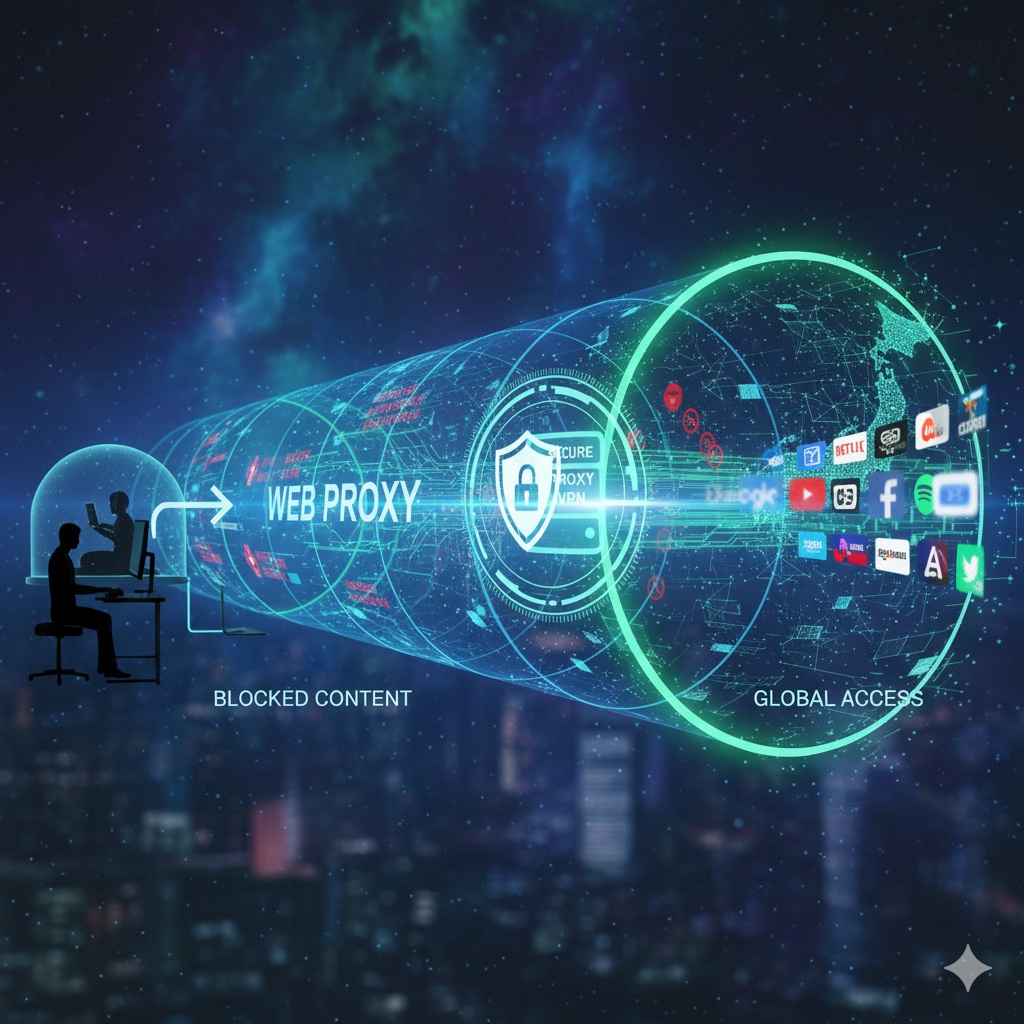
What Public Proxy Services Actually Are
At a basic level, a public proxy service routes traffic through an intermediary server that is accessible to many users. Unlike private or enterprise-managed proxies, these services are often open, shared, and loosely governed.
They are used for purposes such as:
-
Testing how websites behave from different regions
-
Protecting IP addresses during research
-
Bypassing network restrictions
-
Scraping or crawling public web content
The technology itself is neutral. The implications come from how it is used and how the service is operated.
The Legal Landscape Is Fragmented
One of the biggest challenges with public proxies is that the legal framework around them is inconsistent. Laws differ not only by country, but sometimes by industry or use case.
In many jurisdictions, simply using a proxy is not illegal. However, what you do through that proxy can quickly cross legal boundaries.
Examples of activities that raise legal concerns include:
-
Accessing systems without authorization
-
Circumventing contractual access restrictions
-
Masking identity to commit fraud
-
Violating data protection or copyright laws
The proxy does not absolve responsibility. From a legal standpoint, intent and action matter more than the tool used.
A Common Mistake: Assuming Anonymity Equals Immunity
A personal observation from years in this space: many users assume that if their IP address is hidden, they are legally safe. That assumption is wrong and often costly.
Public proxies are frequently logged, monitored, or compromised. Even when they are not, investigators often rely on behavioral patterns, account activity, or payment trails rather than raw IP addresses.
Using a proxy does not remove accountability. It only changes how attribution is performed.
Ethical Use Versus Technical Capability
Ethics tend to lag behind technology. Just because something can be done easily does not mean it should be done at all.
Ethical concerns around public proxies often include:
-
Using shared infrastructure to offload risk onto others
-
Consuming resources without consent
-
Disrupting services through excessive automated traffic
-
Enabling harm by hiding malicious activity
An ethical proxy user asks not “can I do this anonymously?” but “would this be acceptable if my identity were known?”
Real-World Example: Shared IP Collateral Damage
In one case I encountered, a small business relied on a public proxy for market research. Another user on the same proxy abused a major platform, triggering an IP-wide ban.
The result was lost access, disrupted workflows, and days spent appealing a block they did not cause. This is a common downside of public proxies: shared risk.
From an ethical standpoint, this highlights how individual behavior on shared infrastructure affects unrelated parties.
Responsibility of Proxy Service Operators
The ethical burden does not rest only on users. Operators of public proxy services also carry responsibility.
Key ethical questions for operators include:
-
Are users informed about logging and data retention?
-
Is abuse actively discouraged or ignored?
-
Are exit nodes sourced with consent?
-
Are legal requests handled transparently?
Services that fail to address these points often become magnets for abuse, which in turn invites legal scrutiny.
Legal Risks for Organizations Using Public Proxies
Organizations face additional exposure. Using public proxies in corporate environments can violate internal policies, regulatory obligations, or third-party agreements.
Common risk areas include:
-
Data protection laws when personal data is transmitted
-
Industry compliance requirements (finance, healthcare, education)
-
Terms of service violations for external platforms
-
Inadequate audit trails for investigations
Many companies underestimate how quickly a “temporary” proxy workaround can become a compliance issue.
Insider Tip: Document Legitimate Use Cases
One practical step I recommend is documentation. If proxies are used for legitimate purposes such as testing, research, or security assessments, document the scope and intent.
This includes:
-
Why a proxy is required
-
What data is accessed
-
Who approves and oversees usage
Clear documentation helps demonstrate good faith if questions arise later.
Public Proxies and Data Privacy Laws
Data privacy regulations have sharpened the ethical debate. When traffic passes through a public proxy, it may traverse multiple jurisdictions.
This raises questions such as:
-
Where is data processed and stored?
-
Who has access to logs?
-
Are personal identifiers exposed?
Under laws like GDPR or similar frameworks, responsibility does not disappear because a proxy is involved. In some cases, it expands.
Another Insider Tip: Avoid Sensitive Credentials
A non-obvious but critical practice is to never authenticate sensitive accounts through public proxies unless absolutely necessary.
Even when encrypted, risks include:
-
Misconfigured TLS inspection
-
Malicious exit nodes
-
Credential correlation across sessions
If a task requires login credentials tied to personal or corporate identity, a public proxy is usually the wrong tool.
Balancing Research Needs With Ethical Boundaries
Researchers, journalists, and analysts often rely on proxies to avoid bias or retaliation. These are valid use cases, but they still require restraint.
Ethical proxy use in research means:
-
Accessing only publicly available content
-
Respecting robots.txt and rate limits
-
Avoiding deception beyond identity masking
The line between legitimate research and unethical exploitation is thinner than many realize.
For readers trying to understand how public proxy services are typically positioned and discussed in practice, explanations like those outlined on Proxy Site can help clarify common use cases and limitations without oversimplifying the risks.
The Myth of “No One Will Notice”
Another recurring misconception is that public proxy usage blends into internet noise. In reality, proxy traffic is often easier to detect than direct connections.
Many platforms actively monitor for:
-
Known proxy IP ranges
-
Abnormal request patterns
-
Inconsistent geolocation signals
From an ethical and legal perspective, relying on obscurity is a weak foundation.
Toward Responsible Proxy Usage
Responsible use of public proxy services comes down to intent, transparency, and proportionality.
Good guiding questions include:
-
Is this use lawful in all relevant jurisdictions?
-
Would I be comfortable explaining this usage publicly?
-
Does this create unnecessary risk for others?
If the answer to any of these raises doubt, it is worth reconsidering the approach.
A Thoughtful Wrap-Up
Public proxy services are neither inherently good nor inherently bad. They are tools that amplify both legitimate and questionable behavior. The legal and ethical implications arise not from their existence, but from how casually they are sometimes treated.
Also read for more information so click here.