Every year, thousands of commercial buildings, industrial facilities, and construction sites face periods when their primary fire protection systems become unavailable. Whether due to scheduled maintenance, emergency repairs, new construction, or regulatory violations, these gaps in coverage create windows of extreme vulnerability. Understanding how to bridge these gaps effectively can mean the difference between business continuity and catastrophic loss.
The Critical Moments When Buildings Lose Protection
Fire safety systems don’t fail gradually—they go offline completely during maintenance windows. One moment, a building has full detection and suppression capabilities; the next, those systems are entirely non-functional. This binary transition creates immediate risk that demands equally immediate compensatory measures.
System maintenance schedules rarely consider operational convenience. When a fire alarm panel fails or sprinkler system components reach end-of-life, repairs cannot wait for slow business periods. These emergencies demand immediate attention, often requiring multi-day system shutdowns during peak operational periods when buildings are fully occupied and business activities continue at normal pace.
Why Temporary Fire Safety Measures Matter
Some property managers question whether temporary protective measures justify their cost, especially for short-duration system outages. This thinking reveals a fundamental misunderstanding of fire behavior and risk probability.
Fires don’t schedule themselves around system maintenance. A fire is just as likely—perhaps more likely—to occur during the three days when sprinklers are offline as during the other 362 days when systems function normally. Construction activities, increased contractor presence, and physical system disruptions often elevate fire risk precisely when protection capabilities are reduced.
Fire Watch Guards serve as the bridge across this vulnerability gap, providing human detection and response capabilities when technological systems cannot function. Their presence ensures continuous protection despite temporary system unavailability.
Understanding Regulatory Requirements and Code Compliance
Fire watch requirements aren’t optional suggestions—they represent mandatory provisions within fire codes and occupational safety regulations. The International Fire Code, NFPA standards, and OSHA regulations all specify circumstances requiring fire watch implementation.
When sprinkler systems are out of service for more than four hours in a 24-hour period, most jurisdictions mandate fire watch until systems are restored. Similarly, when fire alarm systems are impaired, compensatory measures including fire watch become immediately required. Hot work operations involving welding, cutting, grinding, or other spark-producing activities demand fire watch during operations and for specified periods afterward.
Fire marshals possess authority to issue citations requiring immediate fire watch implementation when code violations are discovered. These orders carry legal weight—ignoring them results in facility closure until compliance is achieved. The costs associated with forced closure dwarf fire watch service expenses, making compliance the only rational business decision.
Commercial Real Estate and Tenant Safety Obligations
Property owners and building managers owe tenants a duty of care that includes maintaining safe premises. When fire protection systems go offline, this duty doesn’t disappear—it intensifies. Tenants continue paying rent with the reasonable expectation that safety systems remain operational or that equivalent protection is provided during system outages.
Failure to provide adequate fire watch during system impairment periods creates substantial liability exposure if fires occur. Tenants suffering losses may pursue claims alleging negligence in maintaining safe premises. These civil actions can result in judgments far exceeding the cost of proper fire watch services.
Multi-tenant buildings present additional complexity. When building-wide fire protection systems require maintenance, all tenants face increased risk. Professional fire watch services patrol entire properties, providing protection that benefits all occupants while distributing costs appropriately across the tenant base or absorbing them as building operational expenses.
The Training That Makes Fire Watch Effective
Anyone can walk through a building, but effective fire watch requires specific knowledge and skills that only proper training provides. Professional fire watch personnel complete comprehensive instruction covering fire science fundamentals, hazard recognition, emergency response procedures, and communication protocols.
Training begins with understanding fire behavior—how fires start, what they need to grow, and how they spread through structures. Guards learn to recognize conditions conducive to fire development: improper storage of flammable materials, blocked fire doors, malfunctioning emergency lighting, and other hazards that increase risk.
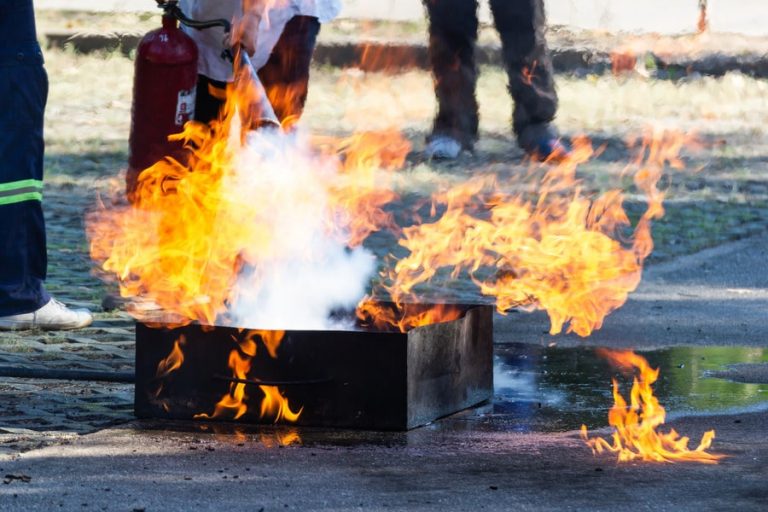
Hands-on training with fire extinguishers teaches guards which extinguisher types work for different fire classes and when attempting extinguishment is appropriate versus immediately evacuating and calling emergency services. This practical knowledge enables effective initial response that can prevent small fires from becoming large ones.
Communication skills receive particular emphasis. Guards must effectively relay information to building occupants, emergency responders, and facility management. Clear, calm communication during emergencies can mean the difference between orderly evacuation and panic-driven chaos.
Industrial Environments and Specialized Fire Watch Needs
Heavy industrial facilities—refineries, chemical plants, manufacturing operations—present fire hazards far beyond typical commercial buildings. These environments demand fire watch personnel with specialized training in industrial fire risks and response protocols.
Industrial fire watch guards understand hazardous material classifications, recognizing which substances pose particular fire risks and how different materials must be handled. They monitor process operations for conditions indicating elevated fire risk, such as equipment overheating, unusual odors, or visible leaks of flammable substances.
These specialized guards coordinate with plant safety personnel, participating in pre-job safety briefings and understanding how their fire watch duties integrate into broader facility safety programs. This collaborative approach ensures that fire watch becomes a seamless component of comprehensive industrial safety management rather than an isolated add-on service.
Documentation: Creating Records That Protect
Thorough documentation serves multiple critical purposes in fire watch operations. Detailed patrol logs create verifiable records proving that required fire watch was properly conducted. These records become essential evidence if regulatory agencies question compliance or if insurance claims require proof of protective measures during system outages.
Modern fire watch services utilize digital documentation systems that timestamp each patrol checkpoint, creating tamper-proof records. Guards photograph observed hazards, document corrective actions taken, and note any unusual conditions encountered during patrols. This contemporaneous documentation provides far more reliable evidence than after-the-fact reconstruction.
Quality documentation also enables performance evaluation and continuous improvement. Reviewing patrol logs helps identify recurring hazards, patrol route inefficiencies, or training gaps that need addressing. This analytical approach transforms fire watch from simple compliance activity into strategic safety management.
The Cost-Benefit Analysis That Matters
Finance-focused executives sometimes view fire watch as discretionary spending that can be minimized or eliminated to reduce costs. This perspective ignores the fundamental risk-reward equation at play.
Professional Fire Watch Guards cost approximately $400-800 per day depending on location and service requirements. A moderate commercial fire causes average damages exceeding $200,000. Major fires easily reach into millions of dollars when property damage, business interruption, and secondary losses are totaled.
The probability of fire during any given day may be low, but it is never zero. When fire protection systems are offline, that probability increases—sometimes substantially depending on building activities and occupancy. Even using conservative probability estimates, the expected value of fire watch protection far exceeds its cost.
Beyond pure financial calculations, reputational damage from fires can devastate businesses. Customers question whether they want to associate with companies that suffered preventable fires. Employees worry about workplace safety. Rebuilding trust takes years and investment far exceeding the direct costs of fire damage.
Integration With Emergency Response Plans
Fire watch services function most effectively when fully integrated into comprehensive emergency response plans. Guards should participate in evacuation drills, understanding their role in guiding occupants to safety. They need to know where emergency assembly points are located and how to account for building occupants during evacuations.
Coordination with local fire departments enhances response effectiveness. Some fire watch providers notify local fire stations when services begin at particular locations, providing advance notice that protection systems are temporarily impaired. This notification enables faster, more informed response if emergencies occur.
Pre-established communication protocols ensure that guards can immediately reach appropriate personnel—facility managers, emergency coordinators, maintenance staff—when issues arise. This rapid communication enables quick problem resolution before minor issues become major incidents.
Conclusion: The Indispensable Human Element
Technology continues advancing, bringing ever-more sophisticated fire detection and suppression capabilities. Yet the human element remains irreplaceable, particularly during those vulnerable periods when systems are unavailable. Trained fire safety professionals bring judgment, contextual awareness, and adaptive problem-solving that no technology can match. They don’t just watch for fires—they prevent them through vigilant hazard identification and immediate corrective action. When buildings lose their technological protection, having dedicated professionals providing continuous coverage isn’t optional—it’s essential for protecting lives, property, and business continuity.