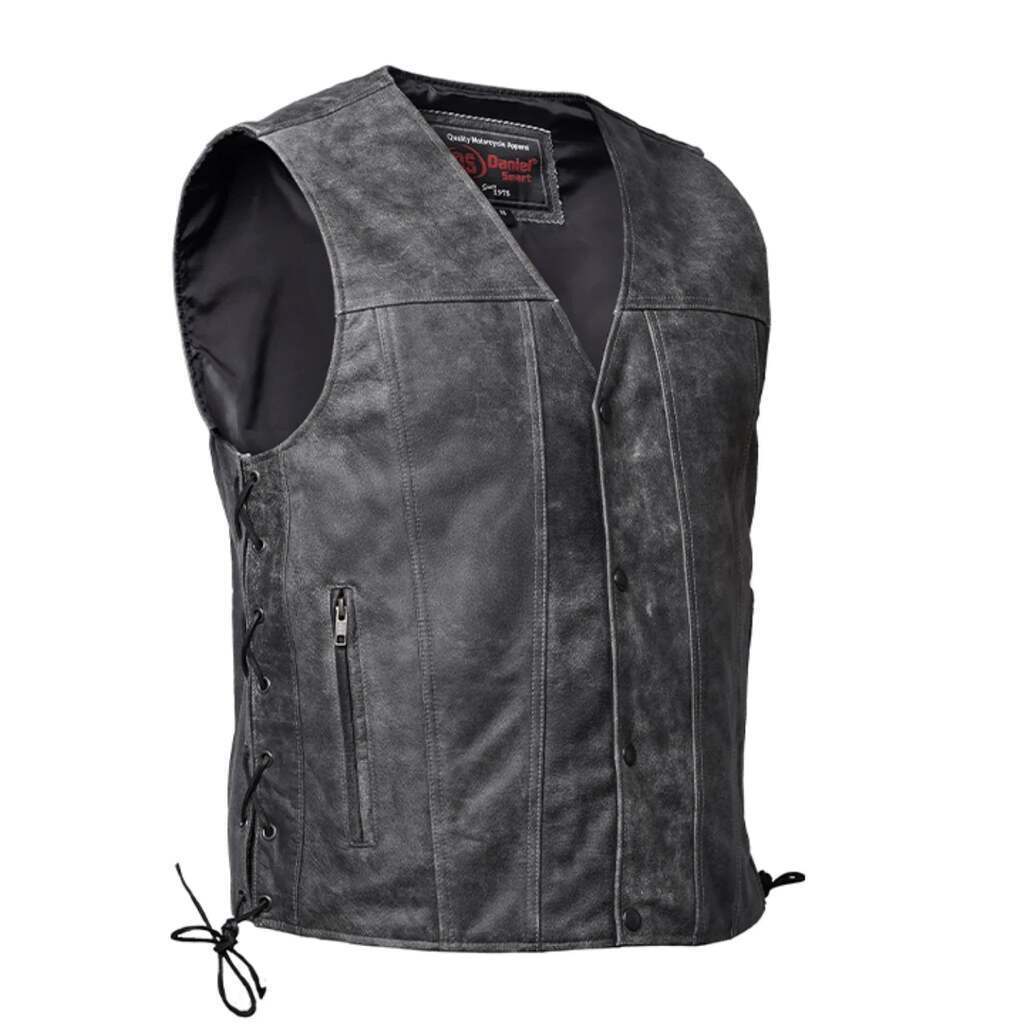
Protective gear in modern motorcycling has evolved from basic leather garments into highly engineered systems designed to mitigate impact forces, reduce abrasion injuries, and enhance rider visibility. As motorcycles increased in speed, performance, and everyday usability, rider protection transformed from informal attire to scientifically tested equipment governed by international safety standards.
Today’s protective gear integrates material science, biomechanics, aerodynamics, and textile engineering. Garments such as the men premium leather vest and the men reflective riding vest illustrate how traditional craftsmanship and modern technology converge to meet contemporary safety expectations. Understanding this evolution provides riders, retailers, and industry professionals with clarity about how protective gear functions, why certain materials are preferred, and how safety design continues to advance.
This article provides a comprehensive, evidence-based exploration of how protective gear has developed over time, the technologies that define modern standards, and the practical considerations that guide professional recommendations.
Early Foundations: Leather as the Original Protective Material
The Rise of Leather in Motorcycling
In the early 20th century, riders primarily wore heavy leather jackets and vests for wind protection rather than impact resistance. However, leather’s dense fiber structure proved highly resistant to abrasion. As racing expanded in Europe and North America, leather became standard equipment due to its ability to withstand sliding friction during crashes.
Organizations such as the Fédération Internationale de Motocyclisme (FIM) formalized racing rules that increasingly required protective clothing. Leather remained dominant because:
- It offers natural abrasion resistance.
- It molds to the rider’s body over time.
- It maintains structural integrity under heat generated by road friction.
Evolution into Structured Protective Garments
By the 1970s and 1980s, leather suits incorporated padding in high-impact zones such as shoulders and elbows. Later, armor inserts made from viscoelastic materials were added to absorb and dissipate energy.
In modern touring and cruiser segments, the men premium leather vest represents a refined continuation of this tradition. High-quality leather vests today feature:
- Top-grain or full-grain hides
- Reinforced stitching (often double- or triple-stitched seams)
- Concealed carry or utility compartments
- Reinforced shoulder panels for layering over armored jackets
While a vest alone does not replace a full protective jacket, it enhances abrasion resistance in the torso region and provides modular layering for riders who integrate separate armor systems.
The Introduction of Impact Armor and CE Certification
Understanding Impact Protection
Modern protective gear incorporates armor rated under European CE (Conformité Européenne) standards. CE-certified armor is tested for impact force transmission measured in kilonewtons (kN). Lower transmitted force values indicate better energy absorption.
Standards such as EN 1621-1 (limb protectors) and EN 1621-2 (back protectors) set measurable performance thresholds. Manufacturers design gear to meet or exceed these ratings through:
- Thermoplastic polyurethane (TPU) shells
- Viscoelastic foam cores
- Multi-layer composite structures
These technologies marked a turning point in motorcycling safety, shifting gear from passive protection to engineered impact management systems.
Textile Innovation and the Rise of High-Visibility Gear
The Shift Toward Technical Fabrics
While leather dominates abrasion resistance, textile materials introduced new capabilities:
- Breathability
- Lightweight comfort
- Weather resistance
- Integrated reflectivity
Materials such as Cordura®, Kevlar® blends, and ballistic nylon improved durability while reducing weight. Textile engineering enabled targeted ventilation zones, mesh paneling, and moisture-wicking liners.
Visibility as a Safety System
Studies from traffic safety agencies such as the National Highway Traffic Safety Administration (NHTSA) highlight that visibility significantly affects collision avoidance. Riders wearing reflective or high-contrast gear are more detectable in low-light and urban traffic conditions.
The men reflective riding vest exemplifies modern visibility integration. Reflective vests typically include:
- Retroreflective striping compliant with ANSI visibility principles
- High-contrast fluorescent panels
- Lightweight textile construction
- Adjustable closure systems for layered wear
Retroreflective materials function by returning light directly to its source, improving nighttime detection by drivers. This technology has become particularly important for touring, commuting, and group riding environments.
Integration of Ergonomics and Biomechanics
Understanding Rider Positioning
Modern protective gear accounts for rider biomechanics. Motorcycling places the body in a forward-leaning or upright seated posture depending on bike type. Gear must accommodate:
- Shoulder articulation
- Elbow flexion
- Lumbar curvature
- Hip rotation
Pre-curved sleeves, articulated panels, and stretch inserts prevent fabric bunching that could compromise comfort or protective alignment.
Pressure Distribution and Load Management
Professional-grade gear distributes impact forces across broader surface areas. Reinforced stitching patterns prevent seam failure under torsional stress. In leather garments, stitch density and thread tensile strength directly influence durability.
Experts recommend examining seam placement—especially in vests—ensuring seams are not positioned at high-impact sliding zones.
Climate Adaptation and Layering Systems
Modern gear design incorporates modular layering systems:
- Base layer (moisture-wicking)
- Protective layer (armor and abrasion resistance)
- Outer shell (weather protection or visibility)
Leather vests often function as mid-layer reinforcements, particularly in cruiser communities. Textile reflective vests are frequently used as outer layers to enhance conspicuity without restricting airflow.
Ventilation systems now include:
- Zippered intake and exhaust vents
- Mesh-lined panels
- Moisture-channeling liners
These features reduce heat stress and maintain rider focus, which directly correlates with safer riding outcomes.
Smart Technology and Future Directions
Emerging innovations include:
- Airbag vests triggered by accelerometers
- Bluetooth-integrated communication panels
- Adaptive LED visibility strips
- Impact data monitoring systems
Brands partnering with racing organizations like MotoGP have accelerated adoption of airbag technologies in consumer markets.
While leather and textile vests remain foundational, integration with electronic safety systems represents the next stage of evolution.
Expert Insights and Best Practices
Industry professionals recommend the following evaluation framework:
1. Material Quality Assessment
- Full-grain leather for abrasion resistance
- High-denier textiles for tear strength
2. Stitch Integrity
- Double or triple stitching
- Reinforced stress points
3. Certification Verification
- CE armor compliance
- Reflective materials meeting ANSI visibility criteria
4. Proper Fit Testing
- Snug but non-restrictive
- Armor alignment with anatomical landmarks
5. Maintenance Protocol
- Leather conditioning to prevent fiber drying
- Textile washing per manufacturer guidance
- Regular inspection of reflective elements for degradation
Professionals emphasize that protective gear must be inspected seasonally to ensure continued effectiveness.
Common Mistakes and Misconceptions
Misconception 1: Thicker Always Means Safer
Thickness does not guarantee superior protection. Material composition, weave structure, and certification testing determine safety performance.
Misconception 2: Visibility Is Only for Night Riding
Reflective and high-contrast gear improves daytime detection in complex traffic environments.
Misconception 3: Leather Requires No Maintenance
Leather requires conditioning to maintain tensile strength and prevent cracking.
Misconception 4: Vests Replace Full Jackets
Vests enhance protection but do not replace full-arm abrasion and armor coverage.
Conclusion
The evolution of protective gear in modern motorcycling reflects advancements in material science, biomechanics, and safety engineering. From early leather garments to technologically integrated systems, protective equipment now operates as a comprehensive safety platform rather than simple apparel.
The continued relevance of high-quality leather—particularly in products such as the men premium leather vest—demonstrates the enduring value of abrasion-resistant materials. Simultaneously, the rise of high-visibility solutions like the men reflective riding vest underscores the growing emphasis on collision prevention through enhanced visibility.
Modern riders benefit from decades of research, certification standards, and technological innovation. When selected carefully, maintained properly, and worn consistently, protective gear remains one of the most effective strategies for reducing risk and improving safety outcomes in contemporary motorcycling.
FAQs
1. What makes leather effective for motorcycle protection?
Leather’s dense collagen fiber matrix resists abrasion and heat generated during road contact. Full-grain leather performs best under sliding friction conditions.
2. Are reflective vests legally required?
Requirements vary by jurisdiction, but many regions recommend high-visibility apparel for enhanced safety.
3. How does CE armor reduce injury risk?
CE-certified armor absorbs impact energy and reduces force transmission to bones and soft tissue.
4. Can a leather vest be worn over armored gear?
Yes. Many riders layer a leather vest over an armored jacket for additional abrasion resistance and storage utility.
5. How long does motorcycle protective gear last?
Lifespan depends on usage, maintenance, and environmental exposure. Leather may last years with proper care, while textiles may degrade faster under UV exposure.
6. Do reflective materials wear out?
Yes. Retroreflective coatings can degrade due to abrasion, washing, and UV exposure.
7. What is the role of stitching in protective gear?
High-tensile thread and reinforced seams prevent structural failure during crashes.