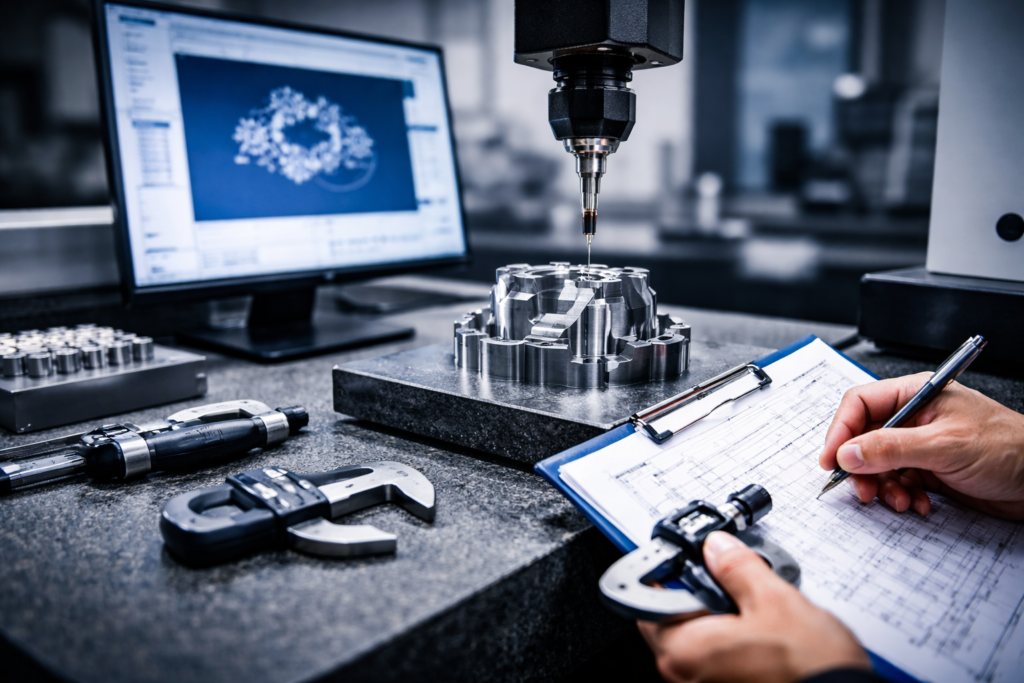
Precision engineering is built on accuracy, consistency, and reliability. However, achieving tight tolerances and exact measurements is only possible when strong quality control systems are in place. Without proper inspection and testing procedures, even the most advanced manufacturing processes can produce costly errors.
In this article, we’ll explore why quality control is essential in precision engineering and how it ensures high-performance industrial components.
What Is Quality Control in Precision Engineering?
Quality control (QC) refers to the systematic process of inspecting, measuring, and verifying that manufactured components meet specific technical requirements. In precision engineering, even a minor deviation can affect performance, safety, or durability.
A professional precision engineering company typically follows strict quality management procedures to maintain consistent standards across every production batch.
Why Quality Control Is Critical
1. Ensures Measurement Accuracy
Precision engineering often works within microns. Advanced measuring tools such as coordinate measuring machines (CMM), laser scanners, and digital gauges help verify exact tolerances.
2. Reduces Manufacturing Errors
Early detection of defects prevents large-scale production issues. Identifying small inconsistencies before mass production saves both time and cost.
3. Improves Product Reliability
High-quality components last longer and perform better under stress. This is especially important in industries like aerospace, automotive, and medical manufacturing.
4. Enhances Customer Confidence
Businesses that consistently deliver accurate components build stronger reputations and long-term partnerships.
Common Quality Control Methods
Precision engineering companies use several inspection techniques, including:
- Dimensional inspection using calibrated tools
- Material testing for strength and durability
- Surface finish analysis
- Automated inspection systems
- Batch sampling and documentation
Each method ensures that components meet design specifications before they reach the client.
The Role of Technology in Modern QC
Modern quality control systems rely heavily on digital tools and automation. Computer-aided design (CAD) data can be directly compared with finished components to detect even the smallest variation.
Advanced precision engineering services integrate inspection into every stage of the manufacturing process, ensuring continuous monitoring rather than relying only on final checks.
Industries That Depend on Strict QC
Industries that require zero-error tolerance include:
- Aerospace and aviation
- Automotive manufacturing
- Medical device production
- Electronics and semiconductor industries
- Industrial machinery manufacturing
In these sectors, quality control service is not optional — it is a critical safety requirement.
Long-Term Benefits of Strong Quality Control
Investing in quality control leads to:
- Lower rejection rates
- Reduced operational downtime
- Improved safety compliance
- Stronger brand credibility
- Cost savings in the long run
Precision engineering without proper quality control can result in system failures, product recalls, and financial loss.
Final Thoughts
Quality control is the backbone of precision engineering. It ensures that every component meets strict standards of accuracy and reliability. As industries demand higher performance and tighter tolerances, robust quality control systems will continue to play a central role in manufacturing success.
Businesses that prioritize inspection and measurement processes are better positioned to deliver consistent, high-quality results in competitive markets.