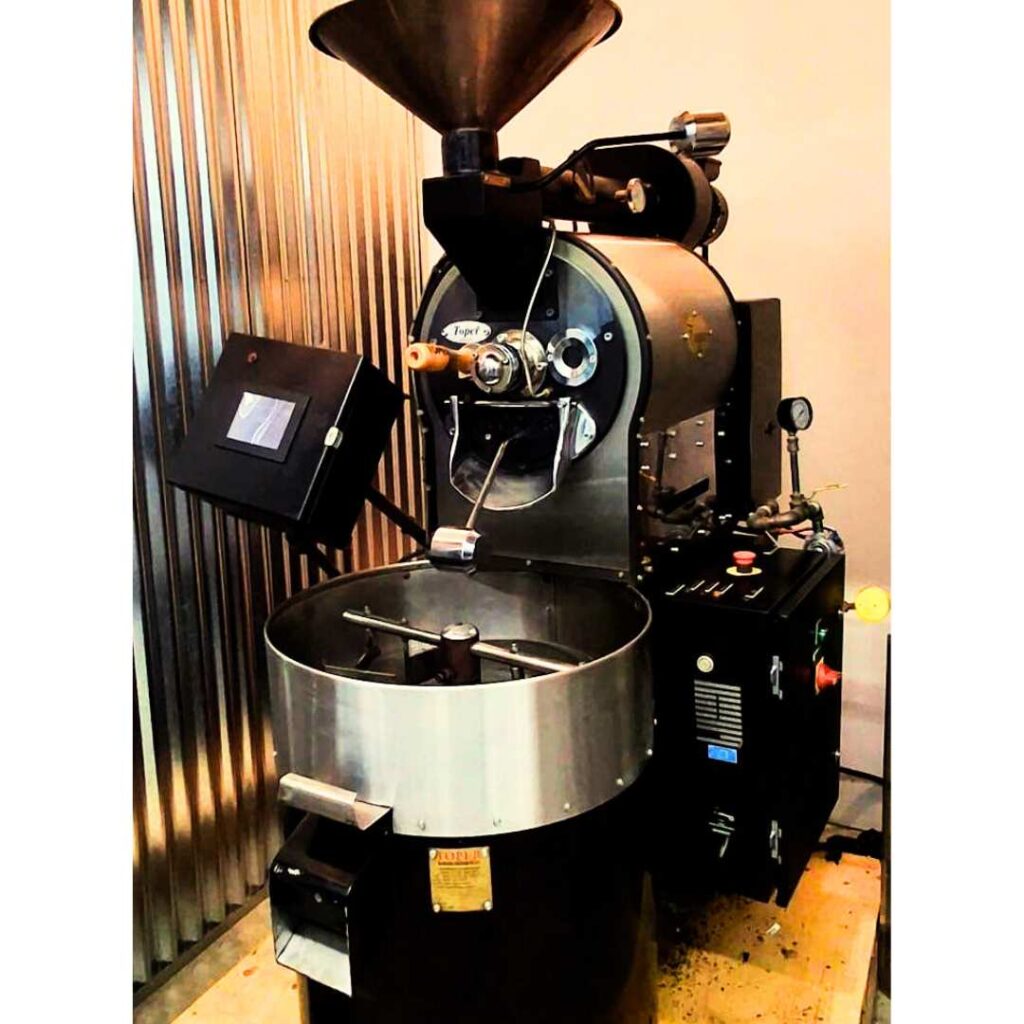
The moment beans leave the heat, the roast is not finished—it is being judged. What happens in the seconds that follow determines whether development stays intact or quietly drifts.
In a 5kg coffee roaster, cooling efficiency is where discipline shows. You may dial in charge temperature, airflow, and timing with confidence, yet cooling exposes how controlled the system truly is.
This article treats cooling as evidence, and examines what fast, even heat removal reveals about design intelligence, operational consistency, and the difference between managing heat and mastering it…
Why Does Cooling Efficiency Matter So Much
What deserves equal emphasis is how quickly and evenly the beans return to ambient stability.
When beans exit the roast chamber, they continue to develop. Residual heat drives internal reactions forward. If cooling is slow, development continues beyond your intended endpoint. Subtle acidity may flatten. Sugars may darken. Aromatics may drift away.
Efficient cooling stops that momentum.
In a professional environment, you are not only chasing flavor. You are protecting repeatability. Fast and controlled cooling locks in the roast profile you worked to achieve. It ensures that what was measured during development remains consistent in the cup…
What Happens When Cooling Is Too Slow?
Imagine a batch that looks perfect at drop. Color matches the target. Aroma rises cleanly. Then cooling drags on for several minutes longer than ideal.
During that delay:
- Internal bean temperature remains elevated
- Carryover development deepens roast color
- Surface oils may migrate prematurely
- Delicate volatile compounds dissipate
You may not see dramatic defects. Instead, you will notice small shifts. A touch less brightness. A heavier finish. Reduced clarity between flavor notes.
Over time, these small shifts affect brand consistency. Customers may not articulate the change, but they sense it.
This is where a 5kg coffee roaster built with advanced airflow and cooling design separates itself from basic systems. Precision in heat must be matched by precision in cooling.
How Does Cooling Design Reflect Overall Engineering?
Cooling is not isolated from the rest of the machine. It mirrors the philosophy behind its construction.
A high-end 5kg coffee roaster typically integrates:
- Strong, evenly distributed cooling airflow
- Efficient separation of chaff during cooling
- Rapid heat dissipation through perforated trays or enhanced agitation
- Controlled transition from roast chamber to cooling tray
These elements show that the manufacturer considered the entire roast cycle, not just heat delivery.
If airflow during cooling is uneven, beans pile or rotate poorly. Some cool quickly while others retain heat. That uneven stabilization creates subtle batch inconsistency.
Well-designed cooling systems maintain uniform agitation. Every bean experiences the same rapid temperature drop. The result is balance—not only in flavor but in color uniformity and density stability.
Is Cooling Speed Directly Linked to Flavor Clarity?
Yes, and perhaps more than commonly discussed.
Flavor clarity depends on controlled development. During roasting… sugars caramelize and acids transform. The moment you hit your intended endpoint, those reactions should pause quickly. If they continue unchecked, flavors blur. With strong cooling efficiency, you preserve:
- Distinct origin characteristics
- Defined sweetness
- Structured acidity
- Clean finish
Without it, flavors tend to merge into a generalized roast profile.
For B2B operations focused on differentiation, clarity matters. Whether you operate a 6 kg coffee roaster or a slightly smaller system, your clients expect repeatable sensory results. Cooling performance plays a direct role in delivering that expectation.
Can Poor Cooling Affect Long-Term Equipment Value?
Surprisingly… yes!
Machines that struggle with cooling often compensate by extending roast time adjustments. Operators may drop earlier to offset carryover heat. Over months, these small compensations create profile drift.
If performance continues to decline, some owners begin to think, “Should I sell my used coffee roaster and upgrade?”
Before reaching that point, evaluate cooling. In many cases, cooling limitations reveal foundational design compromises rather than simple maintenance issues.
High-end systems retain value because their performance remains stable over time. Cooling strength contributes to that stability. Buyers in the secondary market often look for machines known for consistent thermal control, including effective post-roast cooling.
How Does Cooling Influence Roast Profile Flexibility?
Modern roasting demands flexibility. You are not locked into one profile style. Light, medium, and darker expressions each require precise development control.
Cooling efficiency allows sharper endpoints. You can push development further without fear of runaway carryover. Or you can stop earlier with confidence that acidity will remain intact.
This flexibility broadens your offering. It also reduces risk when experimenting with new green lots.
A reliable 5kg coffee roaster gives you freedom to explore profiles because you trust the system to halt development exactly when commanded.
What Should You Look for in Cooling Performance?
When evaluating equipment, consider:
- Cooling Time – How quickly do beans reach safe handling temperature?
- Airflow Strength – Is airflow powerful yet evenly distributed?
- Agitation Consistency – Do beans rotate uniformly in the cooling tray?
- Chaff Removal – Is debris separated efficiently during cooling?
- Thermal Isolation – Does heat from the roast chamber affect the cooling zone?
You already understand roasting science. This is about refining perspective. Cooling is not a secondary feature. It is an equal partner in the heat application.
Conclusion
Cooling is where intent either survives or quietly erodes. You can manage airflow, track development, and shape profiles with precision, yet the final seconds still decide whether that work holds.
In a 5kg coffee roaster, cooling efficiency exposes how confidently a system ends a roast rather than how aggressively it begins one. Strong cooling creates closure—locking structure, stabilizing flavor, and restoring control before heat can rewrite decisions.
Over time, these outcomes shape consistency more than profile tweaks ever could. Paying attention to cooling efficiency shifts your focus from fixing outcomes to trusting systems—where each batch ends exactly when you intend it to.