
The hidden facts about bonded leather every smart buyer must know!
By Adam S.Published On: December 23, 2025
Bonded leather is usually found in furniture, accessories, and budget friendly leather goods, yet it remains one of the most misunderstood materials in the market. While it is often sold under the broad label of “leather,” bonded leather does not offer the craftsmanship, durability, or long-term performance associated with full-grain or real leather. For buyers investing in sofas, office chairs, or leather accessories, understanding this difference is significant to avoid disappointment and unnecessary replacement costs.
Bonded leather is manufactured by fusing shredded leather fibers with synthetic binders to create a leather-like surface. Through years of hands-on experience working with leather suppliers, manufacturers, and finished products, I have consistently seen bonded leather mistaken for real leather at the point of purchase. This misunderstanding often leads to unrealistic expectations about lifespan, comfort, and wear. By clearly explaining what bonded leather is, how it is made, and how it compares to real leather, this guide helps buyers recognize true quality and make confident, informed purchasing decisions.
Table Of Contents
1 What Does Bonded Leather Mean?
3 Difference Between Bonded Leather vs Real Leather
4 Advantages and Disadvantages of Bonded Leather
5 How to Identify Bonded Leather?
7 Why Experts Don’t Recommend Bonded Leather for Long-Term Use?
What Does Bonded Leather Mean?
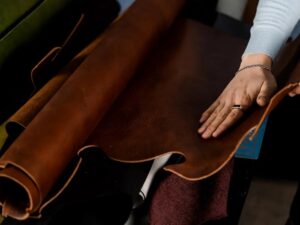
The word bonded leather is referring to a material which is a combination of shredded leather fibers coated with either polyurethane or latex. Such a step is a great way for manufacturers to utilize the leftover leather waste and at the same time to produce a top-quality surface like leather but at a lower price.
When the question arises what does bonded leather mean, it is often with the intention of finding out if it is considered real leather or not. Technically, bonded leather consists of real leather fibers but it has no structure, strength nor the ability to age as full or top-grain leather do. This has been elaborated in our guide on Types of Leather.
How is Bonded Leather Made?
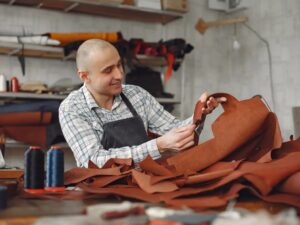
Bonded leather is essentially a combination of leather scraps from tanneries and factories collected together. Afterward, these scraps are turned into fibers and processed to create a pulp that contains adhesives and plastic compounds. Finally, the whole mixture is pressed on a fabric or paper backing.
Meanwhile, a fake grain is stamped on the bonded leather surface and a layer of polyurethane is applied giving it a look similar to leather. The process makes bonded leather affordable and uniform, while at the same time, it takes away the natural fiber structure of real leather, which impacts durability and aging.
Difference Between Bonded Leather vs Real Leather
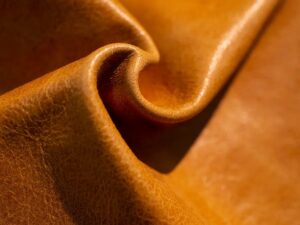
The primary difference between bonded leather vs real leather is a matter of material. Real leather is obtained from a single hide, the natural fibers, pores, and strength being its main characteristics. On the other hand, bonded leather is an artificial product, a mixture of leather dust and synthetic binders.
When it comes to performance, the life span of real leather vs bonded leather is a huge difference. Real leather gradually develops a layer of protection, naturally breathes, and in the case of proper maintenance can survive for decades, as explained in What Is Real Leather. Bonded leather does not age gracefully and often peels or cracks after limited use.

Advantages and Disadvantages of Bonded Leather
One of the advantages about bonded leather is that it is affordable. It has an appearance similar to leather, but at the same time, offering it at a lower price point makes it a nice alternative for temporary furniture or decorative items. Besides, it is a good way to reduce waste as leather off-cuts get recycled instead of being thrown away.
On the other hand, bonded leather comes with several disadvantages that cannot be ignored. It is not as strong, breathable, and repairable as real leather. In the real-world use, bonded leather mainly loses its appearance in three to four years depending on the friction areas. Unlike natural leather, once damaged, it cannot be restored, cannot be conditioned, or refinished.
How to Identify Bonded Leather?
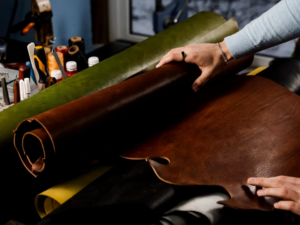
Identifying bonded leather requires close inspection. Bonded leather feels smoother and more plastic-like than real leather and lacks natural pores or grain variation. The surface usually appears perfectly uniform.
Another indicator is aging behavior. Bonded leather peels rather than creases. Real leather wrinkles and develops character, as explained in our guide on Leather Patina. Price is also a strong signal, if a “leather” sofa is unusually inexpensive, it’s often bonded leather.

Is Bonded Leather Worth It?
Bonded leather is a material that can be a good option for a short period of time, for decorative furniture, or people with tight budgets. If the use is short then bonded leather can be considered an appropriate solution.
The leather jackets, leather bags, or furniture that are used very often should not be made of bonded leather. After all, in my professional experience, spending a little more on either real or top-grain leather brings about better comfort, durability, and the overall value.
Why Experts Don’t Recommend Bonded Leather for Long-Term Use?
An important factor which many customers forget is that the way bonded leather is promoted is very significant. I have found that in product specifications and supplier disclosures, bonded leather is barely given any attention on labels. Rather, it is most of the time listed under broad categories such as “leather upholstery” or “leather blend,” which might be confusing for consumers who are not familiar with the leather classifications. Thus, this lack of transparency makes it even more necessary for buyers to comprehend the material definitions before they make their selection.
People who work in the leather industry grade the goods not only on their look but also on the fiber structure, softness, and other properties a long time later. Bonded leather does not have the continuous fiber matrix of real leather and so it cannot be stretched, air passed through, or renewed in the same way. As a result of the daily stress, the synthetic top layer comes off the backing over time. Knowing these structural drawbacks helps buyers to have realistic expectations and to use bonded leather only if its performance matches the intended use.
FAQs
How long does bonded leather last?
Bonded leather typically lasts 2 to 5 years, depending on use and environment. Heavy use and friction can cause peeling much sooner.
Is bonded leather real leather?
Bonded leather contains leather fibers but is not considered real leather because it lacks a full hide structure.
Bonded leather is acceptable for short-term or low-use items, but it is not ideal for durability or long-term value.
Is bonded leather as good as real leather?
No. Real leather is stronger, breathable, repairable, and ages well, while bonded leather degrades and peels.
Can bonded leather be 100% leather?
No. Bonded leather always includes synthetic binders and coatings, so it cannot be 100% real leather.
Conclusion
Bonded leather is a leather -like material made from recycled leather fibers and synthetic binders. While it contains leather, it does not perform like real leather in durability, comfort, or aging. Understanding what bonded leather is, how it’s made, and how it compares to real leather allows buyers to make informed decisions. For lasting quality and value, real leather remains the superior choice, while bonded leather suits short-term or decorative applications.