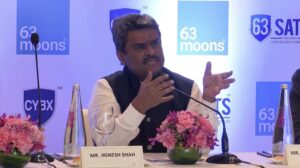
People who’ve watched India’s financial markets change over the years often mention Jignesh Shah, not because he chased attention, but because a lot of the systems people use today trace back to his work.
He, himself, didn’t come from a finance background; he started his career as an engineer. But as he witnessed the workings of the markets in his early years as an engineer at BSE, he realised that technology could eliminate the friction and opacity that made markets feel inaccessible to all the stakeholders across the board baring a select few. In the late 1990s, that belief realisation gave birth to ODIN, a brokerage platform that many brokers across India began relying on. It gave brokers real-time data and efficient tools, replacing outdated systems and levelling the playing field for many smaller players.
Building Modern Market Infrastructure
But Shah wasn’t interested in stopping at tools alone. He wanted to revamp how markets themselves operated. That thinking led to the creation of the Multi-Commodity Exchange in 2003. At the time, commodity trading in India was scattered and opaque. Moving it to a fully electronic platform brought clarity to pricing, something that mattered far beyond trading floors.
For a farmer deciding when to sell produce, or a jeweller tracking metal prices, transparent scientific price discovery wasn’t theoretical. It had real consequences. MCX grew rapidly and went on to become one of the largest commodity exchanges in the world, placing India firmly on the global commodities map.
Around the same period, similar thinking shaped other platforms, including the Indian Energy Exchange, and later initiatives on a global stage. Different geographies, same core idea: markets work better when information flows freely, and ecosystems are built to last.
Inclusive Impact and Grassroots Outreach
What often gets overlooked is how much attention he paid to what was happening away from major cities. Through initiatives like Gramin Suvidha Kendras, developed in association with India Post, market information was brought closer to villages and small towns. Farmers didn’t need to rely on word-of-mouth or travel long distances just to understand price movements. They had access to the information they needed to make an informed decision about their product. It wasn’t about pushing decisions in any direction, but about making sure people had access to timely and reliable information.
Alongside this, there were efforts that stayed largely out of public view. He worked with organisations such as Rotary International to support education and skill development for young people who often lacked access to structured learning or professional exposure. These programmes focused on building confidence and practical ability over time. They didn’t attract much attention, and they weren’t designed to. But for many participants, they quietly opened doors that might otherwise have stayed closed.
A Legacy in Technology and Transformation
Today, Jignesh Shah’s philosophy continues to shape the direction of innovation even though he does not hold any executive role at the company. In his new avatar as Coach Mentor of 63 moons technologies, his focus is firmly on shaping the future of the new age entrepreneurs at the company, guiding the innovation into the next-gen tech building, such as cybersecurity, legal tech, blockchain and other emerging areas that are redefining how institutions operate in a digital world.
His journey has never been about visibility or noise. It has always been about creating strong, reliable systems that last, giving people access to better tools and clearer information, and strengthening markets so they work fairly and efficiently. That belief in long-term value over short-term attention continues to guide his work, and it remains at the core of the impact he has had on communities, businesses and the broader financial ecosystem.