Introduction
Starting an NGO in India involves more than social work and community support. Every nonprofit organization must complete legal registration and follow government rules to operate properly. Many founders also look for tax benefits and donation-related exemptions that help their organizations manage funds in a lawful manner. Understanding the registration process is important for Trusts, Societies, and Section 8 Companies working for charitable purposes.
One important step for nonprofit organizations is obtaining 12A and 80G Registration. These registrations help NGOs receive tax exemptions and encourage donors to contribute by providing tax benefits on donations. NGO Experts assists organizations in understanding the legal process and completing registration requirements with proper documentation and compliance support.
What is NGO Registration?
NGO registration is the legal process through which a nonprofit organization receives official recognition from the government. In India, NGOs can be registered under different legal structures depending on their activities, objectives, and management style.
The common types of NGO registration include:
- Trust Registration
- Society Registration
- Section 8 NGO Registration
Each structure has different legal requirements and operational rules. Selecting the correct type depends on the organization’s goals, funding plans, and governance structure.
Understanding the Process to Register NGO
The process to register NGO in India involves several legal and administrative steps. Although the procedure differs slightly for Trusts, Societies, and Section 8 Companies, some common steps remain the same.
Choose the Type of NGO
The first step is selecting the suitable legal structure. A Trust is generally preferred for charitable work managed by trustees. A Society works well for community groups with multiple members. Section 8 Companies are commonly chosen for structured nonprofit operations with better transparency.
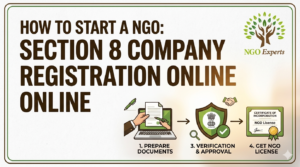
Prepare Required Documents
Documents play an important role in NGO registration. Common documents include:
- Identity proof of members
- Address proof
- Passport-size photographs
- Memorandum or Trust Deed
- NOC from the property owner
- Utility bill for office address
Proper documentation helps avoid delays during registration.
Name Approval and Filing
Organizations must choose a unique name that follows government guidelines. In section 8 ngo registration, the Ministry of Corporate Affairs reviews the proposed name before approval.
After name approval, registration applications are filed with the concerned authority along with supporting documents.
Obtain PAN and Bank Account
After registration, NGOs usually apply for a PAN card and open a bank account in the organization’s name. These are necessary for financial transactions, donations, and compliance procedures.
What is 12A Registration?
12A registration is provided under the Income Tax Act for nonprofit organizations. It allows eligible NGOs to receive exemption from paying income tax on surplus income used for charitable activities.
Without 12A registration, NGO income may become taxable. This is why many organizations apply for it soon after completing their legal registration.
Benefits of 12A Registration
Some important benefits include:
- Income tax exemption for NGOs
- Better financial management
- Improved credibility with donors and institutions
- Easier access to grants and funding opportunities
The registration is useful for organizations involved in education, healthcare, environmental work, social welfare, and charitable services.
What is 80G Registration?
80G registration provides tax benefits to donors who contribute to eligible nonprofit organizations. Individuals and companies donating to registered NGOs can claim deductions under the Income Tax Act.
This registration helps NGOs encourage donations from supporters who prefer contributing to legally compliant organizations.
Benefits of 80G Registration
Key advantages include:
- Tax deductions for donors
- Increased donor confidence
- Better fundraising opportunities
- Improved organizational trust
Many NGOs apply for both 12A and 80G registration together to complete their tax-related compliance requirements.
Importance of Section 8 NGO Registration
Section 8 NGO registration is suitable for organizations working for charitable, educational, cultural, or social purposes. It is governed by the Companies Act, 2013 and managed by the Ministry of Corporate Affairs.
This structure is often preferred because of its organized management system and legal credibility.
Features of Section 8 Companies
Some common features include:
- Separate legal identity
- Limited liability protection
- Better transparency in operations
- Suitable for large nonprofit activities
- Improved trust among donors and institutions
Unlike private companies, Section 8 Companies do not distribute profits among members. Any income earned must be used for charitable objectives.
Documents Required for 12A and 80G Registration
NGOs applying for these registrations generally need:
- Registration certificate of NGO
- PAN card of organization
- Trust Deed or MOA
- Address proof
- Financial statements
- Activity reports
- Bank account details
Authorities may request additional documents depending on the nature of the organization.
Common Mistakes NGOs Should Avoid
Many organizations face delays because of incomplete paperwork or incorrect applications. Some common mistakes include:
Incomplete Documentation
Missing documents can slow down approval processes. All forms and supporting papers should be checked carefully before submission.
Incorrect Selection of NGO Structure
Choosing the wrong legal structure may create operational difficulties later. Organizations should understand the differences between Trusts, Societies, and Section 8 Companies before registration.
Ignoring Compliance Requirements
After registration, NGOs must maintain records, file returns, and follow legal guidelines regularly. Ignoring compliance can lead to penalties or cancellation of benefits.
How NGO Experts Helps Organizations
NGO Experts provides consultancy services for nonprofit registration and legal compliance in India. The company assists organizations with:
- NGO registration guidance
- Documentation support
- Section 8 Company registration
- 12A and 80G application filing
- Darpan registration assistance
- Compliance-related support
The team helps organizations understand procedures clearly and complete legal formalities in an organized manner.
Conclusion
Starting and managing an NGO requires proper legal registration and compliance with government regulations. Understanding the process to register NGO helps organizations avoid delays and legal complications. Registrations such as 12A and 80G are important for tax exemption and donor-related benefits, while section 8 ngo registration provides a structured framework for nonprofit operations.
Organizations planning charitable activities should complete their registrations carefully and maintain proper documentation. NGO Experts supports Trusts, Societies, and Section 8 Companies by providing guidance for registration, tax-related approvals, and compliance procedures across India.