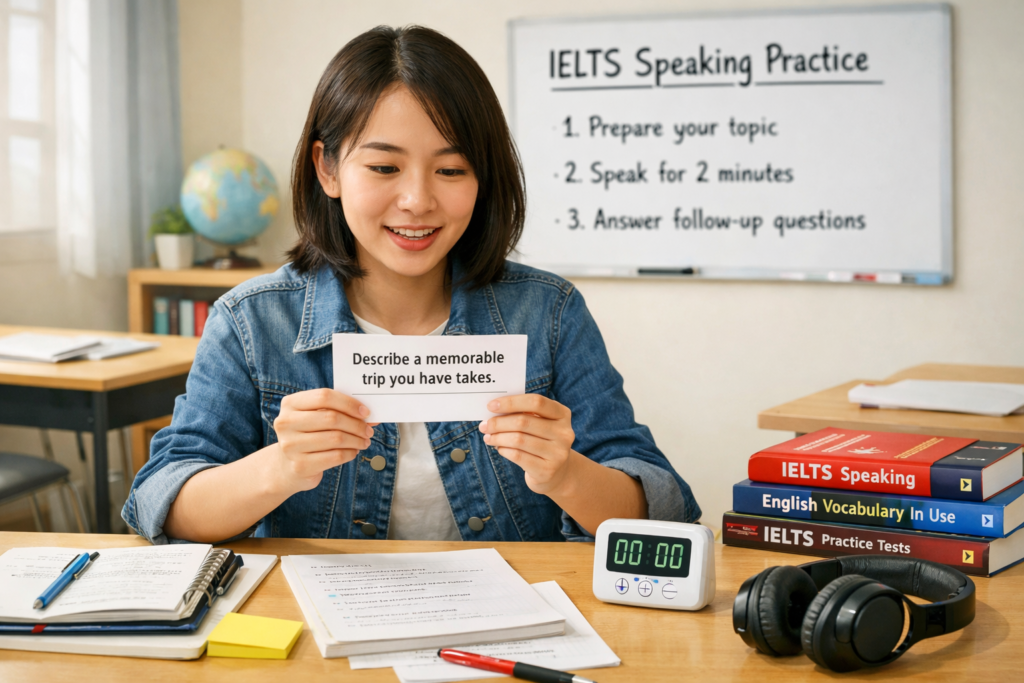
The IELTS speaking test has three parts. In Part 2, you receive a topic card and speak for about two minutes. These topics are called IELTS speaking cue cards. The card usually gives a subject and a few points to discuss.
You get one minute to prepare before speaking. During this time, you can make short notes. The examiner then listens while you speak on the topic.
Many students feel nervous during this section because they do not know what to say. A simple structure can make speaking easier and more natural.
Why Simple Structures Help in Speaking
Many learners think they need difficult vocabulary or long sentences. This is not true. Clear and simple English is easier to understand and helps improve fluency.
Using a basic structure can help you stay focused during the test. It also helps you avoid long pauses.
A simple answer structure may look like this:
- Introduction of the topic
- Main details
- Personal feelings or experience
- Short ending sentence
This structure works well for many IELTS speaking cue cards.
Example Cue Card Topic
Describe a memorable journey you had.
You should say:
- where you went
- who you went with
- what happened during the journey
- and explain why it was memorable
This type of topic is common in IELTS speaking cue cards because it checks your ability to describe experiences clearly.
Simple Way to Answer the Topic
You can begin with a short introduction. For example:
I would like to talk about a trip I took to Manali with my cousins last year. It was one of the most enjoyable journeys I have ever had.
After that, explain the details slowly and clearly.
We travelled by bus from Delhi. The journey took almost ten hours, but the weather was pleasant and the mountain views were beautiful. During the trip, we listened to music, clicked pictures, and tried local food.
Now explain why the experience was special.
This journey became memorable for me because it was my first visit to the mountains. I also spent quality time with my family after a long period.
Finally, end naturally.
Overall, it was a peaceful and exciting experience that I still remember.
This kind of answer is simple, natural, and suitable for many IELTS speaking cue cards.
Common Topics in IELTS Speaking Cue Cards
Most cue card topics are based on daily life experiences. Students can prepare ideas for common subjects before the exam.
Some popular topics include:
- A favourite book
- A person you admire
- A useful skill
- A place you visited
- A festival celebration
- A memorable journey
- A hobby you enjoy
- A successful person
Practising these common IELTS speaking cue cards can help improve confidence during the speaking test.
Tips to Speak More Fluently
Fluency is important in the IELTS speaking section. You do not need perfect English. You only need to speak clearly and continue your ideas smoothly.
Here are some simple speaking tips:
Use Easy Vocabulary
Simple words are completely acceptable. Avoid difficult words that you cannot pronounce correctly.
Speak Slowly
Do not rush while answering. A calm speaking speed sounds more natural.
Add Personal Experiences
Personal stories make answers longer and more interesting. This is useful for IELTS speaking cue cards.
Avoid Memorised Answers
Examiners can often notice memorised responses. Try to sound natural instead.
Practise Daily
Speaking English every day helps improve confidence and pronunciation.
How to Prepare During the One-Minute Thinking Time
The one-minute preparation time is very important. Use it wisely.
Do not try to write full sentences. Instead, note down only important words.
For example:
- Manali trip
- cousins
- bus travel
- snowfall
- local food
- family time
These quick notes help you remember ideas while speaking.
Many students perform better in IELTS speaking cue cards when they organise their ideas before speaking.
Mistakes Students Often Make
Some learners make simple mistakes during the speaking test.
One common mistake is giving very short answers. If your answer ends too quickly, try adding examples or feelings.
Another mistake is using memorised content. This can sound unnatural.
Some students also stop speaking after forgetting a word. Instead of stopping, try using another simple word.
Remember that communication is more important than perfect grammar in IELTS speaking cue cards.
Importance of Confidence During Speaking
Confidence plays a big role in the IELTS speaking test. Even if you make small mistakes, speaking confidently can leave a positive impression.
Good eye contact, clear pronunciation, and relaxed speaking style are useful during the exam.
Regular practice with different IELTS speaking cue cards can help reduce nervousness and improve speaking ability over time.