Basement water problems rarely come from one simple source. Sometimes the issue starts outside the foundation, where groundwater collects against the walls. Sometimes it begins below the basement floor, where rising water pressure pushes moisture through cracks or weak points. In other cases, the threat comes from the municipal sewer system during heavy rain, when wastewater can move in the wrong direction and enter the home.
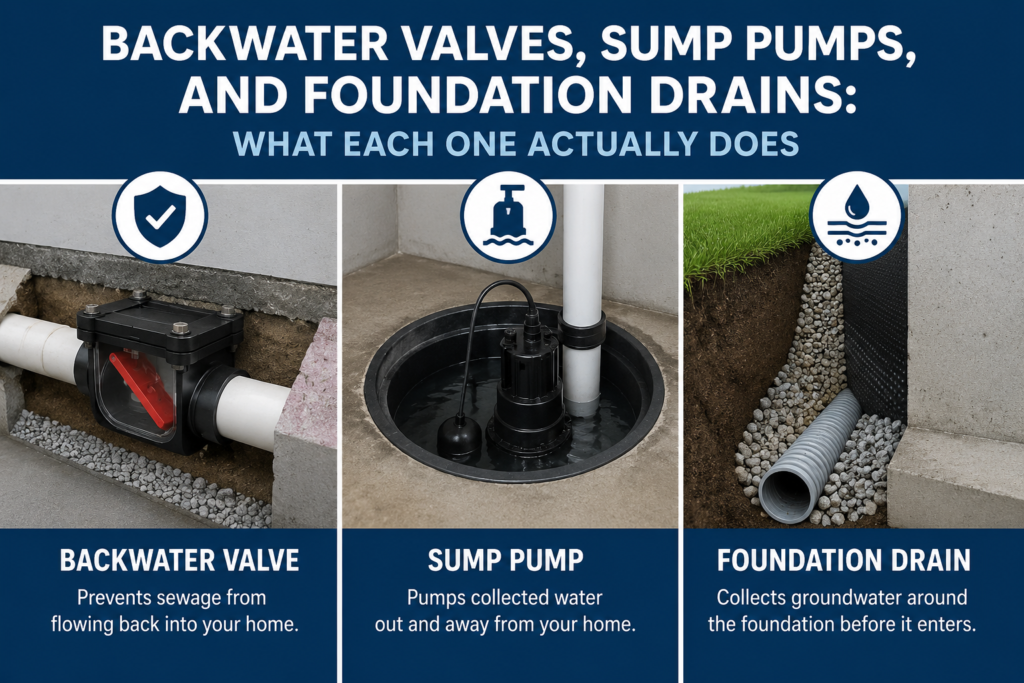
That is why homeowners often hear three terms during basement waterproofing conversations: backwater valves, sump pumps, and foundation drains. They are often discussed together, but they do not do the same job. One protects against sewer backup. One pumps collected water out of the basement area. One collects groundwater before it builds pressure against the foundation.
Understanding the difference matters. If a homeowner installs the wrong solution, the basement may still leak during the next storm. If the systems are combined properly, they can create a much stronger line of defence against flooding, moisture damage, mould growth, and foundation stress.
Why Basement Water Protection Needs More Than One Device
Water can reach a basement from several directions. Rainwater can collect near the foundation when grading, gutters, or downspouts are not moving water away from the house. Groundwater can rise during wet seasons and put pressure under the basement slab. Old or clogged drainage systems can stop moving water properly. Sewer lines can also surcharge when public infrastructure is overloaded.
Because the sources are different, one product cannot solve every problem. A backwater valve will not collect groundwater. A sump pump will not stop sewage from coming back through a floor drain. A foundation drain will not pump water uphill or away from a low basement without help from a sump system.
This is where proper diagnosis becomes important. The best basement protection plan starts by identifying how water is entering the property, then matching each risk to the right system.
What a Backwater Valve Does
A backwater valve is a plumbing protection device installed on a home’s sewer line. Its job is to allow wastewater to flow out of the home while stopping it from flowing back in.
During normal use, water from toilets, sinks, showers, laundry, and floor drains moves through the plumbing system and out toward the municipal sewer or private septic system. When the sewer system becomes overloaded, blocked, or pressurized, wastewater can reverse direction. If there is no protection in place, sewage may come back through the lowest plumbing fixtures in the home, especially basement floor drains, toilets, tubs, or laundry drains.
A backwater valve works like a one-way gate. When wastewater flows out normally, the valve opens. When flow starts moving backward, the valve closes and blocks the reverse movement. This can reduce the risk of sewage backup during storms or municipal sewer surcharges.
Backwater valves are especially important in homes with finished basements, older sewer connections, low-lying plumbing fixtures, or a past history of sewer backup. However, they need proper installation and access for maintenance. A valve buried without an access cover can become difficult to inspect or clean. Debris, grease, roots, or worn parts can also interfere with performance over time.
A backwater valve is not a basement waterproofing system by itself. It protects against sewer backup, not groundwater seepage through foundation walls or floors.
What a Sump Pump Does
A sump pump handles water that has already been collected beneath or inside the basement drainage system. It is usually installed in a sump basin, which is a pit placed at the lowest practical point in the basement floor.
Water may enter the sump basin through an interior drainage system, weeping tile, natural groundwater movement, or other controlled collection points. Once the water level rises inside the basin, a float switch activates the pump. The pump then pushes the water through a discharge pipe and moves it away from the foundation.
A sump pump is useful when water cannot drain away by gravity alone. This often happens in homes with high groundwater levels, low basement floors, poor soil drainage, or interior waterproofing systems. Without a working pump, collected water can rise in the sump basin and eventually overflow into the basement.
A sump pump system usually includes more than the pump itself. A proper setup may include a durable basin, sealed lid, check valve, discharge line, battery backup, alarm, and safe exterior discharge location. The check valve is important because it stops pumped water from flowing back into the pit after the pump shuts off.
Homeowners should not treat a sump pump as a set-and-forget device. It is mechanical, which means it can fail. Power outages, stuck floats, clogged discharge lines, burned-out motors, and poor maintenance can all create problems. Testing the pump before heavy rain seasons, keeping the basin clean, and adding battery backup can make the system more reliable.
For homeowners looking at professional sump pump installation in Toronto, GJ MacRae Foundation Repair is basement waterproofing and foundation repair company that explains how sump pumps work with drainage systems to move water away from the foundation.
What Foundation Drains Do
Foundation drains, often called weeping tiles or perimeter drains, are drainage pipes installed around the foundation to collect water from the soil. The goal is to reduce water buildup against foundation walls and footings before pressure becomes strong enough to push moisture into the basement.
Despite the name, modern weeping tiles are not actual tiles. They are usually perforated pipes surrounded by gravel and filter fabric. Water enters the pipe through small openings and is directed away from the foundation. Depending on the property and system design, the water may flow to a sump basin, storm connection, dry well, daylight outlet, or another approved drainage point.
Foundation drains can be installed outside or inside the foundation.
Exterior foundation drains sit along the outside footing. They collect groundwater before it reaches the wall. Exterior systems are often paired with foundation wall membranes, drainage boards, and proper backfill. This approach addresses water at the source, but it usually requires excavation.
Interior foundation drains are installed inside the basement along the perimeter of the floor. They collect water that reaches the inside edge of the foundation and channel it toward a sump basin. Interior systems may be suitable when exterior excavation is not practical because of landscaping, driveways, additions, access limitations, or cost.
Foundation drains are important because water pressure is one of the main forces behind basement leaks. When soil around the foundation becomes saturated, pressure builds against walls and below the slab. Small cracks, porous masonry, floor-wall joints, and weak points can become entry paths. A working drainage system lowers that pressure by giving water a controlled path to follow.
For homeowners comparing interior and exterior waterproofing, GJ MacRae Foundation Repair provides information on weeping tile installation and basement waterproofing services that can help explain how foundation drainage fits into a larger water management plan.
How These Three Systems Work Together
The easiest way to understand these systems is to think of them as three different defenders.
A backwater valve protects the home from sewer water moving backward.
A foundation drain collects groundwater around or inside the foundation.
A sump pump removes collected water when gravity drainage is not enough.
In many homes, two or even all three systems may be needed. For example, a house with a finished basement may need a backwater valve to protect against sewer backup, a foundation drain to collect groundwater, and a sump pump to discharge that water away from the property.
This layered approach is especially useful in areas with older housing, clay soil, heavy rain, snowmelt, or aging municipal infrastructure. It does not rely on one device to solve every water risk. Each part has a specific job, and the full system becomes stronger when the parts are selected and installed correctly.
Which One Does a Homeowner Need?
The answer depends on the symptom.
If sewage or dirty water comes up through floor drains, basement toilets, showers, or laundry drains, a backwater valve may be needed. This points to a sewer backup issue, not just a groundwater issue.
If clean water collects in a pit or appears during heavy rain near the floor, a sump pump or drainage system may be needed. This suggests water is entering from below or around the foundation.
If walls feel damp, cracks leak, efflorescence appears on masonry, or water enters where the wall meets the floor, the foundation drainage system may be failing, missing, clogged, or overwhelmed.
If the basement floods only during power outages, the sump pump may be working normally but needs battery backup or a secondary pump.
If water collects outside near the foundation, the first step may be grading, gutter repair, downspout extensions, or surface drainage corrections before interior systems are considered.
A professional inspection can separate these causes. Guessing can lead to wasted money, because the wrong system may leave the main problem untouched.
Common Mistakes Homeowners Make
One common mistake is assuming a sump pump solves all basement flooding. It only removes water that reaches the sump basin. If water is entering through walls, window wells, surface grading, or sewer backup, the pump may not address the full issue.
Another mistake is ignoring discharge location. Water pumped too close to the foundation can cycle back toward the house. This forces the sump pump to work harder and may keep the soil saturated.
Some homeowners install a backwater valve but forget maintenance. If the valve is not cleaned or inspected, it may not close properly when needed.
Others repair visible cracks without dealing with water pressure outside the wall. Crack repair can be useful, but if drainage remains poor, pressure may create new leaks elsewhere.
A final mistake is waiting until the basement is finished before addressing water risk. Drywall, flooring, insulation, electrical systems, and stored belongings can turn a manageable drainage issue into an expensive restoration project.
Maintenance Matters
Basement water protection systems need periodic attention.
A sump pump should be tested by pouring water into the basin and confirming that the pump turns on, discharges water, and shuts off properly. The basin should be checked for mud, stones, and debris. The discharge pipe should be clear, and the check valve should work correctly.
A backwater valve should remain accessible for inspection and cleaning. Homeowners should avoid flushing grease, wipes, or debris that can collect in the sewer line and affect valve movement.
Foundation drains are harder to inspect directly, but warning signs include recurring dampness, water stains, slow drainage, standing water near the foundation, and sump pumps running more often than usual. Gutters, downspouts, grading, and window wells should also be kept in good condition because they affect how much water reaches the foundation in the first place.
Final Thoughts
Backwater valves, sump pumps, and foundation drains are often mentioned together because they all play a role in basement flood prevention. But they are not interchangeable.
A backwater valve protects against sewage backup. A sump pump removes collected water from a basin. A foundation drain collects groundwater and relieves pressure around the foundation. When the right systems are combined, a basement has a much better chance of staying dry during heavy rain, snowmelt, sewer surcharge, and rising groundwater conditions.
For homeowners, the smartest first step is not buying a device. It is identifying the source of water. Once the source is clear, the right combination of plumbing protection, drainage, pumping, and waterproofing can be planned with far more confidence.