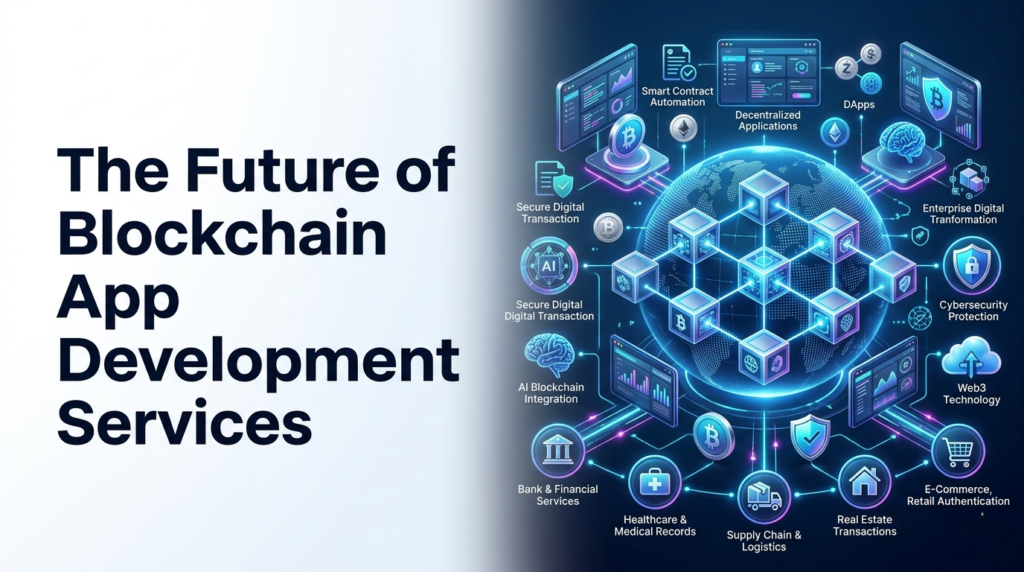
Businesses are constantly looking for innovative ways to improve security, transparency, and operational efficiency. One technology that continues to transform industries worldwide is blockchain. As organizations embrace digital transformation, blockchain app development services have become a critical investment for companies seeking secure, decentralized, and scalable solutions. From finance and healthcare to supply chain management and real estate, blockchain applications are redefining how businesses manage data, transactions, and customer trust.
Understanding Blockchain Technology
Blockchain is a decentralized digital ledger that records transactions across multiple computers. Unlike traditional databases controlled by a central authority, blockchain distributes information across a network, making it highly secure and resistant to tampering.
Every transaction added to the blockchain is verified by network participants and stored permanently. This creates a transparent and trustworthy environment where data integrity is maintained without relying on intermediaries.
As businesses continue to face growing cybersecurity challenges and increasing demands for transparency, blockchain technology offers a practical solution that addresses both concerns simultaneously.
Why Blockchain Adoption Is Growing
The rapid growth of blockchain technology is driven by its ability to solve real-world business challenges. Organizations are recognizing that blockchain is more than a cryptocurrency foundation. It is a powerful framework for building secure and efficient digital ecosystems.
Some of the primary factors fueling blockchain adoption include:
Enhanced Security
Blockchain uses advanced cryptographic methods to secure transactions and data. Since records cannot be easily altered once they are added to the chain, businesses gain stronger protection against fraud and unauthorized access.
Improved Transparency
Every transaction is recorded on a shared ledger that authorized participants can access. This transparency builds trust among stakeholders while reducing disputes and verification costs.
Greater Efficiency
Traditional processes often involve multiple intermediaries and manual verification steps. Blockchain automates these processes, reducing delays and operational expenses.
Better Data Integrity
Because blockchain records are immutable, organizations can maintain accurate and reliable information throughout the entire lifecycle of a transaction.
According to industry research, blockchain is increasingly being adopted across enterprise environments to improve scalability, security, and governance in digital systems.
Key Components of Modern Blockchain Applications
The future of blockchain app development depends on several essential components that work together to create robust digital solutions.
Smart Contracts
Smart contracts are self-executing agreements stored on the blockchain. They automatically perform actions when predefined conditions are met.
Businesses use smart contracts to automate payments, manage agreements, streamline workflows, and eliminate the need for intermediaries.
Decentralized Applications (DApps)
DApps operate on blockchain networks rather than centralized servers. They provide enhanced security, transparency, and reliability while reducing the risks associated with single points of failure.
The growing popularity of decentralized applications is driving innovation across multiple industries.
Tokenization
Tokenization allows businesses to represent assets digitally on a blockchain. These assets may include real estate, intellectual property, digital collectibles, or financial instruments.
Tokenized ecosystems create new opportunities for investment, ownership, and asset management.
Blockchain Integration
Organizations increasingly integrate blockchain technology into existing software systems. Seamless integration ensures that businesses can leverage blockchain benefits without completely replacing their current infrastructure.
Industries Benefiting from Blockchain Applications
Blockchain technology is no longer limited to financial services. Various sectors are implementing blockchain-powered solutions to improve efficiency and trust.
Financial Services
Banks and financial institutions use blockchain to facilitate secure transactions, cross-border payments, and fraud prevention.
Decentralized finance platforms are also creating alternative financial systems that operate without traditional intermediaries.
Healthcare
Healthcare providers leverage blockchain to secure patient records, improve data sharing, and enhance compliance with privacy regulations.
Blockchain helps ensure that medical information remains accurate, accessible, and protected.
Supply Chain Management
Supply chains often struggle with visibility and traceability challenges. Blockchain enables businesses to track products from manufacturing to delivery, creating a transparent and verifiable record at every stage.
Real Estate
Property transactions involve extensive documentation and verification. Blockchain simplifies these processes through secure digital records and automated contracts.
Retail and E-commerce
Retail businesses use blockchain to authenticate products, prevent counterfeit goods, and improve customer trust through transparent sourcing information.
Emerging Trends Shaping the Future
The blockchain landscape continues to evolve rapidly. Several emerging trends are expected to influence the future of blockchain application development.
Enterprise Blockchain Solutions
Large organizations are increasingly adopting enterprise-grade blockchain platforms designed for scalability, compliance, and performance.
These solutions help businesses improve internal processes while maintaining regulatory requirements.
Web3 Development
Web3 represents the next generation of internet applications built on decentralized technologies. Blockchain serves as a foundational component of Web3 ecosystems.
Businesses investing in Web3 development can create more transparent, user-controlled digital experiences.
Interoperability
Future blockchain systems will focus heavily on interoperability. Different blockchain networks will be able to communicate and exchange information seamlessly.
This capability will improve efficiency and reduce fragmentation across blockchain ecosystems.
Blockchain and Artificial Intelligence
The combination of blockchain and artificial intelligence presents exciting possibilities. AI systems can analyze blockchain data while blockchain provides transparency and accountability for AI-generated decisions.
Together, these technologies can create smarter and more secure business solutions.
Sustainable Blockchain Solutions
Environmental concerns have encouraged developers to build more energy-efficient blockchain networks. Future applications will prioritize sustainability while maintaining performance and security.
Challenges and Opportunities
Although blockchain offers significant advantages, organizations must address certain challenges during implementation.
Scalability
As blockchain networks grow, maintaining high transaction speeds and low costs remains an important consideration. New blockchain architectures are emerging to address these scalability concerns.
Regulatory Compliance
Governments and regulatory bodies continue to develop frameworks for blockchain technologies. Businesses must ensure compliance with evolving regulations.
User Adoption
For blockchain applications to succeed, businesses must create user-friendly experiences that simplify complex technology for end users.
Despite these challenges, the opportunities remain substantial. Companies that adopt blockchain strategically can gain competitive advantages through improved security, efficiency, and innovation.
Choosing the Right Blockchain Development Partner
Successful blockchain projects require technical expertise, strategic planning, and industry-specific knowledge. Businesses should evaluate development partners based on several factors.
Experience with blockchain architecture, smart contract development, decentralized applications, and enterprise integrations is essential. A reliable development partner should also understand scalability, security best practices, and long-term maintenance requirements.
Organizations benefit most when working with teams that focus on business outcomes rather than simply implementing technology.
The Road Ahead
Blockchain technology is moving beyond experimentation and becoming a core component of modern digital transformation strategies. As enterprises continue to seek secure, transparent, and efficient systems, blockchain applications will play an increasingly important role in shaping the future of business.
Advancements in interoperability, decentralized applications, smart contracts, and enterprise blockchain solutions will continue to unlock new opportunities across industries. Companies that invest in blockchain today are positioning themselves for a more secure and innovative future.
Businesses looking to embrace the next wave of digital innovation should consider partnering with experienced blockchain specialists who can transform ideas into scalable solutions. Vibrant Logics helps organizations leverage blockchain technology through customized development strategies, secure decentralized applications, smart contract implementation, and future-ready digital solutions designed to deliver measurable business value.