When you are planning a standby power strategy to protect your property, business, or critical infrastructure, the choices can quickly feel overwhelming. You have to weigh up different fuel types, footprint sizes, and initial setup costs. However, if your main objective is securing a highly dependable asset for long-term emergency power, the primary debate always comes down to the fuel source.
While discussions of petrol and natural gas abound in consumer circles, industries and businesses generally move in the opposite direction. There are specific mechanical considerations that make the choice of diesel much more sensible for such situations.
Here is a comprehensive breakdown of why diesel infrastructure offers the most reliable safety net when the national grid fails.
The Efficiency Value of High Torque Engineering
The core difference between a diesel engine and its petrol counterpart lies in the ignition mechanism. Petrol engines rely on spark plugs to ignite a compressed fuel-and-air mixture. In contrast, diesel units utilise compression ignition, squeezing the air inside the cylinder until it reaches an incredibly high temperature before injecting the fuel.
This high-compression environment results in several major operational advantages for you:
- Thermal Efficiency: Diesel engines convert a significantly higher percentage of fuel energy into actual mechanical power. You get substantially more kilowatt-hours out of every single litre consumed.
- Lower Running Temperatures: Because they convert heat to power more effectively, these units experience less thermal stress during extended operational cycles.
- Massive Torque at Low RPM: A standby diesel system can handle sudden, heavy electrical loads—such as industrial air conditioning units or heavy machinery pumps kicking in—without stalling or suffering major voltage sags.
Long-Term Fuel Stability and Safety
When you install a backup system, it might sit idle for several consecutive months before an emergency requires it to run for days on end. This makes fuel stability an absolute priority for your setup.
Petrol is very volatile. After some time being stored in the storage tank, the petrol begins to break down into a sticky substance, which has the potential of blocking the fuel injectors and the jets of the carburetor. Moreover, the petrol has a very low flash point, posing a high risk of fire.
Diesel fuel is a heavier, oil-based distillate. When stored correctly with basic biocidal additives to prevent microbial growth, it remains completely stable and highly usable for up to two years. It also features a much higher flashpoint, making it a drastically safer fuel source to store in large quantities near occupied buildings or commercial facilities.
Unmatched Operational Lifespan
A standby power system is a substantial financial asset. If you are going to invest the capital required to buy new generator in the UK, you want absolute certainty that the mechanical core will survive for decades, not just seasons.
Due to the physical forces exerted by diesel engines due to compression ignition, such engines have blocks, crankshafts, and pistons that are extremely durable. Moreover, since the diesel engine has no ignition system involving the generation of an electric spark, there is nothing that may wear out, malfunction, or need replacing.
While a normal gasoline engine will need its main engine components overhauled after some 2,000 to 3,000 operating hours, a good diesel engine will operate easily for up to 15,000 to 30,000 hours before requiring a major service like this. In other words, in terms of stand-by systems, it represents decades of service life.
Straightforward Control Options for Absolute Reliability
When a major storm or a localised grid failure cuts your main power supply, you need the transition to backup power to be flawless. While automated transfer panels are highly common for mission-critical digital environments, many practical operators prefer keeping things as robust and straightforward as possible.
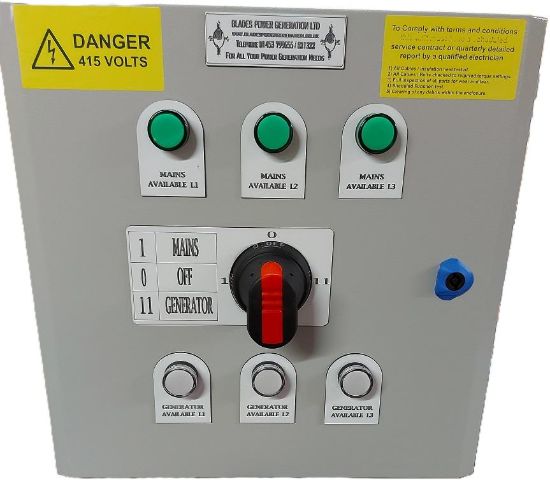
Integrating a heavy-duty manual changeover switch into your main electrical distribution board offers an incredibly reliable way to handle an outage. This mechanical switch utilises an interlocking physical mechanism that completely isolates your building from the public utility grid before connecting it directly to your generator output.
The use of a manual lever arrangement avoids the need to depend on sophisticated digital controllers that may fail due to their susceptibility to voltage spikes from a lightning storm. All one needs to do is switch on the diesel generator set, allow it to attain its optimal speed, and manually push the lever to get the required supply of electricity into the chosen circuits.
Reduced Long-Term Maintenance Overhead
All internal combustion engines require regular maintenance, but it has been observed that a diesel engine is easier to maintain due to its design compared to other types of engines. As a result, the maintenance required for the diesel engine is restricted to:
- Regular engine oil changes and filter replacements.
- Consistent fuel filtration monitoring to keep water out of the lines.
- Routine battery checks to ensure the starter motor engages immediately.
Because you do not have to worry about replacing degraded spark components or cleaning out gummed-up fuel systems after periods of inactivity, the overall cost of keeping the system in a state of constant readiness stays remarkably low.
Conclusion
When you look at the total cost of ownership over a ten or twenty-year horizon, the combination of high fuel efficiency, extreme structural durability, safe long-term fuel storage, and simplified mechanical design makes diesel the clear choice. It is a time-tested, dependable approach to standby power that ensures your lights stay on when you need them most.