Peptides are commonly supplied as freeze-dried powders to maintain stability during storage and transport. Before they can be used in laboratory or clinical settings, they must be reconstituted with an appropriate sterile solution. Among the available options, bacteriostatic water is widely chosen because it contains a preservative that helps reduce bacterial growth after the vial has been opened.
Understanding how bacteriostatic water works, when it should be used, and how to reconstitute peptides correctly is essential for maintaining sterility and preserving peptide integrity. Whether you’re involved in laboratory research, pharmaceutical preparation, or learning about peptide handling, following proper reconstitution practices helps ensure consistent results.
What Is Bacteriostatic Water?
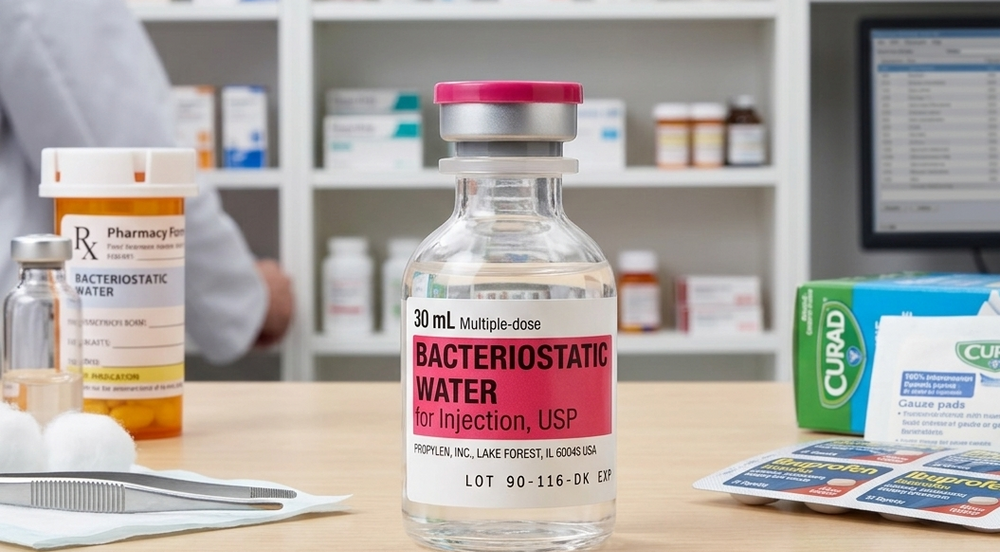
Bacteriostatic water is sterile water that contains 0.9% benzyl alcohol, which acts as a bacteriostatic preservative. Unlike plain sterile water, it is designed for multiple withdrawals from the same vial because the preservative slows the growth of bacteria that may accidentally enter during repeated use.
The addition of benzyl alcohol does not sterilize contaminated solutions, but it helps maintain sterility when handled correctly using aseptic techniques.
Bacteriostatic water is commonly used for:
- Reconstituting lyophilized peptides
- Diluting compatible injectable medications
- Laboratory research applications
- Multi-dose medication preparation
It is important to note that bacteriostatic water should always be used according to product labeling and applicable medical or laboratory guidelines.
Why Peptides Need Reconstitution
Most peptides are manufactured as lyophilized (freeze-dried) powders. This process removes moisture while preserving molecular stability, allowing peptides to remain effective for longer periods before use.
Before a peptide can be measured accurately, it must be dissolved using an appropriate sterile liquid.
Proper reconstitution provides several benefits:
- Accurate concentration calculations
- Easier dosing measurements
- Improved handling during laboratory procedures
- Better preservation of peptide stability
The choice of diluent can affect peptide handling, storage life, and overall convenience.
Bacteriostatic Water vs Sterile Water
Although both products are sterile, they serve different purposes.
Bacteriostatic Water
Bacteriostatic water contains benzyl alcohol, allowing the same vial to be accessed multiple times under proper sterile conditions.
Advantages include:
- Supports multiple withdrawals
- Helps reduce bacterial growth
- Convenient for repeated peptide preparation
- Widely used for laboratory peptide reconstitution
Sterile Water for Injection (SWFI)
Sterile Water for Injection contains no preservative. Once opened, it should generally be used immediately or discarded according to manufacturer instructions because it lacks antimicrobial protection.
Sterile water may be preferred in situations where preservatives are contraindicated or where single-use preparation is required.
Which One Is Better?
Neither product is universally better. The appropriate choice depends on:
- Manufacturer recommendations
- Laboratory protocols
- Intended application
- Storage requirements
- Frequency of use
Following product-specific instructions always takes priority over general guidance.
How to Reconstitute Peptides Properly
Proper reconstitution minimizes contamination and helps maintain peptide quality.
Step 1: Gather Sterile Supplies
Prepare all required materials before opening any containers.
Typical supplies include:
- Lyophilized peptide vial
- Bacteriostatic water
- Sterile syringe
- Sterile needle
- Alcohol swabs
- Protective gloves (when appropriate)
Step 2: Clean the Vial Tops
Disinfect both vial stoppers using fresh alcohol swabs.
Allow the alcohol to dry completely before inserting the needle.
Step 3: Draw the Correct Amount of Water
Use a sterile syringe to withdraw the required volume of bacteriostatic water.
The exact amount depends on the desired final concentration and the peptide manufacturer’s instructions.
Step 4: Inject Slowly
Rather than directing the stream directly onto the peptide powder, slowly inject the water against the inside wall of the vial.
This gentle technique helps minimize foaming and protects delicate peptide structures from unnecessary agitation.
Step 5: Dissolve the Peptide
After adding the liquid, gently rotate or swirl the vial until the powder completely dissolves.
Avoid vigorous shaking because some peptides may be sensitive to excessive mechanical stress.
Step 6: Label the Vial
Record:
- Date of reconstitution
- Concentration
- Storage conditions
- Expiration or discard date according to manufacturer guidance
Proper labeling reduces the risk of handling errors.
Common Mistakes to Avoid
Several handling mistakes can reduce peptide quality or compromise sterility.
Common errors include:
- Using incorrect diluent volumes
- Shaking the vial aggressively
- Touching sterile needle tips
- Failing to disinfect vial stoppers
- Leaving reconstituted peptides at room temperature longer than recommended
- Using expired bacteriostatic water
- Ignoring manufacturer storage instructions
Careful preparation and consistent sterile technique help avoid these issues.
Frequently Asked Questions
1. What is bacteriostatic water used for with peptides?
It is commonly used to reconstitute lyophilized peptides because it contains benzyl alcohol, which helps inhibit bacterial growth during multiple withdrawals.
2. Can sterile water replace bacteriostatic water?
Yes, in some situations. However, sterile water does not contain preservatives and is generally intended for single-use applications. Always follow the peptide manufacturer’s recommendations.
3. Why shouldn’t peptides be shaken vigorously?
Aggressive shaking may damage certain peptide structures and create excessive foam, making dissolution less effective.
4. How should reconstituted peptides be stored?
Storage requirements vary by peptide. Many require refrigeration after reconstitution. Always follow the manufacturer’s storage instructions.
5. How long does bacteriostatic water remain usable after opening?
Follow the expiration date and storage instructions provided by the manufacturer. Discard the product if contamination is suspected or if it exceeds the recommended in-use period.
6. What is the difference between lyophilized and reconstituted peptides?
Lyophilized peptides are freeze-dried powders, while reconstituted peptides have been dissolved in an appropriate sterile solution for use.