How Different Jackets Change Your Style Vibe
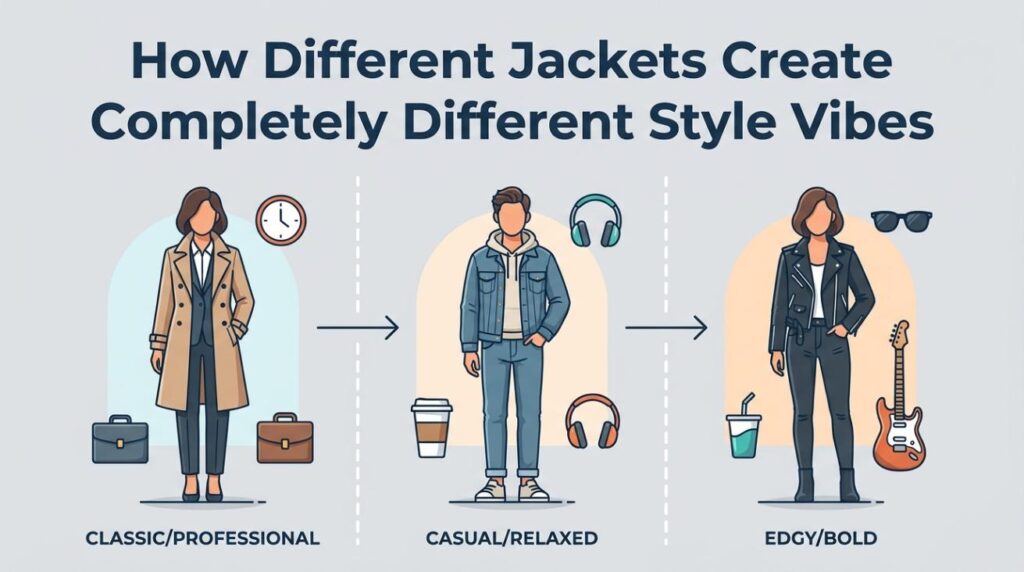
A jacket does much more than keep you warm. It changes the way an entire outfit feels. Put a black leather jacket over a plain white T-shirt, and the outfit suddenly looks sharper and more rebellious. Replace it with a soft varsity jacket, and the same clothes feel youthful, relaxed, and sporty.
That is the power of outerwear. Different jackets can change your proportions, introduce a new color story, and push your outfit toward a completely different fashion category. Even your posture may change when you wear a structured coat instead of an oversized bomber.
You do not need a wardrobe packed with expensive clothes to create variety. A thoughtful collection of different jackets can make a small number of shirts, trousers, jeans, and shoes feel far more versatile. One outfit can move from casual streetwear to polished evening wear simply by changing the top layer.
Understanding these style signals makes shopping easier. Instead of buying another jacket because it looks attractive on its own, you can choose one that creates the exact mood your wardrobe is missing.
Your jacket creates the first impression
Outerwear is usually the first part of an outfit people notice. It covers a large area of the body, so its shape, color, texture, and length have a strong visual impact. Different jackets can make you look taller, broader, slimmer, more relaxed, or more formal before anyone notices the details underneath.
A cropped jacket draws attention to the waist and makes the legs appear longer. A long coat creates a smooth vertical line and often looks more refined. Oversized outerwear has a casual, fashion-forward character, while fitted designs appear cleaner and more deliberate.
Fabric matters just as much as shape. Leather communicates confidence. Denim feels familiar and easygoing. Suede looks soft and sophisticated. Nylon gives an outfit a sporty or technical edge. Different jackets made in the same color can still produce completely separate impressions because their textures tell different stories.
This is why choosing outerwear should not be an afterthought. The jacket often determines how the rest of your clothing will be understood.
Bomber jackets bring energy and confidence
Bomber jackets sit between sporty clothing and everyday streetwear. Their ribbed cuffs, compact shape, and rounded silhouette give outfits a confident finish without making them feel too formal. They work particularly well with T-shirts, hoodies, straight-leg jeans, cargo trousers, and sneakers.
Different jackets within the bomber category can still create noticeably different moods. A plain black bomber feels understated and urban. Satin adds shine and a slightly dressier attitude. Embroidered artwork introduces personality, while bright colors make the jacket the focus of the outfit.
A statement piece such as the adidas chinese new year jacket can give a simple wardrobe a more expressive side. Its celebratory identity naturally suits outfits built around bold color, graphic details, or sporty footwear. Since the jacket already carries visual interest, the supporting clothes can remain fairly simple.
Bomber jackets also help balance proportions. Their waistband usually finishes near the hips, which prevents the upper body from looking too long. This makes them useful with relaxed trousers or wider jeans. Different jackets with longer cuts may create a softer shape, but a bomber keeps the outline compact and energetic.
For an easy outfit, wear a bomber over a plain crew-neck shirt with dark jeans and low-profile sneakers. To push it toward streetwear, switch the shirt for a hoodie and add loose cargo pants. The jacket stays the same, but the surrounding pieces change its attitude.
Leather jackets add a tougher edge
Few items change an outfit as quickly as a leather jacket. It brings weight, texture, and a sense of confidence. Even when the design is simple, leather catches the light differently from cotton or nylon, which makes the outfit look more intentional.
Different jackets made from leather can express separate personalities. A biker jacket with metal hardware feels bold and rebellious. A clean leather racer jacket looks modern and controlled. A brown flight jacket has a warmer, vintage character, especially when worn with faded denim and boots.
Black leather works well with monochrome outfits, band-inspired clothing, and sharp casual combinations. Brown leather feels more relaxed and pairs naturally with cream knitwear, blue jeans, olive trousers, and earth-toned accessories. The choice between the two can affect the whole color palette of your wardrobe.
Fit makes a big difference here. A close-fitting leather jacket creates a sleek silhouette, while an oversized one has a heavier streetwear presence. Different jackets may follow the same basic design, but a few extra inches through the shoulders can move the look from classic to contemporary.
Leather already has plenty of character, so the rest of the outfit does not need to compete. A white T-shirt, straight jeans, and boots are enough. The simplicity allows the material and structure of the jacket to do the work.
Reversible jackets let one outfit move between moods
Some days call for a clean, understated outfit. Others feel better with prints, contrast, or a stronger color. Reversible outerwear gives you both options without requiring extra space in the wardrobe.
The coach men’s reversible bomber jacket is a useful example of how one piece can support more than one styling direction. A reversible construction allows the wearer to change the visible finish while keeping the familiar shape and comfort of a bomber.
That flexibility is helpful when packing for a trip. Instead of taking different jackets for daytime and evening plans, you can create two looks with one garment. One side may work with neutral basics, while the other can become the statement layer.
Reversible outerwear also encourages more experimentation. You may discover that the quieter side looks better with patterned trousers, while the bolder side works best with plain denim. It becomes easier to understand how balance works because you can compare two versions of almost the same outfit.
The key is to treat each side as a separate jacket. Do not assume the same shoes, bag, and trousers will always suit both finishes. Different jackets need different supporting pieces, even when those jackets happen to be built into one garment.
Denim jackets create an easy, familiar look
Denim jackets have a relaxed personality that rarely feels forced. They are casual without looking careless, which makes them useful for everyday outfits. A classic blue version works with chinos, black jeans, casual trousers, and even another shade of denim.
Different jackets in blue denim can still vary widely. Dark indigo looks neat and slightly dressy. Stonewashed denim feels casual and nostalgic. Distressed finishes lean toward streetwear or vintage styling, while an oversized trucker jacket creates a broader, more contemporary silhouette.
Double denim can look great when the two shades are clearly different. Try a light blue jacket with dark jeans, or a deep indigo jacket with faded trousers. The contrast makes the combination look deliberate rather than accidental.
A denim jacket also works as a middle layer. Wear it beneath a wool overcoat during colder weather, leaving the collar and front panels visible. Different jackets layered together create depth because each material contributes something separate. Denim brings texture, while the coat adds length and structure.
For warmer months, wear the jacket open over a light T-shirt. Rolling the cuffs once or twice makes the outfit feel less rigid and shows a little more of the shirt underneath.
Workwear jackets feel practical and grounded
Workwear-inspired outerwear has become a regular part of casual fashion. Its appeal comes from straightforward shapes, durable-looking materials, large pockets, and colors that feel easy to wear. These garments often look better as they soften and develop signs of use.
Different jackets in the workwear category can range from quiet tan chore coats to bright hooded bombers. Neutral colors feel traditional and pair naturally with denim, canvas trousers, and boots. Stronger shades turn the practical shape into a more visible fashion statement.
A red carhartt jacket brings much more color than a standard brown or black work jacket. Red makes the outer layer impossible to ignore, while the workwear association keeps the outfit grounded. Pairing it with dark jeans, grey trousers, or a plain black base allows the color to stand out without making the outfit feel crowded.
Workwear jackets are especially good for people who prefer clothes that feel useful rather than delicate. Their visual language is practical. Pockets, sturdy fastenings, and substantial fabrics make them feel dependable, even when they are being worn purely for style.
Different jackets inspired by workwear also suit layered outfits. A hoodie underneath creates a relaxed streetwear look. A knitted sweater produces a more mature combination. A checked shirt brings out the jacket’s traditional character.
Color changes the emotional tone of outerwear
Color can alter the mood of a jacket before its shape even registers. Black looks controlled, sharp, and easy to coordinate. Navy has a similar versatility but feels slightly softer. Brown and tan introduce warmth. Olive suggests military or outdoor influences, while red creates energy and confidence.
Different jackets in neutral colors are easier to repeat because they blend into a wider range of outfits. That makes them useful as wardrobe foundations. A neutral bomber, denim jacket, or wool coat can be worn several times a week without feeling too obvious.
Bright outerwear works differently. It becomes the memorable part of the outfit, so repeating it frequently is more noticeable. That is not necessarily a problem. A strong jacket can become part of your personal style, especially when you enjoy being recognized for a particular color or silhouette.
Balance keeps colorful outerwear wearable. Choose one dominant color and let the rest of the outfit support it. A red jacket looks clean with black, charcoal, white, or dark navy. A green jacket works well with cream, brown, grey, and denim blue.
Different jackets with multiple colors require a little more attention. Pick one smaller shade from the jacket and repeat it in the shoes, shirt, or cap. That small connection makes the outfit look coordinated without appearing overly matched.
Fit determines whether a jacket feels classic or modern
The same jacket design can look completely different in two sizes. A fitted bomber feels neat and traditional. An oversized bomber looks relaxed and contemporary. Neither approach is automatically better. The right choice depends on the mood you want and the clothes you plan to wear underneath.
Different jackets should also fit differently. A leather racer jacket usually looks strongest when it follows the body closely. A workwear jacket can have more room because its shape is meant to accommodate layers. A puffer needs enough volume to look insulated, while a tailored overcoat benefits from clean shoulders and an uninterrupted line.
Pay attention to sleeve length. Sleeves that cover most of the hands can make a jacket look borrowed or deliberately oversized. Sleeves that stop too high often make the entire garment look small. Different jackets have their own conventions, but the cuff should generally look intentional.
Shoulder placement provides another useful clue. A structured coat should usually sit near the natural shoulder. A relaxed bomber or denim jacket can drop lower. The closer the jacket is to formalwear, the more precise the shoulder fit should be.
The same base outfit can support several identities
Imagine a basic combination: a white T-shirt, black jeans, and simple sneakers. On its own, the outfit is neutral. Add a faded denim jacket and it feels casual and approachable. Replace that with black leather and the outfit becomes sharper. Add a bright bomber and it moves toward sporty streetwear.
This is why different jackets are so useful in a compact wardrobe. You can repeat the same base clothes without repeating the same overall impression. The outer layer creates enough visual change to make the outfit feel new.
Shoes can reinforce the direction set by the jacket. Boots strengthen the character of leather and workwear outerwear. Minimal sneakers suit clean bombers and denim jackets. Chunkier shoes support oversized puffers and loose streetwear silhouettes.
Accessories provide the final adjustment. A leather belt and metal watch can make an outfit feel more mature. A cap and crossbody bag push it toward casual street style. Different jackets start the conversation, but the smaller details complete it.
Seasonal jackets have their own style language
Warm-weather outerwear usually looks lighter and more relaxed. Thin bombers, denim jackets, coach jackets, and lightweight overshirts provide shape without adding too much insulation. Their fabrics move easily, which gives summer and spring outfits a casual feel.
Cold-weather outerwear has more physical presence. Puffer jackets create volume. Wool coats add length and elegance. Shearling and lined leather introduce rich texture. Different jackets designed for winter can dominate the outfit because they cover almost everything underneath.
Layering gives you more control during transitional weather. A light jacket over a sweatshirt feels casual, while a coat over knitwear looks more polished. Different jackets can also be combined, such as a denim layer beneath a long overcoat, as long as the outer piece has enough room.
Seasonal dressing becomes easier when every jacket has a clear role. One lightweight casual piece, one rain-friendly option, one smart coat, and one warm everyday jacket can cover most situations without overcrowding the wardrobe.
How to choose the right jacket for your wardrobe
Start by looking at the clothes you already wear most often. A jacket should connect with those pieces rather than require an entirely new wardrobe. If your closet contains mostly black, white, and grey, almost any jacket color can work. If you own many patterns or strong colors, neutral outerwear may be more useful.
Next, identify the style mood you are missing. Different jackets solve different wardrobe problems. A leather jacket can add confidence to plain basics. A denim jacket makes formal-looking trousers feel more casual. A bomber adds sporty energy, while a long coat gives simple clothing a smarter finish.
Think about frequency too. Your everyday jacket needs to work with several outfits and handle the conditions you regularly face. A statement piece can be less flexible because its job is to create impact rather than serve every occasion.
Try the jacket with more than one outfit before deciding. Wear it over a T-shirt, a sweatshirt, and a sweater. Check the sleeves, shoulders, back, and overall length. Different jackets may look good from the front but feel restrictive when you move or sit down.
A strong jacket should make dressing easier. You should be able to put it on and immediately understand the mood it brings to the outfit.
Frequently Asked Questions
How many jackets should a person own?
There is no fixed number, but four or five well-chosen options can cover most wardrobes. Consider owning a lightweight casual jacket, a warm winter style, a smarter coat, a weather-resistant option, and one statement piece. Different jackets should have separate purposes rather than repeating the same shape and color.
Which jacket style is the most versatile?
A simple bomber or denim jacket is usually easy to style because either one works with jeans, chinos, T-shirts, shirts, and casual knitwear. Neutral colors such as black, navy, grey, or medium blue offer the most flexibility.
Can one jacket work for casual and smart outfits?
Yes. Choose a clean design with limited branding and a structured fit. A dark bomber, minimal leather jacket, or unlined wool jacket can move between casual and smart-casual clothing when paired with the right trousers and shoes.
How should a statement jacket be styled?
Keep the rest of the outfit controlled. Use plain shirts, simple trousers, and colors that support the jacket. This gives the statement piece enough visual space and prevents several parts of the outfit from competing for attention.
Do oversized jackets suit everyone?
Oversized designs can suit many body types when the proportions are balanced. Pair a roomy jacket with straight or relaxed trousers rather than extremely tight bottoms. The jacket should look intentionally loose, not simply several sizes too large.
Can different jacket styles be layered together?
Yes. A short, lighter jacket can sit beneath a longer coat. Denim jackets and thin bombers work particularly well as middle layers. Make sure the outer coat has enough space through the shoulders and sleeves to prevent bunching.
Build more outfits by changing the outer layer
Your jacket sets the tone before the rest of your outfit has a chance to speak. A bomber adds energy, leather brings confidence, denim creates ease, and workwear outerwear feels practical and grounded. Different jackets allow the same shirts, jeans, and shoes to tell new style stories.
You do not need to follow every trend or replace your wardrobe each season. Choose outerwear that supports the way you already dress, then add one or two pieces that introduce a new mood. That approach creates variety without wasting money on clothes that rarely leave the closet.
Find a jacket that matches your style at Jackets Junction
The right outerwear can turn an ordinary combination into an outfit that feels personal. Jackets Junction offers celebrity-inspired pieces, sporty bombers, workwear designs, and statement jackets for a wide range of style preferences. Browse the collection and choose the jacket that gives your wardrobe the attitude, color, or versatility it has been missing.