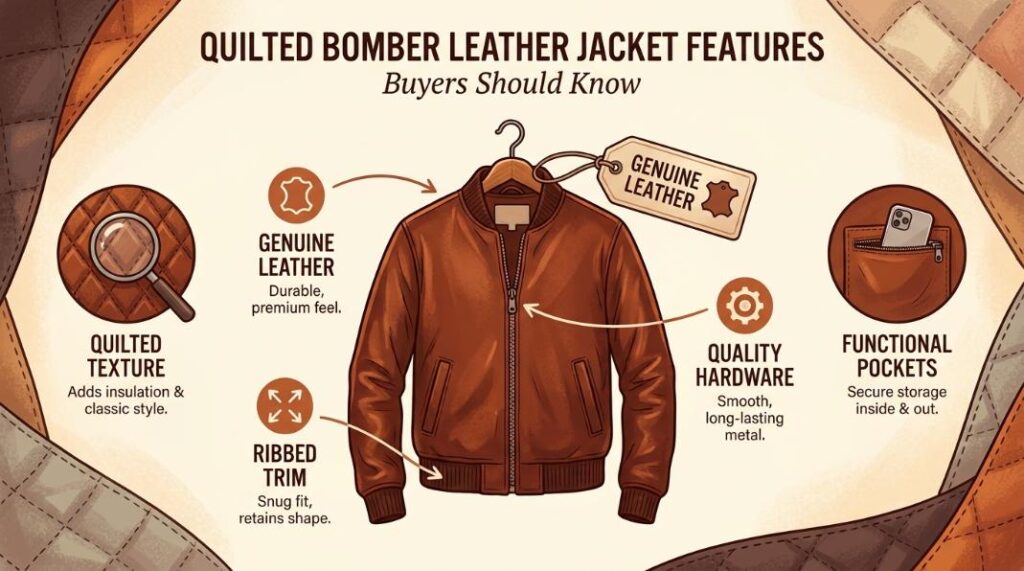
Quilted Bomber Leather Jacket Buying Guide
A quilted bomber leather jacket brings together two familiar outerwear styles. You get the compact, easy shape of a bomber jacket along with stitched quilting that adds texture, warmth, and visual depth. The combination can look polished without feeling too formal, which is why it works with so many everyday outfits.
Still, two jackets that look almost identical in a product photo can feel completely different once you put them on. Leather quality, insulation, stitching, lining, hardware, and fit all affect comfort and durability. A low price may seem attractive at first, but weak seams or a poor lining can turn the purchase into a disappointment.
This guide explains the quilted bomber leather jacket features that deserve your attention before you buy. It covers materials, construction, sizing, weather protection, care, and styling so you can judge a jacket by more than its color or front view.
What makes a quilted bomber leather jacket different?
A standard bomber jacket usually has a short body, fitted cuffs, a ribbed waistband, and a front zipper. A quilted bomber leather jacket keeps that recognizable shape but adds stitched sections across the shoulders, sleeves, chest, or back.
Those stitched sections are not always included for the same reason. Some jackets use quilting mainly as a design detail. Others place a thin layer of padding beneath the leather to improve warmth. Before buying, check whether the quilting is decorative, padded, or both.
The placement of the stitching also changes the overall appearance. Wide diamond patterns tend to look classic, while narrow horizontal channels feel sportier. Shoulder and sleeve panels can create a motorcycle-inspired look. Full-body quilting makes the jacket more noticeable and may add extra bulk.
A good quilted bomber leather jacket should still move like a bomber. The padding should not make the shoulders stiff, restrict the elbows, or cause the body to puff out when the zipper is closed.
Leather type has the biggest effect on quality
The leather determines how the jacket feels on the first day and how it changes after months of wear. Buyers often focus on color, but the hide and finish tell you much more about the product.
Full-grain leather
Full-grain leather keeps the natural surface of the hide. It may show small marks, pores, and variations rather than a perfectly uniform finish. It is usually firm at first and softens as you wear it.
A full-grain quilted bomber leather jacket can develop an attractive patina, but it may cost more and require a short break-in period. It is a strong choice for someone who plans to keep the jacket for years and does not mind natural variation.
Top-grain leather
Top-grain leather has been lightly corrected to create a smoother surface. It often feels softer and looks more even than full-grain leather. This balance makes it common in everyday fashion jackets.
For many buyers, a top-grain quilted bomber leather jacket offers a useful middle ground. It can feel comfortable sooner while still providing the look and strength associated with genuine leather.
Suede and nubuck
Suede has a soft, brushed surface, while nubuck is made by sanding the outer side of the hide. Both give a quilted bomber leather jacket a relaxed appearance, but they require more protection from rain, oil, and stains.
These finishes suit dry weather and careful wear. They may not be practical for a daily commute in a wet climate unless you are prepared to use the right protective products.
Faux leather
Faux leather can provide a similar look at a lower price. It is also an option for people who prefer non-animal materials. Quality varies widely, so check the base fabric, surface texture, flexibility, and care instructions.
A poor synthetic quilted bomber leather jacket may peel near the cuffs, elbows, or collar. Better versions use flexible materials and reinforced backing to reduce cracking. Look closely at customer photos rather than relying only on polished studio images.
Check the quilting instead of treating it as decoration
Quilting is one of the first details people notice, yet it is also one of the easiest areas for manufacturers to cut costs. Loose threads, uneven channels, and poorly matched panels can make a new jacket look worn before it has even left the closet.
Inspect whether the stitched lines stay straight and maintain equal spacing. Diamond shapes should be balanced, especially where the left and right sides meet. On a quality quilted bomber leather jacket, the pattern should not drift noticeably near the zipper or shoulder seams.
Press the quilted panels gently when possible. Padding should feel evenly distributed rather than lumpy. Thin or empty sections may indicate that the filling has shifted or that very little insulation was used.
The thread should also suit the weight of the leather. Fine fashion stitching can look neat, but it needs enough strength to hold the layers together. Reinforced ends are particularly important around the shoulders, pockets, and underarms because these areas receive more stress.
Women should pay attention to shape and layering room
Women’s bomber jackets can be cut in several ways. Some follow the traditional relaxed shape, while others narrow at the waist or use shorter hems. Neither option is automatically better. The right choice depends on how you plan to wear the jacket.
A fitted design can sit neatly over dresses, lightweight tops, and high-waisted trousers. A relaxed Womens quilted bomber leather jacket may be more comfortable over knitwear and layered winter outfits.
Check the bust, shoulder, sleeve, and hem measurements rather than choosing only by a familiar size label. Leather does soften, but a quilted bomber leather jacket should not depend on stretching several inches to become wearable.
Pay close attention to where the hem sits. A cropped jacket can create a defined silhouette, but it may leave less coverage in cold weather. A jacket that ends around the upper hip is often easier to pair with jeans, skirts, and casual dresses.
Men should check shoulder width and body length
Men’s bomber jackets often look simple from the front, but small fit issues are easy to spot once the jacket is worn. Shoulder seams should sit close to the natural edge of the shoulders. Seams that fall too far down can make the jacket look oversized, while tight shoulders can restrict movement.
The body should have enough room for a shirt or light sweater without creating excess fabric around the waist. A well-sized quilted bomber leather jacket should stay comfortable when you reach forward, bend your arms, or sit down.
Body length matters too. Traditional bombers finish near the belt line, though modern versions may be slightly longer. A Mens quilted bomber leather jacket that is too short may rise above the waistband when the wearer moves.
Sleeves should reach the wrist without covering most of the hand. Ribbed cuffs can pull the sleeves inward, so compare the listed sleeve measurement with a jacket you already own rather than judging from model photos alone.
The lining controls comfort more than many buyers expect
The leather gets most of the attention, but the lining sits directly against your clothes and skin. It affects warmth, breathability, movement, and how easily the jacket slides over other layers.
Polyester linings are common because they are smooth and easy to maintain. Cotton blends can feel softer and breathe better, though they may create more friction over sweaters. Satin-like materials help a quilted bomber leather jacket slip on easily, but very thin fabric can tear near the armholes.
A winter jacket may include polyester fill, fleece, or another insulating layer. More padding does not always mean better performance. Thick insulation can make a short bomber feel bulky, especially when the outer panels are already quilted.
Look for a lining that is securely attached around the zipper, hem, pockets, and cuffs. Loose lining fabric can catch in the zipper or twist inside the sleeves. Inside seams should feel smooth rather than rough or exposed.
Ribbed cuffs, collars, and waistbands need close inspection
Knit trim gives the bomber jacket its close-fitting finish. It also helps block cold air around the neck, wrists, and waist. Weak ribbing can stretch out quickly, leaving the jacket looking tired.
Gently check the recovery of the knit when shopping in person. It should stretch and then return to its original shape. On an online listing, zoom in on the rib pattern and read reviews for comments about loose cuffs or a waistband that rolls upward.
The collar should sit comfortably without scratching the neck. Some versions replace the ribbed collar with leather, shearling, or a small stand collar. That change can make a quilted bomber leather jacket look more formal, but it may also alter how well the jacket seals out wind.
Check how the ribbing connects to the leather. Uneven gathering, skipped stitches, or puckering may indicate rushed construction. These joins take regular strain every time the jacket is put on or removed.
Zippers and snaps should feel solid from the start
A front zipper is used every time you wear the jacket, so hardware quality matters. The slider should move without sticking, and the teeth should line up cleanly. A zipper that already catches on a new quilted bomber leather jacket is unlikely to improve with use.
Metal zippers usually feel stronger and suit the weight of leather. Plastic zippers may be lighter, but thin versions can look out of place on a substantial jacket. Check whether the zipper tape is stitched evenly and whether the bottom pin inserts without force.
Pocket zippers should be comfortable against the hands. Sharp teeth or rough edges can make the pockets unpleasant to use. Snaps should close with a firm click without requiring excessive pressure.
Hardware color also affects the style. Silver gives the jacket a sharper, sportier appearance. Antique brass can feel warmer and more traditional. Black hardware creates a quieter look, though chips in low-quality coating may become noticeable over time.
Pockets should be practical, not merely visible
A bomber jacket commonly includes two outer pockets, but their usefulness depends on size, position, and closure. Very shallow pockets may hold little more than a key, while steep pocket openings can allow a phone to slide out.
Try placing your hands in the pockets when shopping in person. They should sit naturally without pulling the jacket upward. For online purchases, look for measurements or reviews that mention phone storage.
An inside pocket adds security for cards, travel documents, or small electronics. A quilted bomber leather jacket intended for regular use should have pocket bags made from sturdy fabric and stitched securely at the corners.
Too many external pockets can compete with the quilted texture. Clean designs often look better with simple side pockets, while utility-focused versions may include chest or sleeve storage.
Fit should be judged while moving
A jacket can look correct while you are standing still and become uncomfortable as soon as you move. Raise your arms, reach forward, sit down, and bend your elbows when trying one on.
The quilted bomber leather jacket should not pull tightly across the upper back. Mild resistance is normal with new leather, but sharp pressure at the shoulders or underarms usually points to the wrong size or cut.
Close the zipper during the fit test. The front should lie relatively flat without forming a strong X-shaped pull across the chest. The waistband should rest against the body without digging in.
Think about your usual layers. A close fit over a T-shirt may become too tight over a sweater. If you expect to wear the jacket in colder months, test it with clothing similar to what you will actually use.
Weather resistance depends on the material and finish
Leather can handle light moisture, but most leather jackets are not waterproof. Quilted seams create additional needle holes, which may allow water to enter during prolonged rain.
A finished leather quilted bomber leather jacket will usually cope with brief exposure better than suede or nubuck. Even so, water should be wiped away with a clean cloth, and the jacket should dry naturally away from heaters.
Wind protection depends on the lining, zipper construction, and knit trim. A storm flap behind the zipper can reduce drafts. Tight cuffs and a firm waistband also help keep cold air out.
Buy according to your actual climate. A heavily padded jacket may be uncomfortable in a mild region, while a lightly lined fashion piece may not provide enough warmth during freezing weather.
Color affects versatility and maintenance
Black remains popular because it works with most wardrobes and hides small marks. Brown brings out the texture of quilted panels and often develops more visible character with age. Navy, burgundy, olive, and cream offer more personality without being difficult to style.
Lighter colors show stains, dye transfer, and darkened cuffs sooner. They can still be a good choice, but they require more careful storage and cleaning.
Look at the color under different lighting when possible. A quilted bomber leather jacket may appear much darker in studio photography than it does outdoors. Customer photos can provide a more realistic view of the shade and finish.
Construction details reveal how long the jacket may last
Turn the jacket inside out if the design allows it. The inside often reveals more about workmanship than the outer surface. Look for secure seam binding, neat lining attachment, and reinforced pocket corners.
Stress points should have extra stitching or bar tacks. These areas include the bottom of the zipper, pocket openings, underarms, and the points where knit trim meets leather.
A strong quilted bomber leather jacket should feel balanced in the hands. It does not need to be extremely heavy, but the materials should not feel paper-thin or brittle. Strong chemical odors may also suggest heavy surface treatments or poor storage.
Read the return policy before ordering. Fit can vary between brands, and product colors may look different across screens. A fair exchange window gives you time to inspect the leather, quilting, hardware, and lining at home.
How to care for a quilted leather bomber
Basic care can prevent dryness, fading, and misshapen shoulders. Hang the jacket on a wide, supportive hanger rather than a thin wire one. Leave space around it so air can circulate.
Do not store a quilted bomber leather jacket in a sealed plastic bag for long periods. Use a breathable garment cover if protection from dust is needed. Keep it away from direct sunlight and strong heat.
Wipe surface dust with a soft cloth. Apply conditioner only when it is suitable for the specific type of leather, and test it on a hidden area first. Too much product can darken the finish or collect inside the quilted stitching.
Serious stains, deep scratches, or damaged lining are usually better handled by a cleaner who works with leather. Home washing can shrink the hide, distort the padding, and weaken adhesives.
Common buying mistakes to avoid
Buying only by appearance is the most common mistake. A striking quilt pattern cannot compensate for uncomfortable shoulders, a weak zipper, or poor leather.
Another mistake is assuming that thick means warm. Insulation type, lining construction, cuffs, and zipper coverage all affect cold-weather performance. A bulky quilted bomber leather jacket may still allow wind through loose openings.
Ignoring the size chart can also lead to trouble. Brand sizing is not consistent, and leather jackets often have less stretch than casual fabric bombers. Compare garment measurements with a jacket that fits you well.
Finally, do not overlook maintenance. Suede, pale leather, and heavily textured surfaces need more care than smooth dark leather. Choose a jacket that fits the amount of upkeep you are willing to provide.
Frequently asked questions
Is a quilted bomber leather jacket warm enough for winter?
It depends on the lining, insulation, fit, and local temperature. A padded jacket with secure cuffs and a wind-blocking zipper can work well in moderate winter weather. A lightly lined fashion jacket may be better for autumn or early spring.
Should a leather bomber fit tightly?
It should sit close to the body without restricting the shoulders, chest, or arms. You should be able to close the zipper and move comfortably. Allow extra room if you plan to wear sweaters underneath.
Does quilted leather stretch over time?
Natural leather may soften and give slightly in areas that receive regular movement. Quilted sections may stretch less because stitching and padding limit movement. Do not buy a jacket that feels painfully tight with the expectation that it will expand dramatically.
Can quilted leather be worn in the rain?
Brief contact with light rain may not cause damage to finished leather, but prolonged moisture should be avoided. Suede and nubuck are more sensitive. Let a wet jacket dry naturally and never place it near direct heat.
How can I tell whether the quilting is padded?
Read the material description for terms such as polyester fill, insulated lining, or padded panels. Product photos may show the thickness, but written specifications and customer reviews are more reliable.
Is genuine leather always better than faux leather?
Not for every buyer. Genuine leather usually ages differently and may last longer with proper care. Faux leather costs less, avoids animal materials, and can be easier to clean. Construction quality matters in both categories.
Choose a jacket that works beyond the product photo
A quilted bomber leather jacket should do more than look good on a screen. It needs to fit your shoulders, support your usual layers, close without pulling, and remain comfortable as you move through the day.
Start with the leather, then inspect the quilting, lining, knit trim, pockets, and hardware. Match the level of insulation to your climate, and consider how much maintenance the color and finish will require.
The best purchase is the jacket you can wear often, not the one that spends most of its time in storage. Explore the bomber jacket collections at The Leather Jackets and compare the materials, measurements, lining details, and construction before choosing your next outerwear piece.