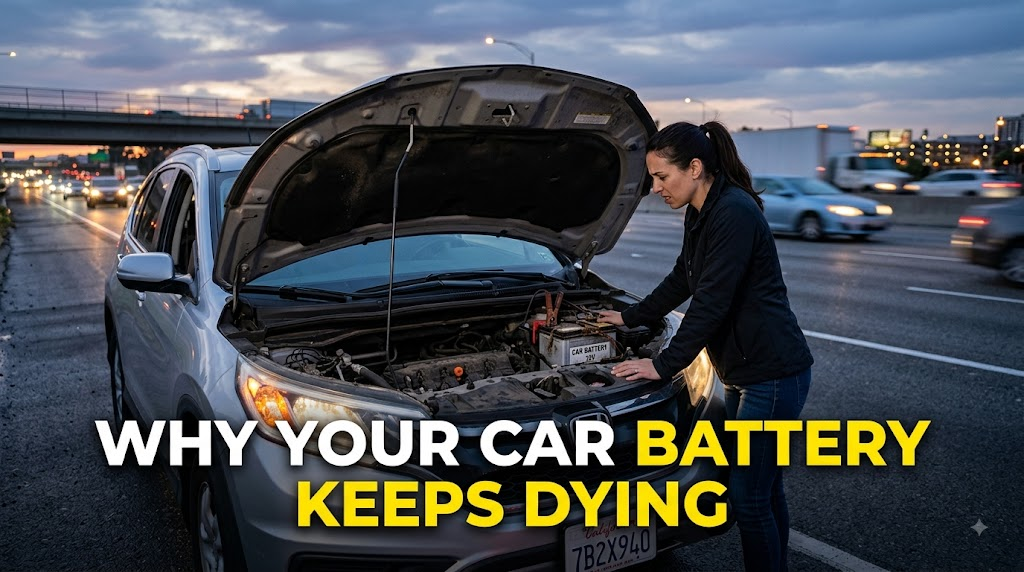
A car battery that repeatedly dies can be more than an inconvenience. It may leave you stranded, make your vehicle unreliable, and signal an underlying electrical or charging problem. While an aging battery is a common cause, it is not always the real reason your car will not start. Understanding what drains a battery can help you avoid replacing a good battery unnecessarily and identify when further inspection is needed.
If you are researching batteries plus bulbs plano because you need help choosing a replacement battery, it is useful to understand why batteries fail in the first place. A properly selected replacement can solve the problem when the battery has reached the end of its service life, but repeated battery failure may require looking at the vehicle’s charging system, electrical accessories, or driving habits as well.
How a Car Battery Works
A vehicle battery stores electrical energy and supplies the strong burst of current needed to start the engine. Once the engine is running, the alternator generally supplies electrical power to the vehicle’s systems while also replenishing the battery.
This means the battery and alternator perform different but connected jobs. The battery provides starting power, while the alternator helps maintain the vehicle’s electrical supply and restores energy used during starting.
When either component is not functioning correctly, the battery may repeatedly become discharged. For example, a healthy battery can still go dead if the alternator is not charging it adequately. Likewise, an alternator may be working properly while an old battery can no longer hold a sufficient charge.
Common Reasons Your Car Battery Keeps Dying
1. The Battery Is Old
One of the most straightforward explanations is battery age. Automotive batteries have a limited service life, and their ability to hold and deliver electrical energy gradually declines.
As a battery ages, internal chemical changes can reduce its capacity. You may notice that the engine cranks more slowly, especially after the vehicle has been parked for several hours. Eventually, the battery may fail to provide enough power to start the engine.
Age alone does not always prove that a battery needs replacement, but an older battery that repeatedly loses its charge deserves attention.
2. Something Is Draining the Battery
A battery can discharge when an electrical component continues consuming power after the vehicle is turned off. This is sometimes called a parasitic drain.
Common examples can include a trunk, glove-box, or interior light that remains on, an accessory that does not shut down properly, or an aftermarket electronic device that continues drawing power while the car is parked.
Modern vehicles contain many electronic modules, so identifying an abnormal electrical drain can sometimes require professional diagnostic equipment. Simply replacing the battery may not fix the underlying problem if the drain remains.
3. The Alternator Is Not Charging Properly
The alternator is essential for maintaining the vehicle’s electrical system while the engine runs. If it is malfunctioning, the battery may not receive adequate charging.
Possible signs of a charging-system issue include a battery or charging warning light on the dashboard, dimming lights, electrical accessories behaving unusually, or a vehicle that repeatedly needs a jump-start.
If a replacement battery becomes discharged again soon after installation, the charging system should be considered rather than assuming the new battery is defective.
4. Short Trips Can Leave the Battery Undercharged
Your driving pattern can also affect battery condition. Starting an engine requires a significant amount of electrical energy. During a very short trip, the alternator may not have enough operating time to fully restore the energy used during starting.
Occasional short trips are not necessarily a problem for a healthy vehicle, but frequent short-distance driving can contribute to an undercharged battery, particularly when combined with heavy use of headlights, climate controls, heated seats, entertainment systems, or other electrical accessories.
If your vehicle is primarily used for short journeys around Plano, paying attention to battery condition can be especially useful.
5. Extreme Temperatures Can Affect Battery Performance
Temperature can influence battery performance. Cold conditions can reduce the battery’s ability to deliver starting power, while high temperatures can accelerate battery deterioration.
Plano drivers may experience substantial heat during summer. Heat can contribute to the aging of a vehicle battery, which means a battery that has already experienced several years of service may become more likely to fail when conditions are demanding.
Temperature alone does not necessarily mean a battery needs replacement. However, it can expose weaknesses in a battery that is already aging or partially degraded.
6. Corroded or Loose Connections
The battery itself may be capable of holding a charge, but poor electrical connections can interfere with current flow.
Corrosion around battery terminals, loose cable connections, or damaged battery cables can create resistance and make starting more difficult. In some cases, a driver may mistake a connection problem for a failed battery.
Battery terminals should be inspected carefully. Because automotive electrical systems can produce significant current, avoid experimenting with unfamiliar electrical components or attempting repairs without understanding the proper safety procedures.
Signs Your Battery May Need Replacement
A battery may be approaching the end of its useful life if you notice repeated starting problems, slower-than-normal engine cranking, frequent need for jump-starts, or electrical symptoms that occur particularly when starting the vehicle.
Another important warning sign is a battery that repeatedly loses its charge even after being properly recharged. If testing shows that the battery cannot retain adequate capacity, replacement may be appropriate.
However, symptoms alone cannot always distinguish a weak battery from a charging-system fault or electrical drain. Testing is often the better way to determine what is actually happening.
How to Choose the Correct Replacement Battery
Replacing a car battery is not simply a matter of choosing the largest battery that fits under the hood. The replacement should match the vehicle’s specifications.
Start by checking the owner’s manual or the information provided for your vehicle. Important factors can include the battery group size, required starting performance, terminal configuration, physical dimensions, and battery technology.
Some vehicles use conventional flooded lead-acid batteries, while others may require or be designed for technologies such as AGM batteries. Vehicles equipped with start-stop systems may have specific battery requirements.
If you are comparing options through batteries plus bulbs plano, bring your vehicle’s year, make, model, engine information, and existing battery details when possible. Accurate vehicle information makes it easier to identify a compatible replacement rather than relying only on appearance.
Do Not Ignore the Charging System
One of the biggest mistakes drivers make is replacing a repeatedly dead battery without investigating why it keeps happening.
If a relatively new battery repeatedly goes flat, ask whether the alternator is charging correctly. Also consider whether an electrical accessory is draining power while the vehicle is parked.
A professional inspection can be particularly useful when the problem is intermittent. Electrical faults may not appear every time the vehicle is tested, making systematic diagnosis more valuable than replacing components based solely on symptoms.
Battery Maintenance Can Help Prevent Problems
Although no maintenance routine can make a battery last indefinitely, sensible habits can reduce avoidable problems.
Keep battery terminals and connections clean and secure, and pay attention to warning lights or changes in starting performance. If the vehicle will sit unused for an extended period, consider the manufacturer’s recommendations for maintaining the battery.
It is also worth addressing small electrical problems promptly. A light that remains on after the vehicle is locked may seem minor, but continuous electrical consumption can eventually discharge the battery.
Regular vehicle inspections can also help identify charging-system or cable problems before they result in a no-start situation.
What to Do When Your Car Battery Dies
If your battery is dead, first consider safety. Park in a safe location and avoid working around traffic or other hazards.
If you know how to use jumper cables correctly, follow the vehicle manufacturer’s instructions and connect the cables in the correct sequence. Many modern vehicles have specific jump-start points, so the owner’s manual should be consulted rather than assuming every vehicle uses the same procedure.
A jump-start only restores temporary starting capability. It does not automatically repair a weak battery, charging problem, or electrical drain. If the vehicle repeatedly needs a jump-start, the underlying cause should be investigated.
If the battery is physically damaged, leaking, swollen, or otherwise unsafe, do not attempt to handle it casually. Automotive batteries contain corrosive materials and can present electrical hazards. Professional assistance is the safer choice when you are uncertain.
When Professional Battery Assistance Makes Sense
There are situations where replacing a battery yourself may be straightforward, but professional assistance can save time when the cause is unclear.
For example, if a new battery becomes discharged within a short period, the issue may involve the alternator, starter circuit, wiring, or an electrical accessory. If the vehicle has advanced electronics or a battery-management system, correct replacement and installation may also require additional procedures.
A reliable battery and lighting provider can be useful when you need help identifying the correct automotive battery, comparing compatible battery types, or determining whether the problem appears to involve the battery itself.
This is also where local search can be practical. Drivers in Plano may look for batteries plus bulbs plano when they need a convenient source for battery-related products and want to understand their replacement options before making a purchase.
Why Correct Diagnosis Matters
Replacing a battery unnecessarily can solve the immediate no-start problem while leaving the actual cause untouched. For example, if a faulty alternator is failing to recharge the battery, the replacement battery may eventually become discharged as well.
Likewise, an electrical drain can continue operating in the background even after a new battery is installed.
The goal should therefore be more than simply getting the engine started once. The goal is to identify why the battery lost its power and address the underlying issue whenever possible.
Final Thoughts
A car battery that keeps dying may be caused by an aging battery, parasitic electrical drain, charging-system problem, poor connections, short-trip driving, or demanding environmental conditions. Before buying another battery, consider whether the battery itself has failed or whether another part of the vehicle is causing repeated discharge. If you need help evaluating replacement options or understanding the problem, Battery Rescue LLC can be a relevant resource to consider alongside other qualified automotive battery professionals. With the right diagnosis and a properly matched replacement when necessary, you can reduce unexpected starting problems and keep your vehicle more dependable.