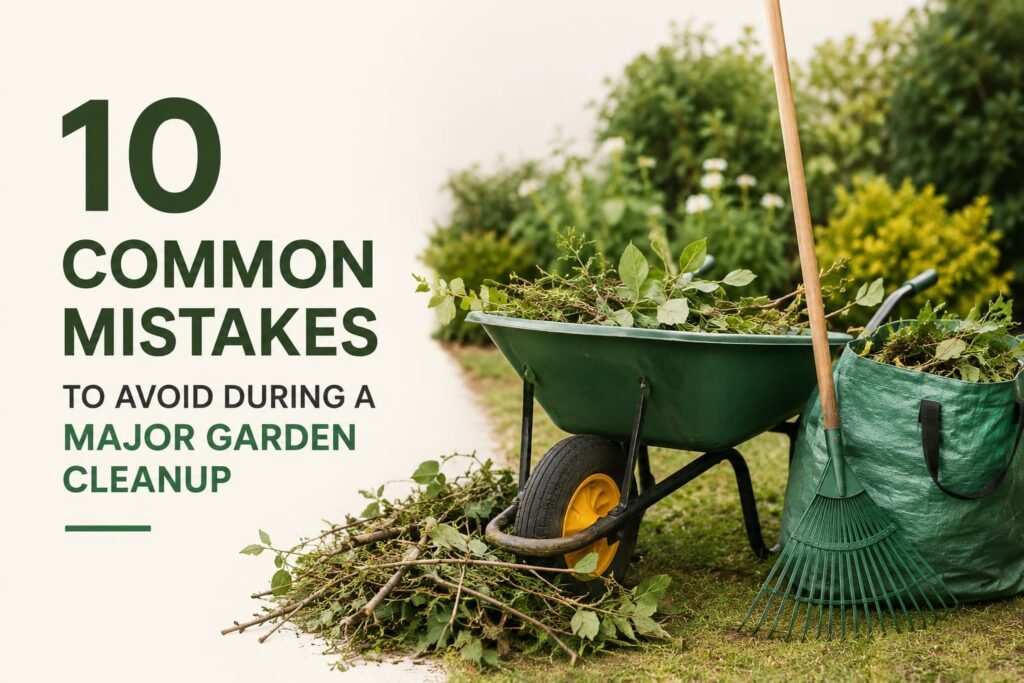
A major garden cleanup can seem like a simple weekend project. Start pruning, pull out the weeds, remove unwanted plants and clear away the debris. But once the work gets underway, the amount of material being removed can become surprisingly large.
Branches, weeds, soil, old pots, broken garden furniture and landscaping materials can quickly fill the available space. Without a plan, the cleanup can become harder to manage than expected.
The good news is that most common problems are easy to avoid. A little planning before the first branch is cut can make the job more organised and reduce the stress of dealing with the waste afterwards.
Planning Mistakes That Make Garden Cleanups Harder
1. Starting Without a Plan
It is tempting to begin clearing whatever looks easiest, but this can create unnecessary work. Before starting, walk around the garden and identify what needs to be removed, what should stay and what could potentially be reused.
Breaking the project into smaller areas can also make a large cleanup feel more manageable.
2. Underestimating the Amount of Waste
A garden may not look particularly large, but pruning trees, removing overgrown plants or changing landscaping can produce a substantial amount of material.
Think about the likely volume before beginning. A few bags of leaves are very different from several piles of branches, soil and old landscaping materials.
3. Forgetting About Non-Green Garden Waste
Garden cleanups are not always limited to leaves and branches. Old pots, broken outdoor furniture, timber, plastic items, pavers and leftover landscaping materials can also end up being removed.
Making a list of these items beforehand helps you understand the full scope of the cleanup rather than planning only for green waste.
Waste-Sorting Mistakes to Avoid
4. Putting Everything Into One Pile
Mixing every type of waste together can make disposal more difficult. Where practical, separate green waste, reusable items, recyclable materials and general waste as you work.
Some materials may also have specific disposal requirements. If you are unsure about an item, check the relevant local requirements before putting it out for disposal.
5. Throwing Useful Materials Away Too Quickly
Not everything removed from a garden is necessarily rubbish. Healthy plants may be suitable for replanting, while usable pots, timber, furniture or other items could potentially be reused or passed on.
The goal is not to keep everything. It is simply to take a moment to consider whether an item still has a useful purpose before sending it away.
6. Ignoring the Scale of the Cleanup
A major garden project can generate considerably more waste than a normal household bin can accommodate. This is particularly true when a cleanup involves heavy pruning, landscaping work or the removal of old outdoor structures.
For larger projects, researching suitable Adelaide waste disposal options before starting can make it easier to manage the material as it accumulates.
7. Leaving Waste Scattered Around the Property
Piles of branches and loose debris can quickly make a garden difficult to move around. They can block paths, create trip hazards and spread across the property in windy conditions.
Instead of leaving waste wherever it is removed, use a suitable temporary collection area where practical. Keeping everything together makes the final removal stage much easier.
Cleanup and Disposal Mistakes That Cause Problems
8. Waiting Until the End to Think About Removal
One of the most common mistakes is treating waste removal as a final task. By then, several days of pruning, clearing and landscaping may have produced a much larger pile than expected.
For a substantial project, it is better to think about removal before the work begins. Planning Brisbane garden waste removal in advance, for example, can help homeowners organise where material will go as the cleanup progresses.
9. Forgetting About Unexpected Waste
Garden projects do not always go according to the original plan. Once overgrown areas are cleared, homeowners may discover old fencing, buried rubbish, damaged landscaping materials or additional soil and debris.
Allow some room for unexpected waste when planning the cleanup. This is particularly useful for older properties where previous garden work may have left materials beneath dense vegetation.
10. Choosing a Disposal Option Without Checking What It Accepts
Before arranging disposal, check what types of waste are accepted and whether there are any restrictions. Different materials can have different handling requirements, and some items should not be treated as ordinary garden waste.
It is also worth considering the amount of material involved, how it will be contained and whether there is enough access for collection. For a substantial property cleanup, researching Gold Coast waste removal options beforehand can help you choose an approach that suits the type and quantity of waste being produced.
Conclusion
A successful garden cleanup is about more than cutting back plants and making the property look tidy. The material removed from the garden also needs to be sorted, contained and disposed of appropriately.
Planning the job, estimating the likely amount of waste and separating different materials can prevent many common problems. Most importantly, think about waste removal before the cleanup begins rather than waiting until the garden is already covered in debris.
A little preparation can turn a difficult garden cleanup into a much more straightforward project.