A deck should feel solid and secure under your feet. When a board starts moving, squeaking, or bouncing as you walk across it, it is usually a sign that something needs attention. Loose deck boards are more than an annoyance—they can create tripping hazards, allow moisture to reach the structure underneath, and sometimes indicate a larger problem with the deck’s framing or fasteners. The good news is that many loose boards can be repaired with a few basic tools and the right approach.
If you’re dealing with damaged or unstable decking and the problem extends beyond a single board, professional Deck Repair in Greenville can help identify the underlying cause before a small issue becomes a costly structural repair. Whether you plan to handle the work yourself or call a professional, understanding why deck boards become loose is the first step toward fixing them properly.
Why Do Deck Boards Become Loose?
Deck boards are constantly exposed to changing weather conditions. Rain, sunlight, humidity, freezing temperatures, and repeated foot traffic can all affect the wood over time. As wood absorbs and releases moisture, it naturally expands and contracts. That movement can gradually loosen screws and nails.
Some common causes include:
- Loose, rusted, or damaged fasteners
- Nails that have worked their way upward
- Wood that has shrunk or warped
- Rot around the fastening points
- Improperly installed screws or nails
- Damaged or weakened joists beneath the boards
- Excessive moisture exposure
- Normal wear and tear from years of use
Before repairing a loose board, take a moment to determine why it is moving. Simply adding another screw may not solve the problem if the wood or supporting joist is already deteriorated.
Inspect the Deck Before Making Repairs
Start by walking slowly across the deck and paying attention to movement. Look for boards that bounce, squeak, shift sideways, or sit higher or lower than neighboring boards.
Check the surface for visible cracks, splinters, popped fasteners, darkened areas, and soft spots. You can gently press suspicious areas with a screwdriver. If the tip easily sinks into the wood, the board may have rot.
It is also important to inspect the framing underneath the deck if it is safely accessible. A loose surface board may actually be caused by a weakened joist. If several boards in the same area are moving, the problem could be larger than a simple fastening issue.
How to Fix a Loose Deck Board
1. Remove Damaged or Popped Fasteners
If a nail or screw is sticking above the deck surface, remove it carefully. Do not simply hammer a damaged fastener back into place without checking the wood underneath.
For nails, use a pry bar or claw hammer carefully to avoid damaging the surrounding board. For screws, use the appropriate screwdriver or drill bit. If the screw head is stripped, you may need a screw extractor.
Once the fastener is removed, inspect the hole. A clean, solid hole can often accept a new fastener, while a deteriorated hole may require a different repair approach.
2. Replace Old Nails With Deck Screws
Older decks are often secured with nails. Over time, nails can loosen as the wood expands and contracts.
Replacing loose nails with exterior-rated deck screws is often a more reliable solution. Choose screws designed specifically for outdoor decking and make sure they are long enough to pass through the board and securely penetrate the joist beneath it.
Position the replacement screw near the original fastening point, but avoid placing it too close to the edge of the board. Screwing too close to an edge can cause splitting.
3. Refasten the Board to the Joist
If the board itself is still in good condition, press it firmly into its proper position before fastening it.
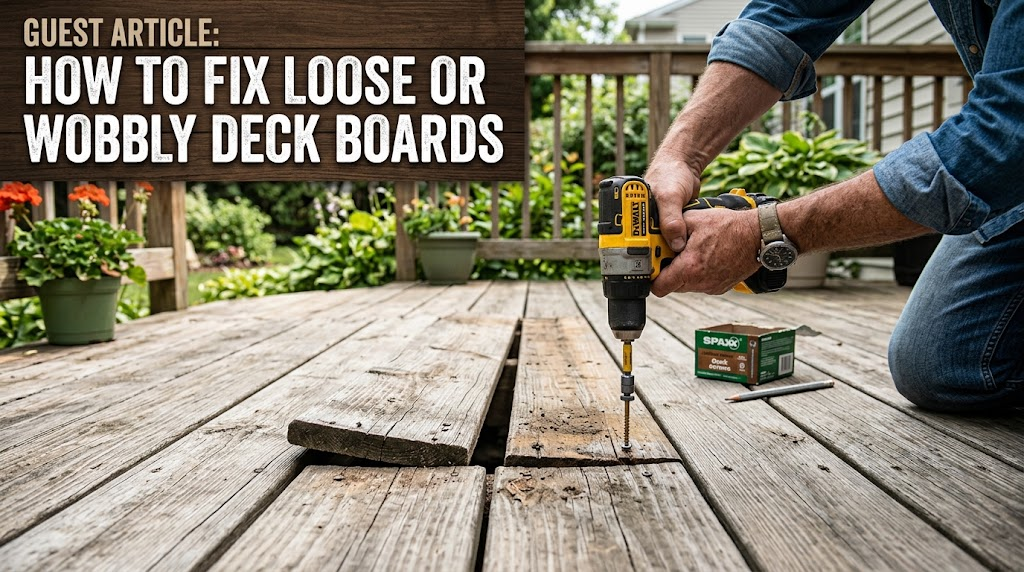
Use a drill or impact driver to install exterior-rated screws through the board and into the supporting joist. The screw head should sit flush with, or slightly below, the surface without being driven excessively deep.
Overdriving the screw can damage the wood fibers and create a place where water collects. The goal is a secure connection without crushing the decking.
4. Replace Rotten Boards
A loose board that is soft, cracked, or severely deteriorated should generally be replaced rather than repeatedly refastened.
Remove the damaged board carefully, especially if it is connected to neighboring boards. Once removed, inspect the joists underneath. If the supporting wood is also soft or rotten, replacing only the surface board will not provide a lasting repair.
Choose replacement decking that is similar in thickness and width to the existing boards. Allow the appropriate spacing between boards so rainwater can drain and the wood has room to expand and contract.
What If the Joist Is Damaged?
Sometimes the board is not the real problem. If the joist beneath it has rot, splitting, or significant structural damage, the board may continue to move even after new screws are installed.
Minor issues may sometimes be reinforced, but extensive deterioration may require replacement or more substantial structural work. Because joists are part of the deck’s load-bearing system, structural damage deserves extra caution.
If you notice multiple loose boards, sagging sections, significant movement, or damaged framing, it is better to have the deck evaluated rather than relying on surface-level repairs.
Fixing Squeaky Deck Boards
A squeak does not always mean a board is dangerously loose, but it can indicate movement between the decking and framing.
Start by locating exactly where the sound originates. Have someone walk across the deck while you observe the board movement, if possible. Once you identify the problem area, check whether the fasteners are loose.
Adding an appropriate exterior-rated screw can sometimes eliminate the movement. However, if the squeak is caused by damaged framing, gaps between components, or deteriorated wood, simply adding more fasteners may not address the real issue.
When Professional Deck Repair Makes Sense
Some deck repairs are straightforward, but not every problem should be treated as a DIY project. If you’re dealing with widespread rot, unstable railings, damaged stairs, sagging sections, or deteriorated structural supports, professional assessment is the safer choice.
A qualified deck repair service in Valhalla can inspect the visible decking as well as the underlying structure and determine whether individual boards need repair or whether a larger section requires attention.
Professional help can also be valuable when matching replacement boards, identifying hidden moisture damage, or determining whether the deck remains structurally sound.
How to Prevent Deck Boards From Becoming Loose
Once you have repaired the problem, regular maintenance can help prevent it from returning.
Keep the deck reasonably clean so dirt and organic debris do not trap moisture against the wood. Remove leaves, branches, and standing water whenever possible. Inspect the deck at least once or twice a year, paying particular attention to fasteners, cracks, joints, stairs, and areas that stay damp.
Applying an appropriate exterior wood stain or sealer can also help protect decking from moisture and weather exposure. However, coatings are not a substitute for repairing rotten or structurally damaged wood.
Avoid dragging heavy furniture across the deck, and address small problems when you first notice them. A popped screw or slightly loose board is much easier to deal with than widespread deterioration.
Safety Tips When Repairing Deck Boards
Deck repair involves tools, elevated surfaces, and potentially weakened structures, so safety should come first. Wear safety glasses and work gloves when removing fasteners or cutting wood.
If you’re working on an elevated deck, use appropriate fall protection and make sure ladders are positioned securely. Be especially cautious when inspecting underneath the deck because damaged framing may not safely support weight.
Before using power tools, check that the correct bits and blades are installed and keep hands clear of cutting areas. If the deck appears unstable, avoid walking across questionable sections until they have been professionally evaluated.
Conclusion
Loose or wobbly deck boards are usually easier to fix when you address them early. Start by identifying the cause, inspect the board and joist underneath, remove damaged fasteners, and use properly rated exterior screws when the wood is still structurally sound. If a board is rotten, replace it rather than trying to secure deteriorated wood. Most importantly, remember that repeated movement or widespread damage can point to a deeper structural problem.
With regular inspections and timely maintenance, you can keep your deck safer, more comfortable, and better prepared for years of outdoor use. If you need help with more extensive repairs, working with an experienced company such as JLL Painting can make the process easier while ensuring problem areas receive the attention they need.
Frequently Asked Questions
1. Can I fix a loose deck board without replacing it?
Yes, if the board is still solid and free from significant rot or cracking. Removing loose fasteners and installing properly sized exterior-rated deck screws can often secure it effectively.
2. Should I use nails or screws for deck boards?
Exterior-rated deck screws are generally a practical choice for many deck repairs because they provide a secure connection and can be removed more easily for future maintenance. Always use fasteners appropriate for your decking material and environment.
3. How do I know if a loose deck board is rotten?
Look for soft areas, deep cracks, discoloration, crumbling wood, or a screwdriver that easily penetrates the surface. If the board feels spongy under normal foot pressure, it may be deteriorated and should be inspected closely.
4. When should I call a professional for a loose deck board?
Call a professional if multiple boards are loose, the deck moves noticeably, joists or beams appear damaged, railings or stairs are unstable, or you find extensive rot. These signs may indicate a structural problem rather than a simple loose-board repair.