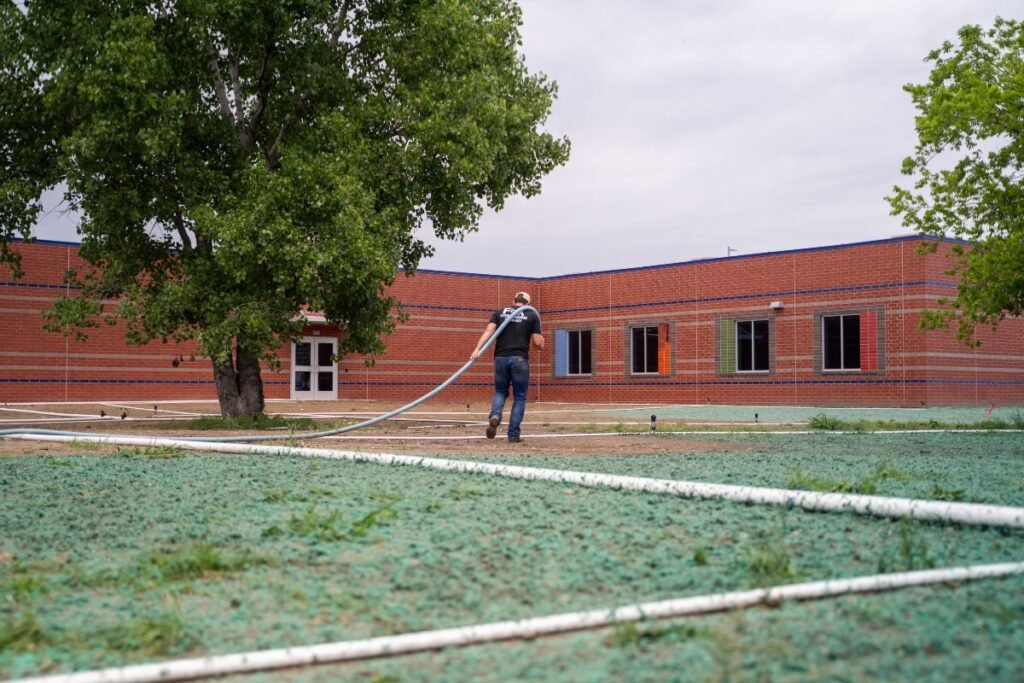
Hydroseeding North Texas
Choosing the right season can make a significant difference when establishing a new lawn in North Texas. Grass seed needs suitable temperatures, moisture, sunlight, and soil conditions to germinate and develop healthy roots. The region’s hot summers, occasional freezing conditions, and unpredictable rainfall can create challenges when timing a hydroseeding project. Hydroseeding can provide several advantages by combining seed, water, mulch, and other materials in one application. However, even a well-prepared slurry needs to be applied during a period when the selected grass can establish successfully.
Contractors need to consider the type of grass being planted, recent weather patterns, soil temperature, irrigation availability, and the expected conditions during the first few weeks after application. Hydroseeding North Texas properties requires more planning than simply selecting a convenient installation date. Spring and fall are often favorable periods for many lawn establishment projects because temperatures can be more manageable than during extreme summer heat. That does not mean every property should automatically be hydroseeded during those seasons. A professional evaluation can help determine the most suitable application window for the specific lawn.
Why Seasonal Timing Matters for Hydroseeding
Grass seed responds strongly to environmental conditions, particularly temperature and moisture. When conditions are favorable, seeds can germinate more consistently and young plants have a better opportunity to develop strong root systems. If hydroseeding is performed during extreme heat or when moisture cannot be maintained, establishment may become slower and more demanding. Heavy rainfall can create a different problem by moving seed and mulch before roots have developed. Timing the project around realistic weather conditions can therefore reduce unnecessary stress during the most vulnerable stage of lawn development.
The timing decision should also account for what will happen after germination begins. A lawn may show green growth relatively quickly, but that does not mean the turf is fully established. Young roots need additional time to penetrate the soil and become strong enough to tolerate mowing, foot traffic, and environmental stress. Contractors should consider the entire establishment period rather than focusing only on the application day. A successful schedule provides suitable conditions not just for germination, but also for the weeks of growth that follow.
Spring Hydroseeding in North Texas
Spring can be an attractive time for hydroseeding because temperatures generally become more favorable for active grass growth after winter. Increasing daylight and moderate conditions can support germination when the selected grass variety is suited to spring establishment. Spring also gives homeowners an opportunity to establish turf before the most intense summer heat arrives. However, spring weather can change quickly, and periods of heavy rainfall may create runoff across newly prepared soil. Careful monitoring of weather conditions remains important even during an otherwise favorable season.
Another advantage of spring application is that newly developing turf can have time to establish before facing the most demanding summer conditions. A healthy root system is better positioned to handle heat and moderate periods of dryness than newly germinated grass. Homeowners should still have an irrigation plan in place because rainfall is not always consistent enough to provide all the moisture young turf needs. Mowing and traffic should also be managed carefully during early development. With appropriate preparation and maintenance, spring can provide a useful establishment window for many North Texas lawns.
Summer Hydroseeding: Benefits and Challenges
Summer is generally the most demanding season for establishing a new lawn in North Texas because high temperatures can increase evaporation and place stress on young plants. Hydroseeding during very hot conditions may require more careful irrigation and monitoring than applications performed during milder weather. The surface of the soil can dry rapidly, especially in exposed areas receiving full afternoon sunlight. If moisture is not maintained properly, germination may become uneven or delayed. Contractors should therefore evaluate summer applications carefully rather than assuming that more frequent watering alone will solve every problem.
Summer hydroseeding may still be possible when project circumstances require it and when the selected grass and site conditions are appropriate. The availability of reliable irrigation becomes especially important because newly planted seed cannot depend entirely on unpredictable rainfall. Application timing within the day may also be considered to reduce unnecessary exposure to extreme conditions, although the broader weather pattern remains more important than the exact hour of spraying. Soil preparation and mulch selection can also influence moisture retention. Professional guidance is valuable when a summer installation cannot reasonably be postponed.
Fall Is Often a Strong Establishment Window
Fall can provide favorable conditions for many North Texas lawn establishment projects because temperatures generally become more moderate after the peak summer heat. Cooler conditions can reduce moisture loss while allowing suitable grass varieties to continue developing roots. Depending on the selected turf, fall establishment may provide a useful period for root growth before winter conditions become more restrictive. The exact timing still matters because applying too late may leave young plants with insufficient time to develop. Contractors should select the seed mixture and application schedule according to the specific grass being used.
One reason fall can be appealing is that the pressure from extreme summer temperatures is reduced. Young turf may be able to focus more energy on root development when daytime conditions are less severe. However, North Texas weather can remain unpredictable during autumn, so irrigation should not be abandoned simply because temperatures are cooler. The soil still needs appropriate moisture during germination and early establishment. A well-planned fall application combines seasonal conditions with active monitoring and appropriate maintenance.
Winter Hydroseeding Considerations
Winter is generally less favorable for establishing warm-season turf because many grasses become dormant or grow very slowly during colder conditions. Seed may remain inactive until temperatures become more suitable, which can extend the establishment timeline. Cold weather can also make it more difficult to achieve the rapid growth some property owners expect after hydroseeding. Applying seed during a period when the selected grass is unable to grow actively may not provide the desired results. Contractors should therefore understand the biological requirements of the chosen grass before scheduling winter work.
Winter does not necessarily make every hydroseeding project impossible, because grass varieties and weather conditions differ. Some cool-season grasses may have different establishment requirements from warm-season varieties commonly used in the region. However, homeowners should not assume that any seed can be applied successfully at any time of year. The provider should explain the expected germination behavior and what may happen if temperatures remain too low. Setting realistic expectations can prevent disappointment and help determine whether postponing the project would be more practical.
How Soil Temperature Influences Germination
Air temperature receives a lot of attention when discussing lawn establishment, but soil temperature is equally important. Seeds respond to the conditions directly surrounding them, and different grass species have different temperature ranges in which they germinate most effectively. A warm afternoon does not necessarily mean that the soil has reached the appropriate conditions for the selected seed. Contractors should consider recent weather patterns and the specific requirements of the seed mixture. This approach is more reliable than choosing an application date based only on the calendar.
Soil temperature can also influence how quickly seedlings develop after germination. When conditions are suitable, roots and shoots can progress more consistently, helping the lawn move toward establishment. If temperatures are outside the preferred range, development may slow even when moisture is available. This is one reason experienced hydroseeding professionals evaluate the entire site before recommending a schedule. Combining soil conditions with weather forecasts and grass characteristics creates a more informed timing decision.
Rainfall and Irrigation Planning
Rainfall can be helpful after hydroseeding, but relying entirely on natural precipitation is risky. North Texas can experience periods of both heavy rainfall and dry weather, making irrigation planning an important part of lawn establishment. Too little moisture can slow germination, while excessive rainfall can create runoff and disturb freshly applied seed and mulch. The goal is to maintain suitable moisture without saturating the soil or encouraging erosion. Homeowners should understand their property’s drainage and irrigation capabilities before the hydroseeding application begins.
A reliable watering strategy should also change as the lawn develops. During early germination, the seedbed may require more consistent moisture than an established lawn. As roots become deeper and stronger, watering can generally be adjusted according to the grass variety, weather, and soil conditions. Property owners should monitor the lawn rather than blindly following a fixed schedule throughout the season. Professional aftercare instructions can help homeowners understand how to respond when rainfall or temperature conditions change unexpectedly.
Choosing the Right Grass for the Season
Seasonal timing and seed selection are closely connected. A grass variety that performs well during one part of the year may have different establishment requirements from another species. Contractors should consider whether the selected grass is warm-season or cool-season and how it responds to North Texas temperatures. Sunlight, soil type, drainage, traffic, and maintenance expectations should also influence the selection. The goal is to choose a turf variety that can both establish successfully and remain healthy after the initial growing period.
Seed selection should not be based solely on how quickly a particular grass is advertised to grow. Long-term durability, drought tolerance, shade tolerance, appearance, mowing requirements, and local adaptability can be equally important. A professional provider can help compare these factors based on the property’s intended use. For example, a heavily used family lawn may require different characteristics from a decorative area that receives limited traffic. Matching the seed to the site can improve the value of the entire hydroseeding investment.
How to Choose a Hydroseeding Company
When searching for a hydroseeding company near me, homeowners should evaluate experience and process rather than choosing solely according to location or price. Ask potential providers how they determine the best application season and what factors they consider before recommending a date. A knowledgeable contractor should discuss soil preparation, seed selection, irrigation, drainage, weather, and expected establishment time. They should also explain what the homeowner needs to do after the slurry has been applied. Clear answers can reveal whether the provider is taking a site-specific approach.
It is also useful to ask whether the quoted service includes soil preparation or only the hydroseeding application. Poorly prepared soil can limit results regardless of the season, so understanding the complete scope of work is important. Homeowners can also request information about the seed mixture, mulch, fertilizer, and recommended maintenance procedures. Written details make it easier to compare providers and understand what is included in the project. A reputable contractor should set realistic expectations instead of promising a perfect lawn on an exact schedule.
Preparing Your Lawn Before Hydroseeding
Proper preparation can improve the chances of successful establishment regardless of the season. The soil should be evaluated for compaction, grading, drainage, debris, and other conditions that could interfere with root development. Construction activity or heavy equipment may leave soil compacted, while older lawns may contain thatch or unwanted vegetation that needs to be addressed. Depending on the site, soil amendments may also be appropriate. Preparing the seedbed gives the slurry a stable surface and helps create conditions where developing roots can grow effectively.
Drainage should receive special attention because water needs to move through the property without washing away seed or creating persistently saturated areas. Slopes may require additional erosion-control measures when runoff is likely to be significant. The irrigation system should also be inspected before the application so that watering can begin promptly afterward. These preparation steps may seem separate from seasonal timing, but they directly affect how well the lawn responds to the chosen planting window. A well-prepared site can make better use of favorable weather conditions.
Post-Hydroseeding Care Through the Seasons
After application, the lawn should be monitored closely as germination begins. Watering, traffic control, mowing, and weed management all contribute to successful establishment. Homeowners should avoid excessive foot traffic until roots have developed sufficiently to anchor the turf. Mowing should begin at an appropriate stage and height for the selected grass rather than according to a predetermined date. Regular observation helps identify dry areas, erosion, poor drainage, or uneven growth before these issues become more difficult to correct.
Seasonal changes may require adjustments to the maintenance routine even after the lawn becomes established. Summer may require greater attention to heat and water management, while cooler periods can change growth rates and irrigation needs. Established turf is more resilient than young seedlings, but it still benefits from maintenance suited to its grass type and local conditions. A long-term lawn care plan should therefore extend beyond the initial hydroseeding project. Good maintenance protects the investment and helps the lawn remain healthy through changing North Texas weather.
Final Thoughts
The best time for Hydroseeding North Texas lawns depends on more than choosing spring or fall from a calendar. Grass variety, soil temperature, rainfall, irrigation, soil condition, sunlight, and upcoming weather all influence whether a particular application window is suitable. Spring and fall can offer favorable conditions for many projects, while summer and winter may require more careful planning based on the selected grass. A professional site assessment can help determine when conditions are most likely to support successful germination. The objective should always be to create a favorable establishment period rather than simply selecting the earliest available installation date.
For homeowners planning a new lawn, working with an experienced hydroseeding company near me can simplify the timing decision and provide practical guidance about preparation and aftercare. The best results come from combining appropriate seasonal timing with suitable seed, proper soil preparation, reliable irrigation, and consistent maintenance. Hydroseeding can be an efficient way to establish attractive turf, but the process still depends on biological conditions that cannot be rushed. By planning around North Texas weather and the specific requirements of the lawn, homeowners can give their new grass a stronger opportunity to develop into healthy, durable turf.