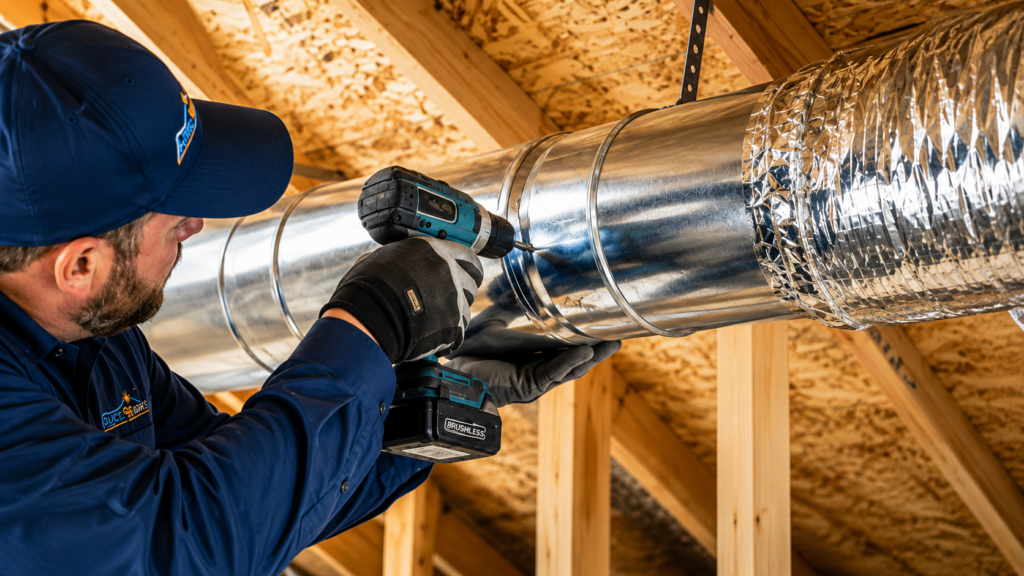
A dependable heating and cooling system does more than produce warm or cool air. It must also distribute that air efficiently to every room in the home. That is where duct repair becomes important. Your ducts carry conditioned air from the HVAC unit through ceilings, walls, attics, basements, crawl spaces, and other areas before it reaches supply registers. When ductwork is damaged, disconnected, leaking, crushed, poorly insulated, or incorrectly supported, your home may become uncomfortable even when the HVAC equipment appears to be working properly.
Professional duct repair can help correct airflow problems that cause rooms to feel too warm in summer or too cold in winter. It can also reduce wasted energy, improve HVAC performance, and help create a more balanced indoor environment. Homeowners often overlook ducts because much of the system is hidden, but air-delivery problems can have a major impact on daily comfort and utility costs.
If you notice weak airflow, temperature differences between rooms, unusual vent noises, or long heating and cooling cycles, duct repair may be the right next step. A detailed inspection can help identify the source of the problem and determine whether your system needs sealing, reconnection, insulation work, or replacement of a damaged duct section.
Why Duct Repair Is Important
Duct repair matters because your HVAC equipment depends on an efficient air path. A furnace, heat pump, or air conditioner can operate correctly, but comfort may still suffer when air escapes before reaching the intended room. Leaking ducts can send heated or cooled air into an attic, crawl space, wall cavity, basement, or garage instead of your living area.
This wasted air forces the system to work harder. As a result, it may take longer to reach the thermostat setting, consume more energy, and place more demand on important HVAC components. Timely duct repair can help reduce these issues by restoring the path that conditioned air should follow.
Another benefit of duct repair is better temperature balance. Rooms at the end of a duct run, upstairs bedrooms, home offices, additions, and converted spaces often reveal airflow problems first. If one room is consistently uncomfortable while others feel normal, the ductwork serving that room may be leaking, restricted, disconnected, or improperly sized.
Duct repair can also support a cleaner indoor environment. Damaged duct connections may pull dust, attic particles, insulation debris, or crawl-space air into the system. Sealing gaps and repairing damaged areas can help create a more controlled airflow path through the home.
Signs You May Need Duct Repair
One of the clearest signs that duct repair may be needed is uneven heating or cooling. If your thermostat is set correctly but one room remains uncomfortable, the duct system may not be delivering enough air to that area. This can happen during cooling season, heating season, or throughout the year.
Weak airflow from a supply vent is another common concern. You may notice that one vent produces much less air than nearby vents, even when the register is open and the air filter has been changed. In this situation, duct repair can help identify whether the issue is caused by a leak, crushed duct, loose connection, damaged flexible section, or another restriction.
Noisy vents may also point to a ductwork issue. Whistling sounds can occur when air escapes through gaps or poorly sealed joints. Rattling can happen when duct sections are loose. Popping and banging sounds may result from pressure changes, expanding metal, or unstable connections. A duct repair inspection can help locate the cause rather than simply treating the sound as normal HVAC operation.
Higher energy bills can also be a warning sign. If your heating or cooling costs rise without a clear explanation, conditioned air may be escaping through damaged ducts. Duct repair can reduce this waste and help the system operate more efficiently.
Watch for these additional signs:
-
A room that stays hot or cold despite thermostat adjustments
-
Airflow that becomes weaker after attic, basement, or renovation work
-
Visible sagging, torn, bent, or crushed flexible ducts
-
Dust collecting unusually fast around registers
-
Musty or unusual odors near vents
-
Heating or cooling cycles that seem longer than usual
-
Noticeable differences in airflow between nearby rooms
Common Ductwork Problems
Duct repair can address many different types of ductwork damage. One frequent problem is a loose or disconnected joint. Duct connections can weaken over time due to vibration, aging materials, temperature changes, or accidental disturbance. When a joint separates, a significant amount of air can escape before reaching the room it is meant to serve.
Flexible ducts can also become damaged. They are common in attics, crawl spaces, and other tight areas because they can be routed around obstacles. However, flexible ductwork can sag, tear, kink, bend sharply, or become crushed under stored items. Duct repair may involve replacing a damaged flexible section, supporting it correctly, or reconnecting it securely.
Leaks around seams and connections are another major source of energy loss. Even small gaps can allow heated or cooled air to escape into unconditioned areas. Professional duct repair often includes sealing leaks with materials designed for HVAC use, rather than relying on ordinary household tape that may fail over time.
Missing or damaged insulation can also affect duct performance. Ducts located in attics, garages, basements, or crawl spaces may lose energy when insulation is inadequate. During hot weather, cooled air can warm up before reaching the room. In cold weather, heated air can lose warmth as it travels through unconditioned areas. Duct repair can include restoring or improving insulation where needed.
Poor duct installation may create comfort problems as well. Ducts that are undersized, sharply bent, poorly supported, or routed inefficiently may restrict airflow. In these cases, duct repair can help improve the system’s performance by correcting the affected sections.
Benefits of Professional Duct Repair
Professional duct repair provides a practical way to improve comfort without automatically replacing the entire HVAC system. When leaks, restrictions, and damaged connections are corrected, air can move more effectively through the home. This may improve airflow to rooms that have been difficult to heat or cool.
Better comfort is one of the main advantages of duct repair. A repaired system can help reduce hot and cold spots, making bedrooms, offices, living rooms, and upper floors more comfortable throughout the year. Instead of constantly changing the thermostat, closing vents, or using fans to compensate, you can address the cause of uneven airflow.
Energy efficiency is another valuable benefit. Leaking ductwork wastes conditioned air, which can increase energy use and utility costs. Duct repair helps reduce unnecessary loss by sealing the pathways that should deliver air directly to your living areas.
Duct repair may also reduce strain on HVAC equipment. When airflow is restricted or leaking ducts force the system to run longer, your furnace or air conditioner may work harder than necessary. Restoring proper airflow can support smoother operation and more dependable performance.
A professional evaluation can also provide peace of mind. Instead of guessing why a room is uncomfortable, homeowners can receive a clear explanation of the duct issue and the recommended solution. Whether the concern is a loose connection, damaged insulation, a torn flexible duct, or an airflow restriction, duct repair gives you a focused way to improve the system.
The Duct Repair Process
The duct repair process usually begins with an inspection of accessible ductwork. A technician may examine ducts in the attic, basement, crawl space, garage, utility room, or mechanical area. They may also inspect registers, return grilles, duct connections, insulation, and visible signs of air leakage.
During the inspection, the goal is to identify the actual source of the airflow issue. The technician may find disconnected sections, gaps at joints, crushed flexible ducts, sagging runs, deteriorated insulation, or improperly supported materials. In some cases, the problem is limited to one area. In others, several sections may need attention.
Once the issue is found, the duct repair recommendation should be explained clearly. Minor work may include reconnecting a loose section, sealing a leaking joint, or securing poorly supported ductwork. More extensive duct repair may involve replacing torn or crushed flexible ducts, correcting poor routing, or improving insulation in unconditioned spaces.
Quality duct repair uses materials designed specifically for HVAC applications. Proper connectors, mechanical fasteners, sealing materials, and insulation can create a more durable repair. Ordinary household tape is not recommended as a long-term solution because it may fail when exposed to dust, humidity, vibration, temperature changes, and airflow pressure.
After duct repair is completed, the system may be checked again to confirm that airflow has improved. You should ask where the problem was located, what caused it, which materials were used, and whether any future maintenance is recommended.
Duct Repair vs. Replacement
Not every duct problem requires complete replacement. Duct repair is often the most practical option when damage is limited to a few accessible sections. A torn flexible duct, loose connection, leaking seam, missing insulation, or crushed section can often be corrected without replacing the entire network.
Replacement may be more appropriate when ductwork is old, extensively damaged, poorly designed, or repeatedly causing comfort problems. If the system has widespread leaks, severe deterioration, improper sizing, or multiple restrictions, a larger upgrade may provide better long-term performance.
Home renovations can also change ductwork needs. Adding a room, finishing a basement, converting an attic, or changing the layout of a home can affect heating and cooling demands. Existing ducts may not have enough capacity to serve the updated space. In these situations, duct repair or modification can help improve airflow where it is needed most.
A professional inspection is the best way to determine whether duct repair or replacement makes sense. The goal should be to solve the real comfort problem with an approach that is appropriate for the condition and layout of your home.
How to Prevent Future Duct Problems
While professional duct repair is needed for damaged or disconnected sections, homeowners can help protect their duct systems with regular attention. Keep storage items away from exposed flexible ducts in attics, basements, and crawl spaces. Heavy boxes, tools, and stored belongings can crush ductwork and restrict airflow.
Avoid stepping on flexible ducts when accessing attic storage or performing other home tasks. Flexible materials can bend, tear, or disconnect more easily than metal ducts. If you notice visible damage, arrange duct repair instead of trying to apply temporary household tape.
Change HVAC filters regularly according to your system’s needs and the filter manufacturer’s guidance. A clean filter helps maintain airflow and makes it easier to notice when a duct-related concern is affecting a particular room.
Keep supply registers and return grilles clear of furniture, curtains, rugs, and stored items. Blocked vents can reduce airflow and make ductwork issues more difficult to identify. Open and unobstructed vents allow the HVAC system to perform as intended.
After remodeling, electrical work, plumbing repairs, or insulation projects, pay attention to changes in comfort. Contractors may work near hidden ducts, and even a small disturbance can affect airflow. Duct repair can correct problems caused by shifted or disconnected sections.
Contact Us for Duct Repair
If your home has weak airflow, uneven room temperatures, noisy vents, rising utility costs, or visible duct damage, professional duct repair can help identify the cause. A detailed inspection can reveal leaking joints, damaged flexible ducts, insulation concerns, disconnected sections, and airflow restrictions.
Contact Details
-
Service: Duct Repair
-
Location: Barre, MA
-
Phone: +1 614-756-0077
-
Call for: Airflow concerns, duct leaks, damaged ducts, uneven heating, and uneven cooling
Call +1 614-756-0077 to discuss duct repair services in Barre, MA. You can get help understanding your ductwork concerns and the recommended options for improving airflow, comfort, and HVAC efficiency.
Whether you have one uncomfortable room or several areas with poor airflow, duct repair may be the solution. Contact +1 614-756-0077 today to arrange a professional evaluation.
Improve Home Comfort Today
Duct repair plays an important role in heating and cooling performance. Your duct system should deliver conditioned air efficiently, quietly, and consistently throughout the home. When ducts leak, disconnect, sag, become damaged, or lose insulation, your comfort and energy efficiency may suffer.
Professional duct repair can help restore proper airflow, reduce energy waste, improve room-to-room comfort, and support the reliable operation of your HVAC equipment. Instead of accepting hot bedrooms, weak vents, long cooling cycles, or cold areas during winter, address the source of the problem.
For duct repair in Barre, MA, call +1 614-756-0077. A qualified inspection can help you understand what is affecting your duct system and identify the right next step for a more comfortable home.
Disclaimer: This content on www.dailystorypro.com is for general informational purposes only and is not professional HVAC advice. Consult a qualified HVAC professional to inspect your ductwork and recommend the appropriate repair. Results may vary depending on the condition of your HVAC system and ductwork.