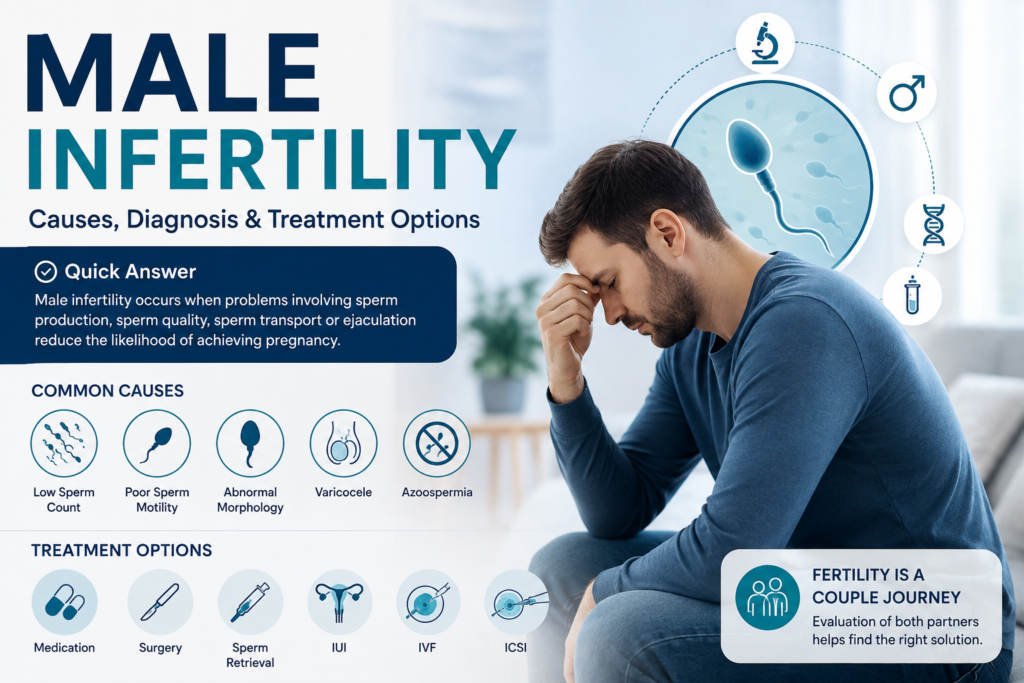
Male infertility is a common part of the fertility picture, yet it is often overlooked when couples begin trying to conceive. Fertility is a shared process, and difficulty conceiving can be related to factors affecting either partner or both partners. A male factor may involve sperm count, movement, shape, sperm production, hormonal signals, anatomy, ejaculation, or other health conditions.
Understanding the possible causes and knowing when to seek an evaluation can help couples move from guesswork to a more structured fertility plan.
What Is Male Infertility?
Male infertility generally refers to difficulty achieving a pregnancy because of factors affecting the male reproductive system. It does not necessarily mean that a man cannot father a child. Fertility can be influenced by several measurable factors, and some causes are treatable.
Sperm quality is one important part of the assessment. A semen analysis typically evaluates sperm concentration, movement, and morphology, along with other semen characteristics. Results should be interpreted in the context of the complete clinical picture rather than as a single pass or fail result.
Common Causes of Male Infertility
Male fertility can be affected by many different conditions.
Problems with sperm production
Some men produce fewer sperm than expected, while others may have very low or absent sperm production. Causes can include hormonal disorders, genetic conditions, infections, testicular problems, previous treatments, or damage to the testes.
Varicocele
A varicocele is an enlargement of veins around the testicle. It can affect the testicular environment and, in some men, may be associated with reduced sperm production or quality.
Hormonal factors
The brain, pituitary gland, and testes work together to regulate sperm production. Hormonal disorders can interfere with this process.
Obstruction
Sperm may be produced normally but prevented from reaching the semen because of a blockage in the reproductive tract.
Lifestyle and environmental factors
Smoking, excessive alcohol use, certain drugs, obesity, heat exposure, and some medications may affect reproductive health. The effect varies between individuals, so lifestyle changes should be considered alongside appropriate medical evaluation.
What Is a Semen Analysis?
A semen analysis is usually one of the first tests used when male infertility is suspected.
The laboratory can assess factors such as sperm concentration, total sperm number, progressive motility, morphology, and semen volume. Because semen parameters can vary from one sample to another, an abnormal result may need confirmation with a repeat test.
A semen analysis is useful, but it does not tell the entire fertility story. A man with a seemingly reasonable sperm count can still have difficulty conceiving, while some men with abnormal parameters can achieve pregnancy.
When Should a Man Have a Fertility Evaluation?
Couples are generally encouraged to seek medical evaluation after a period of regular unprotected intercourse without pregnancy, with earlier evaluation appropriate in situations such as known reproductive problems, previous testicular surgery, sexual dysfunction, certain medical treatments, or other risk factors.
There is no benefit in assuming that infertility is automatically a female issue. Both partners can be evaluated when pregnancy is not occurring.
Additional Male Fertility Tests
Depending on the medical history and semen analysis, a fertility specialist may recommend additional investigations.
These can include:
- Hormone testing
- Physical examination
- Scrotal ultrasound
- Genetic testing in selected cases
- Testing for specific infections
- Assessment for varicocele
- Evaluation of sexual or ejaculatory problems
Not every man needs every test. Testing should be guided by clinical findings.
Male Infertility Treatment Options
Treatment depends on the underlying cause.
Lifestyle changes
If relevant, a doctor may recommend reducing tobacco exposure, moderating alcohol, improving weight management, reviewing medications, improving sleep, and addressing other health factors.
Medication
Hormonal treatment may help selected men when a specific endocrine problem is identified. Medication should only be used under medical supervision.
Surgery
Some anatomical problems, including selected varicoceles or reproductive tract obstructions, may be treated surgically when appropriate.
IUI and IVF
Assisted reproductive techniques can help when natural conception is difficult. Intrauterine insemination may be considered in selected situations. IVF can provide another option when sperm-related or female-factor issues make simpler treatments less appropriate.
ICSI
Intracytoplasmic sperm injection, or ICSI, involves injecting a single sperm directly into an egg during IVF. It may be considered when sperm numbers or motility are significantly reduced, when surgically retrieved sperm are used, or in certain previous fertilization problems.
Questions to Ask a Fertility Specialist
Before starting treatment, couples can ask:
- What does the semen analysis show?
- Does the result need to be repeated?
- Is there an identifiable cause?
- Are additional tests necessary?
- Could a medication or health condition be affecting fertility?
- Is treatment for the male factor likely to improve the chance of natural conception?
- When should IUI, IVF, or ICSI be considered?
These questions can make consultations more productive.
Frequently Asked Questions
Can male infertility be treated?
Some causes can be treated or improved, while others may require assisted reproductive techniques. Treatment depends on the specific cause.
Is low sperm count the same as infertility?
No. A low sperm count can reduce the probability of conception, but it does not automatically mean pregnancy is impossible.
Is a semen analysis enough?
It is an important starting test, but additional evaluation may be needed depending on the results and medical history.
Can lifestyle changes improve sperm health?
Some lifestyle factors can affect reproductive health. However, lifestyle changes should not replace medical evaluation when conception is taking longer than expected.
Conclusion
Male infertility is a medical issue that deserves the same attention as female fertility. A structured evaluation can identify treatable conditions, clarify whether assisted reproduction may be useful, and help couples understand their options.
Ferti.health provides evidence-based fertility education for Indian patients and emphasizes that its content is educational rather than a substitute for individualized medical care. Any diagnosis or treatment decision should be discussed with a qualified fertility specialist.