Choosing the right vegetable knife transforms meal preparation from a frustrating chore into something that actually feels satisfying and efficient. The wrong knife crushes delicate herbs, struggles through dense root vegetables, and makes precise cuts nearly impossible regardless of technique.
The right knife glides cleanly through whatever you put in front of it. This guide covers every knife type suited to vegetable preparation and helps you make an informed decision based on how you actually cook rather than what looks impressive.
The Best Knives for Cutting Vegetables
The best knife for cutting vegetables depends entirely on the specific vegetable and the cut required. A chef’s knife handles most tasks, a Nakiri excels at precision vegetable work, and a paring knife manages the smaller detailed jobs that larger blades cannot approach without risk of injury or imprecision. Understanding each knife’s genuine strengths removes the guesswork from selection entirely.
Chef’s Knife: The Most Versatile Option
A chef’s knife is the most genuinely useful all-purpose vegetable cutting knife available to both home and professional cooks. Its curved blade enables the rocking motion that creates fast and consistent chopping of everyday vegetables required in standard meal preparation. Most experienced cooks reach for this knife first because it allows them to handle vegetable preparation tasks easily and confidently without switching tools mid-preparation.
Nakiri Knife: Precision Vegetable Work
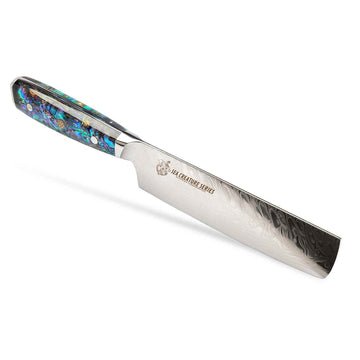
The Nakiri is a Japanese vegetable knife and features a straight blade with two bevels that is designed specifically for vegetable preparation. The flat design of its blade means that it makes complete contact with the chopping block during each downward cut, thus eliminating the push-cut motion that chef’s knives require. This creates cleaner cuts through delicate vegetables and produces uniform slices that rocking-blade knives struggle to replicate consistently across an entire preparation session.
Paring Knife: Detail Work and Small Vegetables
A paring knife takes care of those detailed cutting tasks that are not well taken care of by large knives. Cutting tomatoes, trimming green beans, de-kernalizing corns, and cutting small vegetables such as radishes and cherry tomatoes are done using a paring knife.
Santoku Knife: The Asian All-Rounder
Santoku is the Japanese version of the chef’s knife that is shorter and flatter. Santoku has gained popularity among cooks due to the balance of weight and the precise downward chopping motion it encourages. Its name translates roughly to three virtues, referring to the blade’s proficiency with meat, fish, and vegetables. It is thus a universal knife that can be used instead of the chef’s knife for everyday kitchen tasks.
Knife Comparison Table
| Knife Type | Blade Length | Best Vegetable Tasks | Skill Level |
| Chef’s Knife | 200–250 mm | General chopping, dicing, slicing | Beginner to Advanced |
| Nakiri | 160–180 mm | Precision cuts, julienne, thin slices | Intermediate to Advanced |
| Santoku | 160–190 mm | All-purpose slicing and dicing | Beginner to Intermediate |
| Paring Knife | 80–100 mm | Peeling, trimming, detail work | All Skill Levels |
| Cleaver | 180–220 mm | Dense root vegetables and squash | Intermediate |
Blade Material: What Actually Matters
Blade material determines how long an edge holds its sharpness, how easy the knife is to maintain, and how it responds to the specific demands of daily vegetable preparation. Here are the blade material options and their genuine practical differences-
- High-carbon stainless steel balancing sharpness retention with corrosion resistance
- Carbon steel achieving exceptional sharpness but requiring careful drying to prevent rust
- Ceramic blades maintaining edge sharpness but susceptible to chipping on hard vegetables
- Damascus steel combining performance with visual appeal through layered construction
- German stainless steel offering durability and relatively easy maintenance for everyday use
Knife Sharpness: The Factor Most People Overlook
A sharp knife is genuinely safer than a dull one. Dull blades require excessive force to cut through vegetables, which creates unpredictable slipping and loss of directional control. A sharp blade cuts cleanly with minimal pressure and stays exactly where the cook intends it to throughout each cut made during preparation.
Handle Design and Comfort
Handle comfort determines how fatigued a cook becomes during extended preparation and whether the grip remains secure when hands are wet or coated with vegetable moisture. This is a genuinely personal dimension of knife selection that deserves hands-on assessment before purchase wherever possible. Here are the handle considerations that affect real-world cooking comfort-
- Full tang construction providing balance and structural integrity through the full blade length
- Ergonomic shaping reducing hand fatigue during extended preparation sessions
- Non-slip texture maintaining grip confidence when handling wet vegetables
- Material durability across the daily washing and drying that kitchen knives endure
- Handle width and depth comfortable for the specific size of the cook’s hand
Conclusion
Selecting the right vegetable knife is one of the most practically impactful decisions any cook makes for the daily experience of working in their kitchen. Blade material, sharpness maintenance, and handle comfort all contribute to how well any knife performs across the years of daily vegetable preparation it will be asked to handle.
Choose based on how you actually cook rather than how impressive a knife looks. The right decision becomes more effective when you choose a knife from reputable brands like Chef Supply Co.