Moving into a newly constructed home often comes with a backyard that is unfinished, sparsely landscaped, or simply waiting for a thoughtful design. Backyard installation for new homes gives homeowners an opportunity to create an outdoor environment that reflects their lifestyle from the beginning rather than trying to renovate an established landscape later. A new property provides a clean starting point for planning patios, lawns, planting areas, walkways, retaining features, and entertainment spaces while considering the home’s architecture and the natural characteristics of the lot.
The advantage of backyard installation for new homes is that homeowners can address functional requirements before landscaping decisions become complicated by mature plants, existing hardscape, or poorly positioned features. A carefully planned backyard can provide areas for entertaining, recreation, relaxation, gardening, and everyday family activities. The process also allows important practical considerations—including grading, drainage, access, irrigation, privacy, and long-term maintenance—to be incorporated into the design rather than corrected after the landscape is already established.
Start With the Property, Not the Features
A new backyard may look like a blank canvas, but it still has characteristics that should guide the design. The property’s slope, soil, sun exposure, drainage patterns, utility locations, access points, and relationship to neighboring homes can all influence what is practical. Before selecting materials or deciding where to place a patio, homeowners should understand these existing conditions. The position of doors and windows can also affect how people will move between indoor and outdoor areas. Taking measurements and evaluating the entire lot first creates a stronger foundation for the design. This step can prevent attractive features from being placed in locations that later create circulation, drainage, or maintenance challenges.
Create a Layout Around Everyday Activities
The best backyard designs begin with how the household expects to use the space. A family that enjoys outdoor meals may need a conveniently located dining area, while homeowners who entertain regularly might want several connected seating zones. Children may require open space for recreation, and others may prefer a quieter section for relaxing or enjoying the landscape. These different uses can coexist when the layout is carefully organized. Paths should provide intuitive movement between the house and major outdoor areas, while furniture zones should have enough room for comfortable circulation. Planning these relationships before construction helps ensure that the finished yard feels purposeful rather than like a collection of unrelated features.
Plan Hardscape Before Installing Landscaping
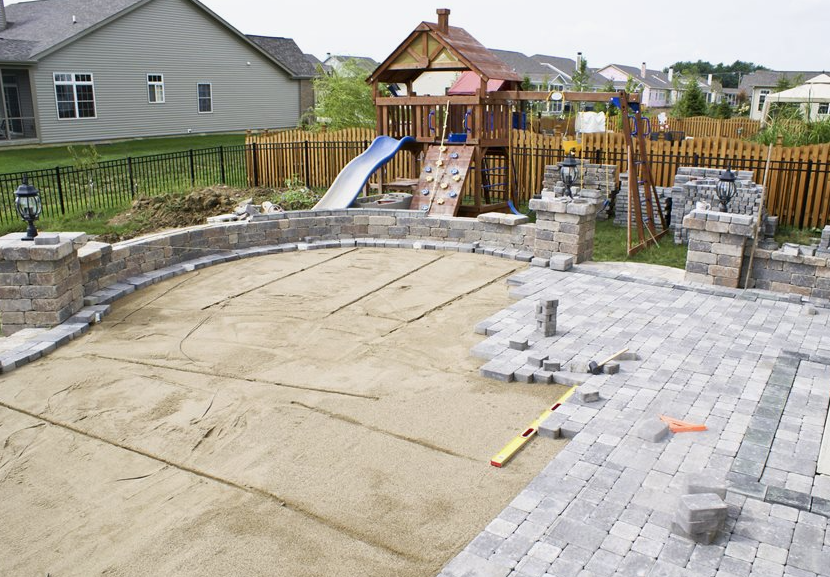
Hardscape often establishes the framework for a new backyard. Patios, walkways, steps, retaining walls, and other structural elements determine how people move through the property and where other features can be placed. Installing plants before resolving the hardscape plan can create unnecessary complications later, particularly when excavation or construction equipment needs access to the yard. A coordinated design considers the dimensions and locations of hardscape features before finalizing planting areas. This also provides an opportunity to think about transitions between different surfaces. For example, a pathway can lead naturally from the back door to a patio, while planting beds can soften the edges and connect the built areas with the rest of the landscape.
Consider Drainage and Grading From the Beginning
Water management deserves special attention when developing a new backyard because construction can significantly alter the way water moves across a property. Proper grading can help direct runoff toward appropriate drainage areas while reducing the possibility of water collecting beside structures or in frequently used parts of the yard. Downspouts, existing slopes, soil conditions, and neighboring grades may all influence the solution. Drainage should not be treated as an afterthought because correcting water-related problems after landscaping has been installed can be disruptive and expensive. Including grading and drainage considerations in the original design allows the outdoor space to be built around the property’s natural conditions while supporting long-term usability.
Select Landscaping With Long-Term Growth in Mind
New landscapes can initially look sparse because plants need time to mature, but choosing vegetation based only on its appearance at installation can create problems later. Homeowners should consider mature plant size, sunlight requirements, watering needs, seasonal appearance, and proximity to structures or hardscape. Trees should have adequate space for their root systems and eventual canopy, while shrubs and ornamental plants should be positioned according to their expected growth. Thoughtful plant selection can also contribute to privacy, shade, visual interest, and separation between different areas of the yard. A balanced landscape does not need to be densely planted from day one; it needs enough room and structure to develop successfully over time.
Incorporate Outdoor Living Features
A new backyard offers an excellent opportunity to plan outdoor living features as part of the original landscape rather than adding them after the yard is complete. Depending on the property’s size and the homeowner’s goals, possibilities may include patios, fire features, outdoor kitchens, seating areas, artificial turf, retaining walls, water-related features, or recreational spaces. Each addition should be evaluated according to its intended purpose and its relationship to the rest of the yard. For instance, a fire feature should be positioned with appropriate space around it, while an outdoor cooking area should have convenient access and sufficient room for movement. Integrating features during the planning stage can create stronger visual and functional connections throughout the property.
Why Professional Planning Matters for New Construction
Working with an experienced landscape professional can help new homeowners coordinate numerous decisions that might otherwise become overwhelming. A professional can evaluate the property, develop a practical layout, identify potential site challenges, and coordinate different construction and landscaping elements. This is particularly useful when the project includes both hardscape and softscape or requires several stages of construction. Professional planning can also help homeowners establish priorities when working within a specific budget. Instead of attempting to install every desired feature immediately, the design can be structured so future additions remain possible without compromising the original work. This approach can make the initial investment more purposeful while allowing the landscape to evolve alongside the homeowners’ needs.
Building a Backyard That Ages Well
A successful new-home landscape should be designed with the future in mind. Materials will weather, plants will mature, families may change how they use their outdoor spaces, and maintenance preferences can evolve. Designing with these realities in mind can make the backyard more adaptable. Durable construction, appropriate plant spacing, accessible maintenance areas, and flexible outdoor zones can all contribute to long-term value. Homeowners should also consider whether irrigation systems, lighting, furniture, storage, and future construction needs have been accounted for. A landscape does not have to remain identical to its original design to be successful; it should provide a solid framework that can accommodate reasonable changes over time.
Conclusion
Backyard installation for new homes is an opportunity to create an outdoor environment that is functional from the beginning and capable of developing with the property. Strong results come from evaluating the site first, establishing practical zones, addressing drainage and grading, coordinating hardscape with landscaping, and selecting plants and materials according to long-term needs. Outdoor living features can then be integrated into the design in ways that support everyday use without overwhelming the landscape. For new homeowners, the most practical approach is to treat the backyard as an extension of the home rather than an empty space to fill. With careful planning and professional execution, a newly built property can gain an outdoor setting that is comfortable, cohesive, and ready to become part of daily life.