Scrapping an old or damaged car in the UK
Getting rid of an old or damaged car can seem like a complicated task, particularly when the vehicle is no longer roadworthy, has expensive mechanical problems, or has simply reached the end of its useful life. Many owners are unsure whether they should repair the vehicle, sell it privately, trade it in, or send it for scrap.
For some vehicles, scrapping can be a practical option. It can remove the cost and inconvenience of keeping an unwanted car while also allowing useful materials and components to be recovered. However, there are several things UK vehicle owners should understand before arranging collection.
From checking the condition of the vehicle to understanding the DVLA process and choosing an appropriate treatment facility, a little preparation can make the process much easier.
When Does It Make Sense to Scrap a Car?
There is no single point at which every vehicle should be scrapped. The decision usually depends on the vehicle’s age, condition, repair costs, market value and whether it is still practical to keep.
A car with major engine damage, severe corrosion, electrical faults or failed mechanical components may require repairs that are difficult to justify financially. An older vehicle that has also failed its MOT or has been sitting unused for a long period may have limited appeal to private buyers.
Accident damaged vehicles can also become difficult to sell through traditional methods. Even when a car can technically be repaired, the cost of parts, labour and recovery may make keeping it less attractive.
In these situations, getting a scrap car valuation can help an owner understand what the vehicle may be worth before deciding what to do next.
What Can Affect the Value of a Scrap Car?
Scrap car prices are not necessarily the same for every vehicle. Several factors can influence the amount offered.
The vehicle’s weight and the value of recyclable metals can play a role. However, the condition of the vehicle and whether useful components can be recovered may also affect its overall value.
Other factors can include:
- The make and model of the vehicle
- The vehicle’s age
- Its overall condition
- Whether major components are missing
- The current value of recyclable materials
- Whether the vehicle can be collected easily
- The location of the vehicle
- Whether the vehicle is complete or partially dismantled
This is why it can be useful to request a quotation based on the actual vehicle rather than relying on a general scrap car price found online.
For owners who want to avoid spending hours contacting different businesses, an online valuation can provide a convenient starting point. Services such as scrap my car online can make it easier to provide vehicle details and find out what options are available.
Can You Scrap a Car That Is No Longer Running?
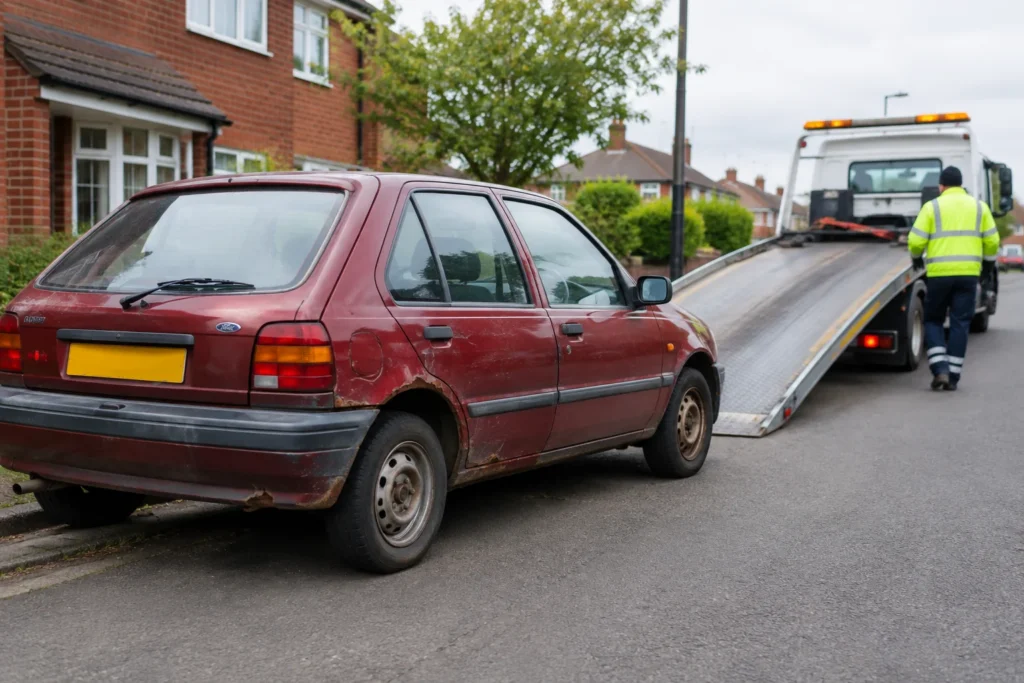
Yes, a non-running vehicle can often be scrapped. In fact, many vehicles sent for scrap are no longer suitable for normal road use.
A car may stop running because of engine failure, gearbox problems, electrical faults, accident damage or a combination of mechanical issues. If the vehicle cannot be driven safely, arranging collection can be more practical than attempting to repair or transport it yourself.
When arranging collection, it is important to explain the vehicle’s condition accurately. Tell the collection provider if the car cannot start, cannot move, has flat tyres, has significant damage or is missing important components.
Providing accurate information helps the collection process run more smoothly and reduces the possibility of unexpected problems when the vehicle is collected.
What If the Car Has Missing Parts?
Not every vehicle being scrapped will be complete. Owners sometimes remove components before arranging disposal, particularly when they need a part for another vehicle or have already sold certain components.
However, removing major components can affect the value of the vehicle and may affect collection arrangements.
For example, a vehicle without wheels may require specialist equipment for loading. Similarly, a car with major mechanical components removed may be valued differently from a complete end-of-life vehicle.
One particularly common question concerns vehicles with gearbox problems or missing gearboxes. If you are dealing with this situation, it is worth checking the specific requirements before arranging collection. Information about scrapping a car without a gearbox can help owners understand some of the practical considerations involved.
What About a Car in Poor Condition?
A vehicle does not have to look presentable to have scrap value.
Cars with rust, dents, accident damage, faded paint, broken windows or significant mechanical faults may still contain recyclable materials and recoverable components. The important consideration is whether the vehicle is suitable for the scrap or recycling process and what condition it is in when collected.
Owners sometimes spend money trying to make an old car look better before selling it. In many cases, this may not be necessary if the intended buyer is purchasing the vehicle primarily for scrap or recycling.
Instead, provide accurate details about the vehicle and ask for a valuation based on its actual condition.
Understanding the UK Scrapping Process
There are important legal and administrative steps involved in scrapping a vehicle in the UK.
The GOV.UK guidance states that an end-of-life vehicle should be taken to an authorised treatment facility, commonly referred to as an ATF.
For a car that is completely scrapped, the ATF can issue a Certificate of Destruction. GOV.UK states that this should be provided within seven days when applicable. The certificate provides evidence that the vehicle has been handed over for destruction.
Vehicle owners should also make sure the DVLA is properly notified when the vehicle has been scrapped. GOV.UK warns that failing to notify DVLA can result in a fine of up to £1,000.
These steps are important because simply handing over an unwanted vehicle does not mean the owner should ignore the administrative side of the process.
Why Should You Use an Authorised Treatment Facility?
Choosing the correct facility matters when disposing of an end-of-life vehicle.
Authorised treatment facilities are regulated for the storage, depollution and dismantling of end-of-life vehicles. Government guidance explains that these facilities handle processes such as removing fluids and components and recovering materials for recycling.
Using an appropriate facility also helps ensure that the vehicle is dealt with through the correct legal process.
Before arranging disposal, vehicle owners can check official information about authorised facilities and the requirements that apply in their part of the UK.
What Documents Do You Need?
The vehicle log book, known as the V5C, is an important document when scrapping a car.
According to GOV.UK, owners should give the ATF the vehicle log book but keep the yellow section relating to selling, transferring or part-exchanging the vehicle to the motor trade.
It is also sensible to remove personal belongings from the vehicle before collection. Check the glove box, boot, door pockets and storage compartments carefully.
If the vehicle has a private registration number that you want to keep, this should also be dealt with before the car is scrapped. GOV.UK advises applying to remove the registration number if you want to retain it.
Can You Scrap a Car in a Different Location?
Vehicle collection services can be useful when a car is located away from a scrapyard or is not safe to drive.
For example, an unwanted vehicle may be sitting on a driveway, outside a garage or at a private property. If it is not roadworthy, attempting to drive it to a scrapyard could create unnecessary risks.
Collection arrangements can make the process more convenient, particularly for vehicles that do not start or have significant damage.
If you are located in the South West and need information specific to your area, you can also look into options for scrap my car in Plymouth and check what collection arrangements are available for your vehicle.
What Happens to a Scrapped Car?
Scrapping a car is not simply a matter of crushing the entire vehicle and throwing everything away.
End-of-life vehicles can contain a variety of materials and components that can be recovered. Government guidance for authorised treatment facilities includes requirements relating to depollution and the recovery of materials such as metals, tyres, glass and other vehicle components.
Fluids and potentially hazardous components need to be handled appropriately before further dismantling or recycling takes place.
Depending on the vehicle and its condition, some components may be suitable for reuse while materials such as steel and other metals can enter recycling processes.
This makes responsible vehicle disposal an important part of managing an old or unwanted car.
Should You Repair or Scrap an Old Car?
The answer depends on the individual vehicle.
A relatively new car with a minor problem may be worth repairing. On the other hand, an older vehicle requiring several expensive repairs may make more sense to scrap.
Before spending money on major repairs, consider the likely repair cost alongside the vehicle’s current market value and potential scrap value.
For example, replacing one inexpensive component might make sense, while repairing an ageing vehicle with multiple major faults could become difficult to justify financially.
Getting a scrap valuation before committing to repairs gives you another figure to consider when making the decision.
A Simple Checklist Before Scrapping Your Car
Before arranging collection, it is useful to work through a short checklist:
- Remove all personal belongings from the vehicle.
- Find the vehicle’s V5C log book.
- Check whether you want to retain the registration number.
- Make a note of the vehicle’s condition and any missing components.
- Get a quotation based on accurate vehicle information.
- Confirm how and when the vehicle will be collected.
- Check that the vehicle is being handled through the appropriate authorised process.
- Make sure the relevant DVLA requirements are completed.
- Keep any documentation provided after the vehicle has been scrapped.
Completing these steps can reduce delays and help prevent avoidable problems.
Final Thoughts
Scrapping an old or damaged vehicle can be a straightforward process when you know what to expect. Whether the car has stopped running, suffered significant damage, failed its MOT or simply reached the end of its useful life, getting an accurate valuation and understanding the disposal process can help you make an informed decision.
The most important points are to describe the vehicle honestly, understand its condition, arrange appropriate collection when necessary and make sure the vehicle is dealt with through the correct authorised process.
For UK vehicle owners, taking a few minutes to understand the process before arranging collection can make the difference between a stressful disposal experience and a simple one.