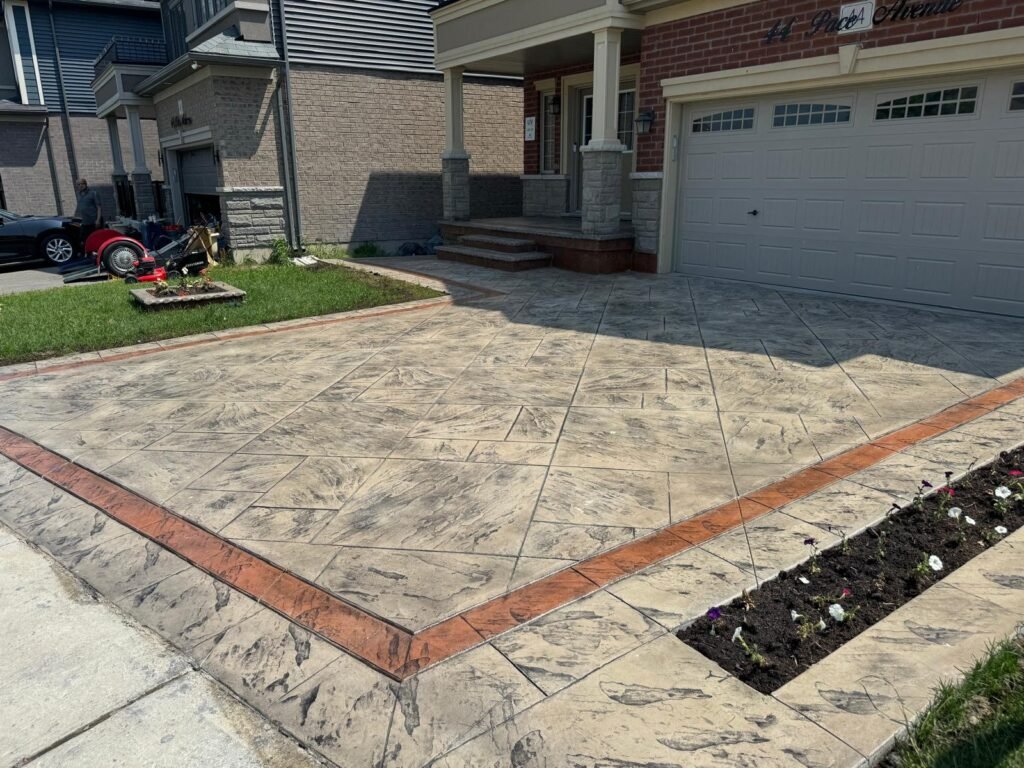
Choosing paving for a patio, walkway, driveway, or backyard sitting area often starts with the pattern. Homeowners may look at running bond, herringbone, grid, or other layouts and quickly decide which one looks most attractive. However, the pattern is only one part of a successful outdoor design.
The scale of the paving can have an even greater effect on how the finished space feels. The size of each paver, the size of the paved area, the width of the joints, and the relationship between the paving and nearby features all influence the final appearance. Recent hardscape design guidance also emphasizes choosing paver sizes that suit the dimensions of the space, rather than selecting a format based only on appearance.
A beautiful pattern placed with the wrong scale can make a space feel crowded or unbalanced. A simple pattern with the right scale can look clean, comfortable, and well planned.
What Does Paving Scale Mean?
Paving scale refers to how the size of the paving units relates to the size of the area.
Imagine a small backyard patio covered with very large paving units. Each piece may look attractive on its own, but the surface could feel out of proportion. Now imagine a large outdoor area covered with very small units and many visible joints. The space may look overly busy.
The goal is to choose paving that feels appropriate for the size and purpose of the area.
When Concrete And Interlocking is being considered, scale should be reviewed before the final pattern is selected. The material, paver size, surrounding architecture, and intended use should all work together.
Why Size Can Matter More Than Pattern
A pattern creates visual interest, but the size of the paving establishes the basic rhythm of the surface.
Large units create fewer visible joints and often produce a calmer appearance. Smaller units create more lines and texture, which can make a surface feel more detailed.
This does not mean large pavers are always better or that small pavers should be avoided. The right choice depends on the property and the space.
Current design guidance notes that paver size can affect how detailed a patio feels, how many joints are visible, and how well the finished surface relates to the surrounding home.
Think About the Size of the Area
A small patio has limited visual space. Every joint and edge can become noticeable.
A larger patio has more room for a pattern to develop. It may be able to support a combination of paver sizes, borders, or a more detailed layout without feeling crowded.
The important point is proportion. The paving should relate naturally to the area rather than overwhelming it.
Large Pavers Can Create a Calm Appearance
Large format paving can reduce the number of visible joints across an outdoor area. This can create a cleaner and more open appearance.
This approach can work particularly well around modern homes where simple lines and open surfaces are part of the overall design.
However, large pieces are not suitable for every space. On a compact patio with many corners, curves, or fixed features, oversized units may require numerous cuts. That can make the edges look less balanced.
A good design considers how the units will fit before installation begins.
Small Pavers Add Detail and Texture
Smaller paving units can create a more traditional or detailed appearance. The additional joints introduce texture and visual rhythm.
They can work well as borders, accents, pathways, or features within a larger paved area.
Small units can also be useful when the shape of the space includes curves. Smaller pieces may allow the layout to follow certain shapes more easily, although the exact installation requirements depend on the selected product and site.
Avoid Making the Surface Too Busy
Using many small pieces throughout a large area can create a strong visual effect. In some settings that may be desirable, but it can also make the surface feel fragmented.
One approach is to use smaller paving as an accent while allowing a larger main field to remain visually simple.
This creates contrast without making every part of the design compete for attention.
The Pattern Still Has an Important Role
Pattern should not be ignored. It simply works best after scale has been considered.
A pattern can influence the direction in which people see and move through an outdoor area. Running bond can create clear directional lines, while herringbone can create a stronger sense of movement.
Pattern can also influence the visual character of the space. Current paving guidance describes different layouts as creating different levels of structure, movement, and visual interest.
The strongest designs usually combine an appropriate paver size with a pattern that supports the shape and purpose of the area.
Match Paving Scale With the Home
The house itself provides an important reference point.
A large home with broad architectural lines may work naturally with larger paving units. A smaller home or traditional property may look more balanced with smaller or medium sized units.
This is not a strict rule. The goal is simply to consider the relationship between the outdoor surface and the building.
When Home Renovation Services include both indoor and outdoor improvements, this relationship becomes especially important. The backyard should feel connected to the home’s proportions rather than appearing like a separate addition.
Consider Furniture Before Choosing Paver Size
Outdoor furniture also affects scale.
A patio designed for a large dining table needs enough paved space for the table, chairs, and comfortable movement around them. A smaller sitting area may need less surface area.
The paving should frame the furniture without making the space feel empty or overcrowded.
Important Scale Questions
- How large is the paved area compared with the house?
- How much furniture needs to fit comfortably within the space?
- Will the paving include curves, corners, steps, or other fixed features?
- How many visible joints will the selected paver size create?
- Will the paving meet grass, planting beds, walls, or another surface?
- Does the chosen scale leave balanced edges around the main paved area?
Answering these questions before installation can make the final design easier to balance.
Borders Can Correct or Improve Proportion
A border can help establish the relationship between the main paving field and its surroundings.
For example, a larger patio may benefit from a defined border that frames the central area. A smaller patio may need a simpler edge so the border does not take over the space.
Borders can also help handle the difference between the dimensions of the paving pattern and the dimensions of the property.
Careful layout is important because a poor starting point can lead to narrow pieces and uneven cuts at the edges. Professional layout guidance recommends establishing the main lines and borders before filling the central paving field.
Scale Matters in Walkways Too
Paving scale is not limited to patios.
A walkway can feel uncomfortable when the paving units are too large for its width. Likewise, very small units can create a visually busy surface along a narrow route.
The direction of the paving can also influence how the walkway feels. Lines running with the direction of travel can emphasize length, while crosswise lines can make the width more noticeable.
The pattern and size should therefore be considered together.
Think About Curves and Irregular Shapes
Straight patios are easier to plan because standard paving units can often fit the layout more efficiently.
Curved or irregular areas require more attention. Large units may need significant cuts around curves, while smaller units can sometimes provide greater flexibility.
This does not mean every curved space needs small pavers. Instead, the design should be reviewed before materials are ordered.
A scaled drawing or layout plan can show where full units, partial units, and borders are likely to fall.
Scale Can Affect Material Waste
Paver size can also influence how efficiently materials are used.
When the unit dimensions work well with the size of the paved area, fewer cuts may be needed. When they do not fit naturally, more pieces may need to be trimmed.
The amount of waste can also vary with the pattern. For example, diagonal layouts and curved edges can require more cutting than simpler arrangements.
The goal should not be to avoid every cut. Some cutting is normal in professional paving work. The goal is to plan the layout so cuts appear in logical and visually balanced locations.
Do Not Forget the Surface Beneath the Paving
Scale and pattern affect appearance, but the finished surface also depends on proper preparation.
The ground, base, drainage, edge support, and installation method all contribute to how the paved area performs. A beautiful pattern cannot compensate for poor preparation.
This is especially important when a surface will experience vehicles, heavy furniture, or regular foot traffic.
Look Beyond Appearance
Before finalizing a paving design, consider these practical factors:
- How the area will be used each day.
- The expected amount of foot or vehicle traffic.
- The drainage conditions around the property.
- The existing ground and slope.
- The location of doors, steps, drains, and other fixed features.
- The amount of maintenance the homeowner expects.
These considerations help make sure the design is attractive as well as practical.
Use Pattern as a Supporting Feature
Once the right scale has been selected, the pattern can add personality.
A simple layout can keep a large surface calm. A more detailed pattern can create a focal point in a seating area. A contrasting border can frame a patio without covering the entire surface with complicated details.
Concrete And Interlocking can therefore offer many design possibilities, but the most important starting point is understanding the space itself.
Plan the Entire Outdoor Area Together
Outdoor design works better when patios, pathways, steps, driveways, planting areas, and entrances are considered together.
If every section is designed independently, the finished property can feel disconnected. Similar proportions, materials, colors, or alignment can help create a stronger relationship between areas.
Home Renovation Services that include outdoor improvements should therefore consider the complete property rather than focusing only on one paved section.
Final Thoughts
Pattern can make paving interesting, but scale determines whether that pattern feels appropriate for the space. The size of the pavers, number of joints, width of borders, dimensions of the patio, and relationship with the home all influence the final result.
Concrete And Interlocking can create an attractive outdoor surface when the material, scale, pattern, and layout are chosen together. A thoughtful approach can also reduce awkward cuts, improve visual balance, and make the space more comfortable to use.
For homeowners planning a larger improvement project, Quick & Perfect Renovation can help bring the different design elements together. With careful planning, Home Renovation Services can create outdoor spaces where paving feels proportional, practical, and naturally connected to the home.