hardwood floor repairs
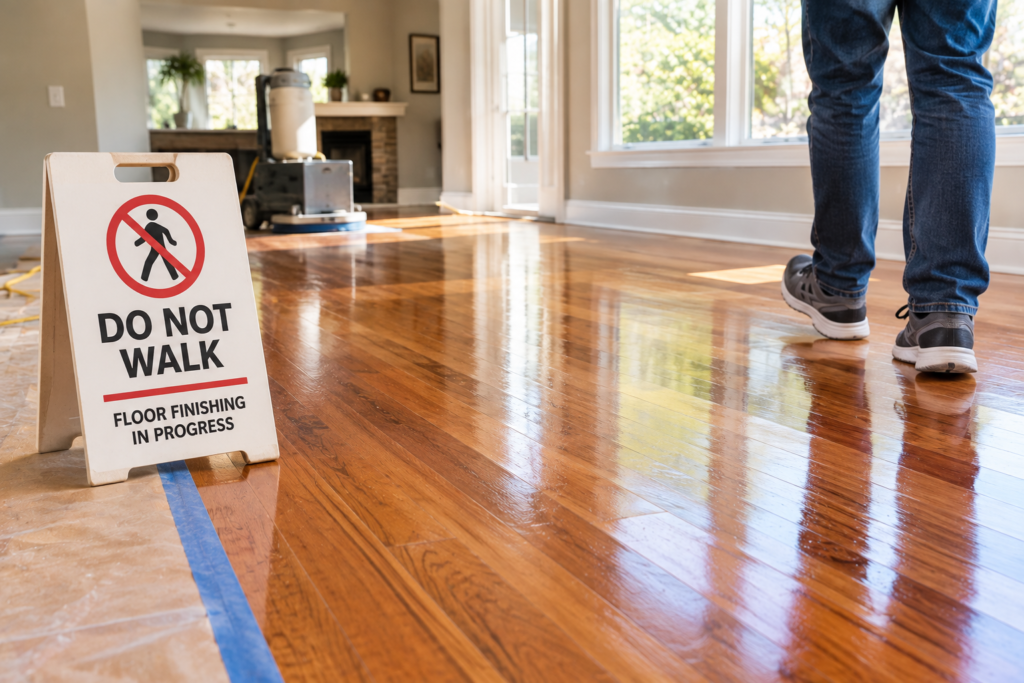
You just had your hardwood floors refinished. The crew packed up their equipment, the smell of fresh finish is still hanging in the air, and the floors look better than they have in years. Maybe better than they ever have. Now you are standing at the doorway in your socks staring at that gleaming surface and asking the same question every homeowner asks at this exact moment. How long do I actually have to wait before I can walk on these without ruining them?
It is a completely fair question, and the honest answer is more layered than most contractors take the time to explain properly. Walk too early and you risk leaving permanent marks in finish that has not hardened enough to handle pressure. Wait longer than you need to and you are inconveniencing yourself and your family for no real reason. Getting this right comes down to understanding what the finish is actually doing after the crew leaves your home.
This guide gives you the full, straight picture of what the post-refinishing timeline looks like, what mistakes to avoid, and how to protect an investment that should serve your home for years before it needs attention again.
Why Waiting After Refinishing Actually Matters
Most homeowners understand on a surface level that fresh finish needs time to dry. What very few people understand is why it matters so practically and what the real consequences of ignoring the timeline actually look like in their floors six months later.
1. What Happens to Finish When You Walk on It Too Soon
Fresh polyurethane finish goes through two distinct stages after the final coat goes down. The first is surface drying, where solvents in the finish evaporate and the surface transitions from visibly wet to touch-dry. This stage can complete within a few hours depending on the product, the humidity, and the temperature in the space. But surface dry and hard are two completely different conditions.
During the surface-dry stage, the finish film is still soft at its core and highly vulnerable to pressure, abrasion, and contamination. Careful walking in clean socks might leave no marks. But shoes, dragging feet, or stepping with uneven weight distribution puts pressure on that soft film and creates permanent impressions, scuff lines, and in more serious cases adhesion failures that look like peeling or crazing across the surface.
Think of it the same way you think about fresh nail polish. Dry to the touch in minutes but dents and smears easily for a long time after. Hardwood floor finish works on a longer timescale but follows exactly the same principle. Understanding this is the foundation of everything else in this guide.
2. Dry Time vs. Cure Time: The Difference Nobody Explains
This distinction is the one that most homeowners never hear explained clearly before a refinishing project, and it is the single most important piece of information for protecting a freshly refinished floor. Dry time is how long it takes the finish to feel dry to the touch and be ready for the next coat. Cure time is how long it takes the finish to reach its full hardness, chemical resistance, and long-term durability. These two numbers are dramatically different from each other.
A water-based finish might feel completely dry within two to four hours of the final coat application. That same finish will not reach full cure for twenty-one to thirty days. Oil-based finish might feel dry after eight to twelve hours and still be working toward full cure thirty to sixty days later. During the long gap between dry time and cure time, the finish is handling careful foot traffic acceptably but is still chemically cross-linking and building hardness at the molecular level. Anything that stresses the surface during that window creates damage that is permanent once the finish fully hardens around it.
Why This Mistake Is More Common Than You Think
The reason so many Portland homeowners damage their fresh finish without realizing it is simple. The floor genuinely feels fine. You tap it with your finger, nothing sticks. You walk across it in socks and nothing obvious happens. So you bring the furniture back in on day four, slide the couch into its spot, and go back to normal life. Six months later there is a permanent depression where the couch leg sat that was not there before and you cannot figure out why.
The couch leg sat on finish that was dry but not cured, and the concentrated weight over weeks and months slowly compressed the still-soft film into a permanent mark. This situation is one of the most common reasons homeowners call for hardwood floor repairs after a refinishing project, and it is entirely avoidable with the right information going in. The cost of proper hardwood floor repairs after a curing failure adds real expense to a project that should have been finished, which makes understanding the timeline genuinely worth the time it takes to read this guide.
How Long Before You Can Walk on Refinished Hardwood Floors?

Here are the actual numbers broken down by finish type so you have a concrete reference for your specific project rather than a vague range that leaves you guessing.
1. Water-Based Finish: Walk Time and Full Cure Schedule
Water-based polyurethane is the most commonly chosen finish for residential refinishing work today because of its fast dry time, low odor during application, and clear non-yellowing film that preserves the natural wood color. The post-application timeline with water-based finish looks like this under normal indoor conditions.
Light foot traffic in clean socks is generally safe four to six hours after the final coat in normal temperature and humidity conditions. Hard-soled shoes should wait until at least twenty-four hours after the final coat. Furniture with thick felt pads under every single leg can return after forty-eight to seventy-two hours. Area rugs should stay completely off the floor for a minimum of two weeks, with three to four weeks being the safer choice for rugs with rubber or foam backing. Full cure, meaning the finish has reached its maximum hardness and chemical resistance, takes twenty-one to thirty days from the final coat.
The faster timeline is the primary reason water-based finishes have become the standard choice for refinishing occupied homes. Getting the space functional within one to two days makes a meaningful difference for families who cannot relocate for extended periods.
2. Oil-Based Finish: Walk Time and Full Cure Schedule
Oil-based polyurethane builds a slightly harder film over its cure period than water-based and adds a warm amber tone to the finish that many homeowners prefer on red oak and other warm-toned species. The trade-off is a longer out-of-service period and a significantly stronger odor during application and the initial drying stage.
Light foot traffic in clean socks with oil-based finish should wait a firm minimum of twenty-four hours from the final coat. Hard-soled shoes should wait a full forty-eight hours. Furniture should not return for at least seventy-two to ninety-six hours with thick felt pads under every leg. Area rugs need to stay off a minimum of four weeks. Full cure takes thirty days in typical conditions and can stretch to sixty days when temperatures are lower or humidity is running high, both of which are common situations in Portland during the cooler months.
How Portland’s Climate Affects Drying and Cure Time
Portland’s Pacific Northwest climate adds a variable that homeowners in drier climates rarely have to think about carefully. Finish curing depends heavily on ambient temperature and relative humidity in the space. Higher temperatures and lower humidity accelerate both dry time and cure time. Lower temperatures and higher humidity slow both processes down noticeably.
During Portland’s wet season running from October through March, indoor humidity regularly runs higher than the ideal range for finish curing. A dehumidifier running in the refinished space throughout the first week after application keeps conditions closer to the optimal range of 50 to 55 percent relative humidity and can meaningfully reduce the time it takes for the finish to reach stable hardness. Temperatures below 60 degrees Fahrenheit slow oil-based curing particularly aggressively, which matters for projects in garages, sunrooms, or older Portland homes with inconsistent heating during winter months.
A Week-by-Week Guide to Using Your Floor After Refinishing

Here is a practical breakdown of what is safe and what is not during the post-refinishing period using water-based finish under typical Portland indoor conditions.
1. First 24 Hours: Complete Hands-Off Period
The first twenty-four hours after the final coat goes down are the most critical of the entire post-refinishing window. If it is at all possible, stay completely off the floor during this period. If you absolutely must cross the room, use clean socks only and walk gently without dragging or shuffling your feet in any way. Keep pets out of the space completely because pet nails on soft fresh finish leave scratches that become permanent once the finish hardens around them.
Do not place anything on the floor during this period. Not boxes, not a single piece of furniture, not even a piece of paper. A sheet of paper left sitting on fresh finish can leave an impression in the film as it dries. Treat the first twenty-four hours as completely off-limits and you protect everything the refinishing project cost you.
2. Days Two Through Seven: Light Use With Real Caution
Starting on day two, the floor can handle careful foot traffic in clean socks or soft-soled shoes. Most homeowners begin using the space again during this period, and that is reasonable as long as the specific limitations of this stage are respected.
No hard-soled shoes, heels, or heavy boots during this first week. No dragging anything across the surface under any circumstances. No wet mopping and no liquid cleaning products on the floor at all. If a spill happens, a barely damp cloth applied immediately and dried right away is the safe response. No furniture returns during this week, even pieces with thick felt pads. The finish can handle careful human foot traffic but is not ready for the concentrated pressure of furniture legs.
Pet containment continues to matter significantly during this period. A dog skidding to a stop across the floor on day three leaves scratches in finish that is not yet hard enough to resist that level of abrasion. Keep pets off or carry them across the space during the first week without exception.
3. Week Two and Beyond: Getting Back to Normal Life
By the end of the first full week with a water-based finish under normal conditions, furniture can return to the room. This means thick felt pads under every single leg without exception, including light pieces you might think are too small to cause any damage. Even a light accent table can leave marks if a bare leg sits directly on finish that is still working toward full cure.
Normal shoe traffic becomes safe in the second week. Regular cleaning can resume using dry mopping or a hardwood-specific cleaning product applied barely damp. By the end of week two the floor is back to handling daily life normally, even though the thirty-day full cure mark has not yet been reached. The remaining cure work during weeks three and four happens while the floor is in normal daily use, and as long as the early-stage guidelines were followed, that final curing period proceeds without any special attention needed.
When Can Rugs Go Back on Refinished Floors?
Rugs are one of the most consistently problematic things for homeowners managing a post-refinishing timeline because they trap moisture and heat against the finish surface and interfere with the remaining curing process. They can cause clouding, uneven yellowing, and in cases with rubber-backed rugs, actual adhesion between the rug backing and the finish surface.
The minimum for any rug is two full weeks from the final coat. Four weeks is the safer choice for rugs with rubber, foam, or synthetic backing. When rugs do go back, use natural fiber felt pads rather than rubber pads for the first several months. Felt allows the finish to continue any remaining off-gassing without the trapped conditions that rubber creates.
What You Should Never Do During the Cure Window
The cure window from the day of the final coat through the thirty-day full cure mark requires consistent awareness of what the floor can and cannot handle. A handful of specific mistakes cause the large majority of post-refinishing damage situations that lead to hardwood floor repairs.
1. Furniture, Rugs, and Heavy Objects Placed Too Soon
The point pressure from furniture legs is the obvious concern, but heavy objects placed on curing finish create a second problem that is less immediately obvious. Anything placed on the floor blocks airflow across that section of the surface. Blocked airflow slows the local curing process and results in that covered area curing at a measurably different rate than the surrounding exposed floor. The finish cures unevenly and can show subtle visual differences between covered and uncovered areas that are not visible immediately after the project but become apparent weeks later as the finish fully hardens.
Area rugs create this problem across a large section of the floor simultaneously, which is why homeowners who rush rugs back frequently notice an unexplained color difference between the area under the rug and the surrounding open floor when the rug is eventually moved. The difference was created during the cure process, not by the rug itself after the fact.
2. Cleaning Products That Wreck Fresh Finish
The most damaging cleaning mistake during the cure window is using any product not specifically formulated for sealed hardwood floors. Vinegar and water solutions are one of the most widely recommended DIY floor cleaning approaches online and one of the most genuinely damaging choices for polyurethane finish. The acidity in vinegar breaks down the finish film surface progressively with each application, accelerating dulling and making the surface more porous and more vulnerable to future staining and moisture damage.
Steam mops are equally damaging at every stage of a hardwood floor’s life and particularly destructive during the cure window. The combination of heat and moisture driven into the finish joints disrupts the curing chemistry and can cause the same kind of moisture-related finish cloudiness that develops when water stains form in the finish layer. During the cure window, dry microfiber mopping for routine cleaning and a barely damp cloth for spot spills only is the right approach, full stop.
3. Shoes, Pets, and Traffic Mistakes That Leave Marks
High heels create contact pressure that is dramatically higher than flat shoes carrying the same body weight. The physics of a narrow heel tip concentrating full body weight into a small contact area creates enough pressure to permanently dent surfaces much harder than fresh polyurethane finish. No heels on fresh finish for the full thirty-day cure period is a firm rule regardless of how solid the floor feels underfoot at any point during that window.
Pet nails that have not been recently trimmed leave fine scratches across the curing finish surface that are not visible in normal overhead lighting but become clearly apparent once the finish fully hardens and the light hits the surface at a raking angle. Trim pet nails before the refinishing project begins and keep animals off the floor or carry them across for at least the first full week after the project completes.
Signs Your Finish Did Not Cure the Way It Should Have
Even when the refinishing process goes well and the post-application care guidelines are followed correctly, finish problems occasionally develop during or after the cure window. Knowing what to look for helps catch problems early when more options for addressing them are still available.
1. How to Tell If Something Actually Went Wrong
Fish eyes are small circular craters scattered across the finish surface caused by contamination from silicone-based products, wax residue, or cleaning product buildup that was not fully removed before refinishing. They are usually visible immediately after the finish dries rather than appearing gradually. Bubbles or foam texture in the finish surface indicate the product was applied too quickly or in too thick a single coat, trapping air in the film before it had a chance to flow out and level.
Peeling or delamination that develops in the weeks after the project indicates an adhesion failure between the finish and the wood beneath it. Common causes include contamination on the surface before finishing, insufficient sanding preparation, or applying finish over a floor that contained elevated moisture at the time of application. Cloudiness or milkiness that develops after foot traffic or rug placement indicates moisture trapped within the finish film, a process identical to white water ring formation but driven by curing conditions rather than external water exposure.
Any of these situations warrants a call to the contractor who did the work or to a professional who handles hardwood floor repairs regularly, because the correction options available depend heavily on how early the problem is identified.
2. What to Do When Fresh Finish Gets Damaged
Light scuffs or faint marks from the first week sometimes respond to gentle treatment with a compatible finish restorer product if they are caught and addressed immediately. Deeper damage, areas of adhesion failure, or widespread finish problems across a room require professional assessment to determine correctly whether the affected area can be spot-repaired or whether the finish needs to be fully sanded and reapplied across the entire surface.
For any homeowner dealing with finish failure, damage from premature traffic, or post-refinishing problems of any kind, hardwood floor repairs near me from a contractor who specifically has experience with finish correction work is the most reliable path to a result that actually matches the surrounding floor. Attempting spot repairs on polyurethane finish without experience in sheen matching and blending technique almost always produces a patch that is more visually obvious than the original damage it was meant to fix.
The All Seasons Floors team handles hardwood floor repairs across Portland for exactly these kinds of situations, from minor finish touch-ups to full correction of refinishing jobs that developed problems during or after the cure window. Getting a professional read on what your floor actually needs is always the right first step before attempting any repair work yourself.
How Professional Refinishing Changes the Cure Timeline
Professional-grade finish products carry performance characteristics that differ from consumer products in ways that meaningfully affect the post-refinishing timeline. Commercial water-based polyurethane from professional flooring suppliers reaches initial hardness faster than equivalent consumer products because of significantly higher solids content and more sophisticated cross-linking chemistry that activates more completely during the cure process.
Some experienced contractors offer polyaspartic finish systems that reach a walkable hardness within hours of the final coat and a full functional cure within days rather than weeks. These systems cost more than standard polyurethane and require specific application equipment and technique to execute correctly, but they significantly reduce the disruption period for families who need their space back quickly. If minimizing the out-of-service time is a priority for your project, asking your contractor directly about polyaspartic finish options is a conversation worth having before the project starts.
Professional application also means the finish goes down at the correct film thickness, in the right environmental conditions, and with the correct timing between coats that DIY refinishing projects frequently get wrong due to unfamiliarity with the products. Each of these variables affects how predictably and completely the finish cures, and a professionally applied finish under the right conditions is far less likely to develop the kind of cure problems that lead to hardwood floor repairs in the months after a project completes.
Whether you are planning a refinishing project, managing the post-refinishing period, or dealing with finish damage that needs professional correction, the team that handles hardwood floor repairs at All Seasons Floors brings the experience and the honesty to tell you exactly what your floors need rather than what is easiest or most profitable to recommend.
Conclusion
How long before you can walk on refinished hardwood floors comes down to one core distinction that most homeowners never hear before they need it: dry time and cure time are completely different things. And treating them the same is the most common reason post-refinishing damage happens. Light sock traffic is safe within four to six hours with water-based finish and twenty-four hours with oil-based. Normal shoe traffic follows a day or two later. Furniture goes back with felt pads at the end of the first week. Rugs wait two to four weeks. Full cure lands at thirty days. Follow that sequence with patience, keep pets and heels off the surface during the critical early stages, and your refinished floors will stay in the condition they looked on the day the crew left your home for years to come.
FAQs
- How long after refinishing can I walk on hardwood floors in socks?
With water-based finish, careful sock traffic is safe after four to six hours. Oil-based finish needs a full twenty-four hours before any foot traffic at all. - When can furniture go back on refinished hardwood floors?
Furniture with thick felt pads under every leg can return after forty-eight to seventy-two hours for water-based and after ninety-six hours for oil-based finish. - How long before area rugs can go back on refinished floors?
Wait at least two full weeks for any rug and four weeks for rugs with rubber or foam backing that restrict airflow to the curing surface beneath. - What happens if you walk on refinished floors before the finish cures?
Premature traffic creates permanent scuff marks, shoe sole impressions, and adhesion failures that require professional hardwood floor repairs to correct properly. - Does Portland humidity affect how long refinished floors take to fully cure?
Yes, higher indoor humidity slows both dry time and cure time noticeably. Running a dehumidifier in the refinished space during the first week helps maintain ideal curing conditions throughout the process.