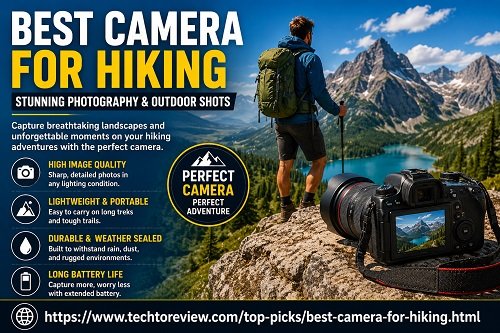
Best camera for hiking with a lightweight design for outdoor landscape photography
Hiking is an opportunity to explore beautiful landscapes, capture mountain views, and create lasting memories. Whether you enjoy photographing forests, wildlife, waterfalls, or sunrise trails, choosing the right camera can improve your outdoor photography experience. The best camera for hiking should balance image quality, portability, durability, and battery performance without adding unnecessary weight to your backpack.
From compact cameras to mirrorless models and action cameras, there are several options for different photography needs. Understanding the features that matter most can help you choose equipment that suits your hiking style, budget, and preferred shooting conditions.
1. Choose a Lightweight Camera
Weight is one of the most important considerations when selecting a best camera for hiking. Carrying a heavy camera body, multiple lenses, and accessories over long distances can make your journey less comfortable.
A lightweight camera allows you to focus on the trail while keeping your photography equipment accessible. Compact mirrorless cameras, small interchangeable lenses, and point-and-shoot models can be practical choices for day hikes and longer outdoor adventures.
When comparing cameras, consider the total weight of the camera, lens, spare batteries, and protective accessories rather than looking only at the body weight. A compact camera system can offer a useful balance between image quality and portability.
2. Look for Weather Protection
Outdoor conditions can change quickly. Rain, dust, humidity, and cold temperatures may affect your equipment, especially when hiking in mountains or forests.
Weather-sealed cameras can provide additional protection against dust and moisture when used with compatible lenses and according to the manufacturer’s instructions. The OM SYSTEM OM-5, for example, is designed with dustproof, splashproof, and freezeproof protection.
However, weather resistance does not mean every camera is waterproof. Always check the manufacturer’s specifications and use appropriate protection during heavy rain or challenging conditions
3. Consider Image Quality and Sensor Size
Image quality matters when capturing landscapes, distant mountain peaks, and wildlife. A camera with a capable sensor can provide detailed photographs and greater flexibility when editing images.
APS-C mirrorless cameras offer a balance between image quality and portability. Micro Four Thirds cameras can also be useful for hikers who prefer compact bodies and smaller lenses.
The right choice depends on your priorities. If you mainly photograph scenic landscapes during daylight, a lightweight system may be more useful than carrying a larger professional camera. For low-light photography, sensor performance and lens aperture become more important.
4. Check Battery Life
Long hiking trips may take you far away from power outlets, making battery performance an important consideration. A camera with dependable battery life can help you capture more photos throughout the day.
Before heading out, charge your batteries and consider carrying a spare. A power bank or compatible charging solution can also be helpful on multi-day trips, provided your equipment supports it.
Remember that cold weather, frequent video recording, and extended screen use can increase battery consumption. Planning ahead can help reduce the risk of running out of power during an important part of your hike.
5. Choose the Right Lens
The lens you select can influence the types of photographs you capture. A wide-angle lens is useful for landscapes, while a telephoto lens can help you photograph distant wildlife or mountain details.
For many hikers, a versatile zoom lens provides a practical starting point because it covers different compositions without requiring multiple lenses.
However, carrying several lenses adds weight and requires additional storage. Choose equipment according to the length of your hike, photography goals, and comfort level.
6. Consider Image Stabilization
Image stabilization can help reduce camera shake when shooting handheld. This is particularly useful when photographing in low-light conditions or using slower shutter speeds.
Some mirrorless cameras include in-body image stabilization, which can make handheld shooting more convenient. The Olympus OM-D E-M10 Mark IV, for example, is noted for including in-body stabilization in a compact camera body.
best camera for hiking is the stabilization does not replace good shooting technique, and it cannot freeze movement from a moving subject. Nevertheless, it can be a valuable feature for landscape photography and everyday hiking images.
7. Think About Your Hiking Photography Style
The best camera for hiking depends on how you plan to use it. A landscape photographer may prefer a mirrorless camera with interchangeable lenses, while someone recording trail videos may prefer a compact action camera.
For hikers who want a pocket-friendly option, a compact camera such as the RICOH GR III offers a portable design and a fixed wide-angle lens. However, it is not weather-sealed, so additional care is needed in wet conditions.
Action cameras can be useful for hands-free recording, cycling, and adventure footage. When choosing one, consider stabilization, battery performance, mounting options, and protection against outdoor conditions.
Tips for Carrying a Camera on Hiking Trips
Once you choose the best camera for hiking, protecting it during the journey is equally important. Use a suitable camera bag or protective cover to reduce exposure to dust, moisture, and accidental impacts.
Keep spare batteries and memory cards in a secure, accessible location. Avoid leaving equipment exposed to direct sunlight for long periods, and clean dust or moisture from the camera using appropriate materials.
It is also helpful to practise adjusting basic camera settings before your hike. Knowing how to change exposure, focus, and shooting modes can help you capture moments without spending too much time managing equipment.
Conclusion
Choosing the best camera for hiking involves more than comparing megapixels or advanced specifications. Weight, weather protection, battery life, lens versatility, image stabilization, and overall convenience all contribute to a practical outdoor photography setup.
Whether you prefer a compact point-and-shoot camera, a mirrorless system, or an action camera, select equipment that matches your hiking routine and photography goals. best camera for hiking that you can comfortably carry and confidently use can help you document scenic trails and memorable outdoor experiences.