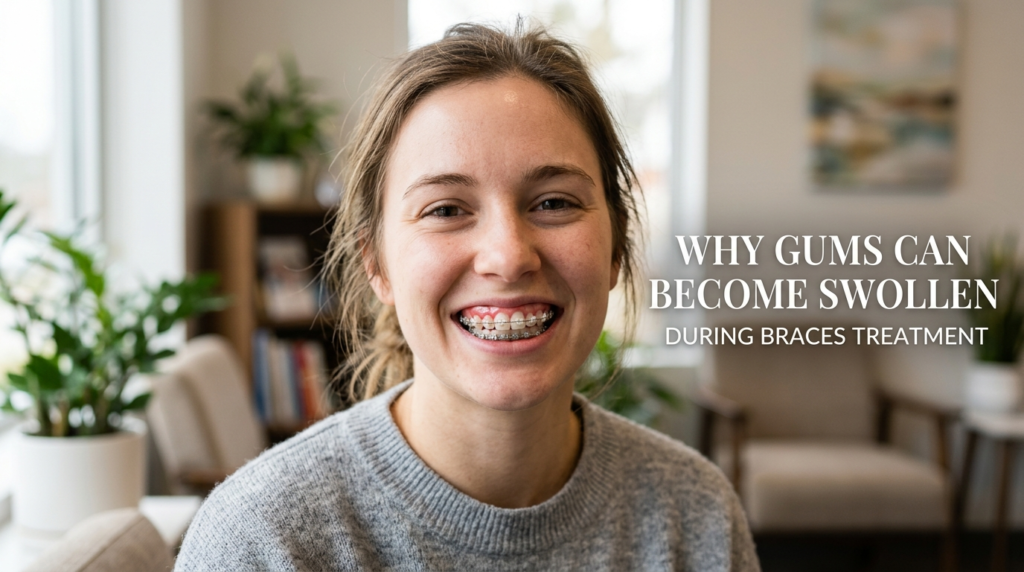
Braces are designed to move teeth gradually into healthier, more functional positions. Most people expect some pressure or tenderness after getting braces or having them adjusted. What can be more surprising is seeing the gums look puffy, red, or enlarged during treatment.
Swollen gums are fairly common with fixed braces, but they should not simply be ignored. In many cases, the problem begins with plaque collecting around brackets, wires, and the gumline. In others, factors such as local irritation, tissue response, treatment duration, or hormonal changes may be involved.
The good news is that gum swelling can often be reduced when the cause is identified early and oral hygiene improves. Understanding why it happens is the first step.
Why Braces Can Make the Gums More Vulnerable
Braces do not automatically cause unhealthy gums. The challenge is that fixed orthodontic appliances create more places for food particles and plaque to collect.
Before braces, a toothbrush can usually move freely across the teeth. Once brackets and wires are added, cleaning requires more precision. Plaque may remain near the gumline, around brackets, and between teeth.
If that plaque is not removed effectively, the gums can become inflamed. This early stage of gum disease is called gingivitis. Common signs include redness, swelling, tenderness, and bleeding during brushing or flossing.
1. Plaque Buildup Around Brackets and Wires
Plaque is a sticky film that continually forms on teeth. Brackets, bands, and wires can make it easier for plaque to remain in areas that are difficult to reach.
Over time, plaque bacteria may irritate the gum tissue. The gums can begin to look rounded or puffy around the teeth and may bleed more easily.
This does not necessarily mean someone rarely brushes. A person can brush twice a day and still miss the spaces immediately around orthodontic hardware. Technique matters just as much as frequency.
2. Flossing Becomes More Difficult
Traditional flossing is less straightforward with braces because the archwire blocks the usual path between teeth. Some people therefore floss less often or stop altogether.
That can leave plaque between teeth and along the gumline, where a toothbrush has difficulty reaching.
Floss threaders, orthodontic flossers, interdental brushes, and water flossers can make cleaning easier. The best choice depends on the spacing between the teeth and the appliance being used. The important point is not to treat cleaning between the teeth as optional during braces treatment.
3. Inflamed Gums Can Become Enlarged
There is a difference between temporary irritation and gingival enlargement.
When gums stay inflamed for a longer period, the tissue can become more noticeably enlarged. It may cover more of the visible tooth surface or grow closer to the brackets.
Research on orthodontic-related gingival enlargement suggests that the condition can have several contributing factors. Plaque is important, but mechanical forces from fixed appliances, individual tissue response, treatment duration, and local irritants may also play a role.
Persistent gum swelling therefore deserves professional attention rather than being dismissed as a normal part of braces.
4. Hormonal Changes May Increase Gum Sensitivity
Teenagers make up a large portion of orthodontic patients, and puberty can influence how gum tissue responds to plaque and inflammation.
Hormonal changes do not mean swollen gums are unavoidable. They may, however, make the gums more reactive while braces are already making cleaning more demanding.
For parents trying to understand how fixed appliances are managed during adolescence, this overview of orthodontics and braces for teens explains what to expect from treatment, adjustments, and oral-hygiene responsibilities.
The practical takeaway is simple: teenagers with braces may need reminders and the right cleaning tools until the routine becomes a habit.
5. Mechanical Irritation Can Add to the Problem
Sometimes the gums or nearby soft tissues become irritated because of the physical presence of orthodontic hardware. Food may become wedged around a band or between crowded teeth, while a local problem around a bracket can make an area difficult to clean.
This is not necessarily the same as plaque-induced gingivitis, but both issues can occur together. If one area stays swollen despite careful cleaning, an orthodontist should examine the appliance and surrounding tissue.
Is Gum Swelling Normal After Braces Are Tightened?
Some tenderness after braces are first placed or adjusted is expected because the teeth are being placed under controlled pressure.
However, tooth tenderness is different from gums that remain visibly swollen, red, or prone to bleeding.
Mild irritation that settles quickly may not be concerning. Persistent swelling, especially with bleeding, bad breath, pain, or increasing gum overgrowth, should be evaluated. It is better to ask about a change early than to wait until cleaning becomes more difficult.
How to Reduce Swollen Gums While Wearing Braces
Improving plaque control is often the most useful first step. The goal is not aggressive brushing. Scrubbing too hard can irritate the gums further. A careful routine is more effective.
Brush Around the Gumline and Every Bracket
Use a soft-bristled toothbrush or orthodontic brush and angle the bristles so they clean above and below the brackets. Give extra attention to the gumline, where plaque tends to collect.
Take enough time to clean every section, not only the visible front surfaces.
Clean Between the Teeth Every Day
Use floss with a threader, an orthodontic flosser, an interdental brush, or another tool recommended by a dentist or orthodontist.
Interdental brushes can be useful around brackets and under wires, but they should be used gently and in an appropriate size.
Rinse After Meals When Brushing Is Not Possible
Food particles can remain trapped around braces after eating. Rinsing thoroughly with water can help loosen debris until the teeth can be cleaned.
A dentist or orthodontist may also recommend a fluoride or therapeutic mouth rinse for certain patients. Mouthwash can support a hygiene routine, but it does not replace brushing and interdental cleaning.
Keep Professional Dental Cleanings on Schedule
Orthodontic visits and dental checkups serve different purposes. The orthodontist monitors tooth movement and the appliance, while the dentist continues to monitor the health of the teeth and gums.
Professional cleaning can also remove hardened deposits that home brushing cannot.
Limit Sticky Foods and Frequent Sugary Snacks
Sticky foods can cling around brackets and wires, while frequent sugary snacks can encourage plaque-related problems. Following the food guidance provided by the orthodontic team helps protect the appliance and oral health.
Should You Stop Brushing If Your Gums Bleed?
No. Bleeding can be a sign of gum inflammation, and avoiding the area may allow even more plaque to remain.
Instead of brushing harder, brush more carefully with a soft brush and continue cleaning along the gumline. If bleeding is frequent, painful, heavy, or does not improve, a dental professional should assess the gums.
Can Swollen Gums Affect Orthodontic Treatment?
Significant gum inflammation can make treatment more difficult because healthy gum and bone support are important while teeth are being moved.
If swelling becomes severe, cleaning can become harder, creating a cycle in which enlarged tissue traps more plaque. An orthodontist may need to coordinate care with a general dentist or periodontist or address a local problem before treatment continues normally.
Adults may also begin treatment with existing periodontal concerns or a history of gum disease. Readers considering treatment later in life can find a useful explanation of oral-health considerations and options in this guide to orthodontics and braces for adults.
Straightening teeth and maintaining healthy gums should happen together.
When Should You Contact a Dentist or Orthodontist?
Schedule an evaluation if gum swelling is persistent, worsening, or making normal cleaning difficult. Other reasons to seek professional advice include gums that are very sore, repeatedly bleed, appear to be growing over the teeth or brackets, or are associated with persistent bad breath.
You should also get advice if a tooth feels unusually loose, there is pus or a lump near the gum, or swelling stays limited to one area and does not improve.
An orthodontist can check whether the appliance is contributing to the problem, while a dentist can assess the gums for gingivitis, tartar, periodontal disease, or another dental cause.
Will the Gums Return to Normal?
In many mild cases related to plaque and gingivitis, the gums can improve once plaque control improves and professional cleaning is completed when needed.
More pronounced gingival enlargement may require additional periodontal treatment. The right approach depends on the cause, how much tissue is involved, and whether enlargement persists after inflammation is controlled.
Early attention matters because severely enlarged gums can make cleaning increasingly difficult.
Final Thoughts
Swollen gums during braces treatment are common enough to be familiar, but they are not something to accept without question. Braces create extra cleaning challenges, and plaque around brackets and wires is one of the most common reasons gums become inflamed. In some patients, tissue response, local irritation, treatment duration, or hormonal changes may contribute as well.
The best response is usually a combination of careful brushing, daily interdental cleaning, regular dental care, and communication with the orthodontic team.
Braces are meant to improve the position and function of the teeth. Keeping the gums healthy throughout that process helps create a result that is not only straighter, but healthier too.
Frequently Asked Questions
Why Are My Gums Swollen Around Just One Bracket?
Localized swelling may occur when plaque or food is repeatedly trapped around one bracket or when there is local irritation. If the swelling does not improve with careful cleaning, have the area checked.
Can Braces Cause Gum Disease?
Braces do not automatically cause gum disease, but fixed appliances can make plaque control more difficult. If plaque remains around the gumline, gingivitis can develop and may progress if left untreated.
How Long Should Swollen Gums Last With Braces?
There is no single normal timeframe. Brief irritation may settle quickly, but swelling that persists, worsens, bleeds frequently, or interferes with cleaning should be assessed by a dentist or orthodontist.
Can Mouthwash Get Rid of Swollen Gums From Braces?
Mouthwash may support plaque control in some situations, but it is not a substitute for brushing, interdental cleaning, or professional care. The appropriate product depends on the cause of the swelling and the individual’s oral-health needs.