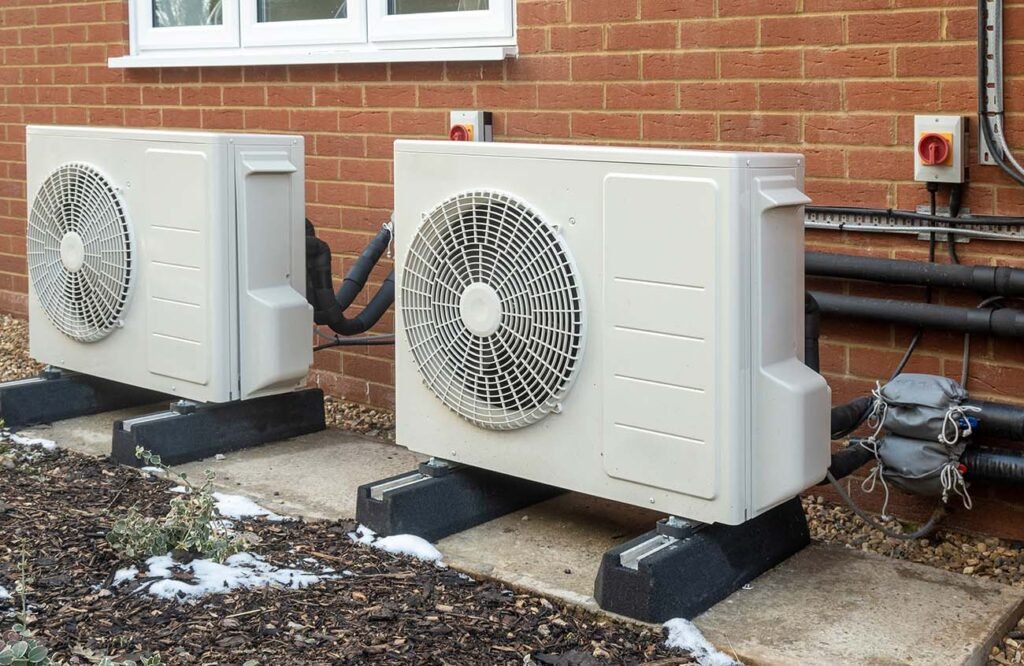
Two air source heat pump units installed on a modern house
If you’re fed up with eye-watering energy bills and looking to future-proof your gaff, getting your head around the Boiler Upgrade Scheme (BUS) eligibility is your first move. The scheme offers a massive financial leg-up for UK homeowners, landlords, and property owners aiming to ditch dirty fossil fuels and install clean, green low-carbon heating.
Whether you’re eye-balling an air source heat pump, a ground source setup, or a rural biomass unit, the grant takes a serious bite out of those steep upfront installation fees. But keep in mind: bagging the voucher isn’t automatic. Your property, chosen kit, and tradesperson all need to meet strict official criteria. Here is the plain-English breakdown of how the scheme works in 2026.
What Is the Boiler Upgrade Scheme?
The Boiler Upgrade Scheme is an Ofgem-administered capital grant backed by the UK government, designed to help property owners in England and Wales replace old gas, oil, or electric heaters with renewable tech.
You won’t have to wade through mountain-high paperwork or wait around for a cash rebate in your bank account. Instead, the scheme runs entirely through certified installers—they apply for the voucher and knock the discount straight off your final invoice before you pay a single penny.
Crucial context: This is strictly an eco-grant for renewable tech. You cannot use it to buy a standard replacement gas or oil combi boiler.
What Is the Purpose of the Scheme?
The core objective is simple: help British households transition away from expensive, polluting fossil fuel setups without breaking the bank.
[Old Gas / Oil Boiler] ──( £7,500 BUS Grant )──> [Clean, Low-Carbon Heat Pump]
The scheme delivers key long-term wins:
-
Chops down initial capital costs for modern heating tech.
-
Slashes household carbon footprints across England and Wales.
-
Boosts home energy performance (EPC) and future-proofs property values.
-
Ditches reliance on imported fossil fuels in favor of home-grown electricity.
Which Heating Systems Are Supported?
The BUS targets specific high-efficiency renewable heating systems.
Air Source Heat Pumps (ASHPs)
An ASHP absorbs warmth from the outside air—even when it’s freezing out—and upgrades it to warm your home and hot water. It’s the most versatile choice for standard British terraced, semi-detached, and detached houses.
Ground Source Heat Pumps (GSHPs)
GSHPs extract geothermal heat stored underground via boreholes or surface loops. They boast exceptional efficiency all year round, though the necessary groundwork makes initial installation a bit more involved.
Biomass Boilers
Biomass setups burn organic wood pellets. Funding is strictly restricted to off-gas-grid rural properties with strict emissions limits and specific fuel storage requirements.
| Heating Technology | 2026 Grant Allowance | Best Suited Property Type |
| Air Source Heat Pump | £7,500 | Most domestic homes across England & Wales |
| Ground Source Heat Pump | £7,500 | Homes with decent garden, driveway, or outdoor space |
| Biomass Boiler | £5,000 | Off-grid, rural properties (strictly non-urban) |
What Are the Boiler Upgrade Scheme Details for 2026?
To qualify for the funding this year, your project must tick off five essential criteria:
1. Property Eligibility & Location
The scheme covers domestic homes and small non-domestic buildings across England and Wales. (Scotland operates the Home Energy Scotland scheme, and Northern Ireland runs its own separate grants).
2. Complete Fossil-Fuel Replacement
Your new renewable unit must completely replace an existing fossil-fuel system (gas, oil, LPG, or electric storage heaters). The system must be sized to handle 100% of the property’s space heating and hot water needs. Hybrid setups (keeping an old boiler alongside a heat pump) won’t qualify.
3. MCS-Certified Installers Only
You must hire a tradesperson registered with the Microgeneration Certification Scheme (MCS). Handymen or uncertified plumbers cannot access or redeem BUS vouchers.
4. Insulation & EPC Rules
Your property’s Energy Performance Certificate (EPC) shouldn’t have any outstanding recommendations for loft or cavity wall insulation. If it does, you’ll need to insulate your gaff or get a fresh EPC issued before the grant can be processed.
5. Technical Efficiency Standards
The installed heat pump must meet strict minimum performance thresholds—such as a Seasonal Coefficient of Performance (SCOP) of at least 2.8—to guarantee lower running costs and proper heating performance.
How Does the Boiler Upgrade Scheme Work?
Getting your grant sorted is surprisingly fuss-free because your installer handles the administrative heavy lifting.
Who Can Benefit From the Scheme?
-
Owner-Occupier Homeowners: Ideal for replacing aging, inefficient boilers with eco-friendly alternatives.
-
Private Landlords: Landlords can claim grants across their rental portfolios to upgrade property EPC ratings ahead of tighter energy regulations.
-
Self-Builders: Individuals building a home for their own use can claim, provided the build meets technical rules.
Note: Social housing providers and properties earmarked for demolition are excluded from claiming BUS vouchers.
Preparing Your Home for a Heat Pump
Heat pump grants eligibility through boiler upgrade scheme run on a low-and-slow heating strategy compared to the harsh “blast-and-cool” cycle of traditional gas boilers. Preparing your home properly guarantees maximum comfort and minimal power bills.
-
Top Up Your Loft Insulation: Ensure you have at least 270mm of loft insulation to lock heat inside.
-
Seal Wall Cavities & Drafts: Cavity wall insulation and draft-proofing stop heat escaping through floors, doors, and windows.
-
Upsize Key Radiators: Because heat pumps run water at lower temperatures (~45°C to 55°C vs old boilers at 70°C), some rooms may need larger double-panel radiators or fan convectors.
-
Hot Water Storage: Unless you fit a specialized thermal storage battery, ensure you have space for an insulated hot water cylinder.
What Costs Should You Consider?
While a £7,500 grant covers a massive chunk of the work, rare is the job where it pays for 100% of the install. Depending on the age and layout of your property, your final out-of-pocket balance will cover:
-
Heat pump outdoor and indoor units.
-
Plumbing modifications & pipework upgrades.
-
Electrical consumer unit upgrades (if required).
-
Hot water cylinder supply and fitting.
-
Groundworks, trenching, or boreholes (for Ground Source systems only).
-
Labor, commissioning, and disposal of your old boiler.
Always ask your engineer for a fully itemized, binding quote that explicitly breaks down the gross cost, grant discount, and remaining customer balance.
Common Mistakes to Avoid in 2026
-
Hiring Non-MCS Installers: Never pay a deposit before verifying your installer’s active credentials on the MCS register.
-
Assuming Every System Gets Funded: Hybrid systems, direct electric heaters, and gas boiler swaps do not qualify for a penny.
-
Ignoring Expired EPC Warnings: Check your EPC report early. If it flags missing loft or cavity wall insulation, resolve those first to avoid voucher rejections.
-
Skipping Room Heat-Loss Calculations: An undersized heat pump will leave you shivering, while an oversized unit cycles inefficiently, driving up your electric bill.
-
Relying on Outdated Grant Figures: Always confirm current voucher values (£7,500 for heat pumps) directly with your installer rather than relying on outdated web articles.
Frequently Asked Questions
1. What is the Boiler Upgrade Scheme in 2026?
The Boiler Upgrade Scheme is a UK government capital grant providing £7,500 towards qualifying heat pump installations (or £5,000 for biomass boilers) for eligible properties in England and Wales.
2. Can I get a Boiler Upgrade Scheme grant for a heat pump?
Yes. Both Air Source Heat Pumps and Ground Source Heat Pumps qualify for a upfront £7,500 grant, provided the system completely replaces an existing fossil-fuel heating system and meets MCS standards.
3. Does the scheme pay for a new gas boiler?
No. The scheme is specifically designed to phase out fossil fuels. Standard gas, oil, or LPG boiler replacements are completely excluded.
4. Who applies for the Boiler Upgrade Scheme grant?
Your certified MCS installer handles the entire application process on Ofgem’s portal. The grant discount is subtracted straight off your installation bill.
5. Can landlords use the Boiler Upgrade Scheme?
Yes. Private landlords owning domestic rental properties in England and Wales can utilize the grant to upgrade their rental portfolio to low-carbon heating.