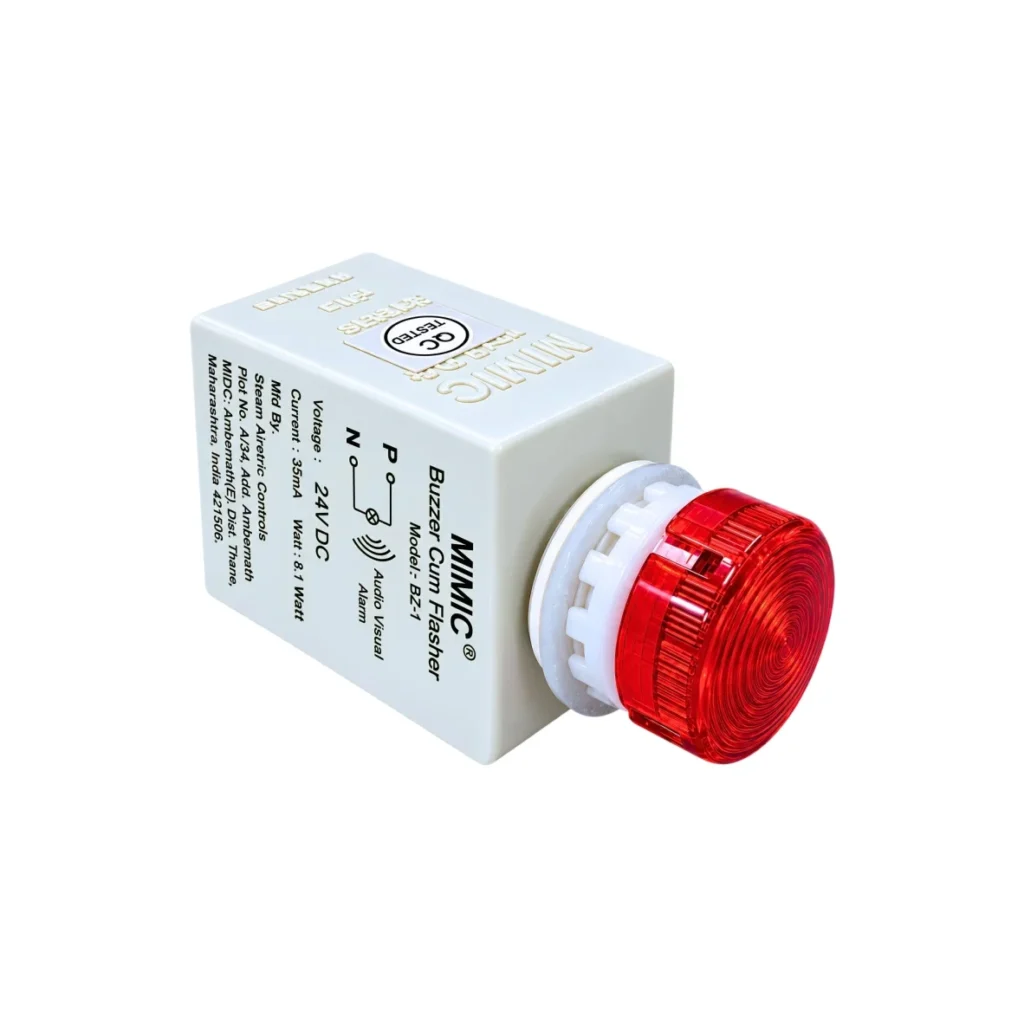
Imagine an operator working beside a running machine. Motors are humming, production equipment is moving, and several control panels are active at the same time. Suddenly, one part of the system needs attention. If the warning is too quiet or too difficult to see, the operator may not notice it immediately. This is why choosing the right warning method matters in an industrial setting.
An Audio visual alarm combines two familiar forms of notification—sound and flashing light—to make an alert more noticeable. Rather than depending on a single indicator, it gives operators both an audible and visual signal when the connected circuit is activated.
Why Industrial Warnings Can Be Easy to Miss
Industrial workplaces are rarely silent. Machinery, compressors, motors, ventilation systems, and other equipment can create constant background noise. At the same time, workers may move between different areas instead of continuously watching a control panel.
A conventional indicator lamp may be overlooked when someone is not facing the panel. Similarly, a buzzer may not stand out clearly when the surrounding noise level is high.
Combining both methods provides another way to communicate the same warning. The sound can attract attention, while the flashing light helps the operator identify the warning visually.
How the Dual Indication Works
The operating principle is straightforward. When the appropriate electrical signal reaches the device, the audible section produces a warning sound and the visual section provides a flashing indication.
An Audio visual alarm does not necessarily perform the same function in every installation. Its role depends on how it is connected to the control circuit and what condition is intended to activate it.
For example, it may be connected to a machine control system so that an alert is generated when a particular operating condition occurs. The device then becomes part of the overall warning arrangement.
Where This Type of Device Can Be Useful
There are many situations where combined warning indication can be considered. Electrical control panels, automation equipment, industrial machinery, and monitoring systems may all require noticeable alerts.
Some typical areas include:
- Machine control panels
- Industrial automation systems
- Electrical equipment
- Manufacturing machinery
- Process monitoring systems
- Equipment status indication
- Industrial control installations
The exact suitability depends on the product specifications and the requirements of the application.
The Importance of Choosing the Correct Voltage
One of the first specifications I would check before installing an Audio visual alarm is its operating voltage. The device must be suitable for the voltage supplied by the intended control circuit.
This is particularly important because industrial systems can use different AC and DC control voltages. Checking the product information before purchase helps avoid selecting a device that does not match the existing electrical arrangement.
Other technical details should also be reviewed, including connection requirements, mounting method, dimensions, and operating conditions.
Location Can Affect Warning Visibility
Even a suitable warning device may not be effective if it is installed in an inconvenient position. The flashing signal needs to be visible from the areas where operators normally work.
For a panel-mounted application, I would consider the position of the panel, the viewing angle, surrounding equipment, and available mounting space. The audible portion should also be noticeable within the intended area.
If the device is installed behind machinery or inside an enclosed location where the signal cannot be easily seen or heard, its practical value may be reduced.
Environmental Conditions Should Be Considered
The environment surrounding electrical equipment can vary significantly. Some installations are located inside clean control rooms, while others are exposed to dust, vibration, moisture, or temperature changes.
Before selecting an Audio visual alarm, I would check the manufacturer’s environmental specifications and compare them with the actual installation conditions.
This is especially important for equipment used close to production machinery. A product should be selected according to the conditions it is expected to handle rather than simply based on its general appearance.
Sound and Light Serve Different Purposes
It is useful to understand that the audible and visual portions of the device perform complementary roles.
The sound is primarily intended to attract attention. It can notify someone who is not currently looking toward the equipment. The flashing indication then provides a visual confirmation that a warning signal is active.
This makes the combined approach useful in environments where operators move around frequently. Instead of expecting someone to continuously watch an indicator, the system provides an additional method of drawing attention.
Installation and Wiring Considerations
Installing an Audio visual alarm requires more than simply fixing the device to a panel. The wiring must be compatible with the control circuit, and the installation should follow the manufacturer’s instructions.
Before beginning the installation, I would confirm the electrical rating and identify the appropriate connection points. The available space should also be checked to make sure the device can be mounted securely.
After wiring is completed, the warning function should be tested. Both the sound and flashing indication should respond correctly when the intended control signal is applied.
Regular Testing Helps Maintain Reliability
A warning device should not be installed and then ignored. Regular testing can help identify issues such as loose connections, wiring faults, or a malfunctioning indication.
During routine maintenance, operators or maintenance personnel can verify that the audible signal and visual indication are functioning correctly. The device’s physical condition and mounting can also be inspected.
For systems connected to automated equipment, testing should follow the site’s established maintenance procedures and the manufacturer’s recommendations.
A Practical Addition to Industrial Control Systems
The value of an Audio visual alarm comes from its simplicity. It provides two forms of indication without requiring operators to interpret a complicated display.
For suitable electrical and industrial applications, this can make warning communication more noticeable. However, the device should be selected according to the actual requirements of the system, including electrical rating, mounting conditions, environment, and required visibility.
It should also be viewed as one component within a properly designed control and warning system rather than as a replacement for appropriate safety equipment or protective measures.
Final Thoughts
In a busy industrial environment, small details can make a difference in how quickly an operator notices an abnormal condition. Combining sound and light provides a straightforward way to make warnings more noticeable.
An Audio visual alarm can therefore be considered for control panels, machinery, automation systems, and other applications where dual warning indication is useful. The most important step is choosing a model that matches the electrical and environmental requirements of the installation.
By paying attention to voltage, positioning, mounting, visibility, sound requirements, and regular testing, businesses can make better use of this type of warning device and create clearer communication between equipment and operators.