Dust, pollen, bird droppings, leaves, and other debris can quietly collect on solar panels and interfere with their performance. Regular maintenance helps keep these surfaces clear while making it easier to spot damage before it becomes a larger concern. For homeowners using Residential Solar Cleaning as part of routine maintenance, a consistent cleaning schedule can support efficient operation, protect the equipment, and help preserve the value of a solar investment.
Why Clean Solar Panels Regularly?
Solar panels are designed to operate outdoors, so they naturally encounter changing weather and environmental conditions. Rain may remove some loose dirt, but it does not always clear stubborn deposits such as bird droppings, pollen, dust, or dried residue.
Over time, this buildup can reduce the amount of sunlight reaching the photovoltaic cells. Even when the reduction is relatively small, ongoing accumulation can affect overall energy production.
Regular solar cleaning provides a simple way to manage this problem. Instead of waiting until panels look heavily soiled, homeowners can include cleaning in a broader maintenance routine.
Common Sources of Panel Dirt
Several everyday sources contribute to dirty solar panels:
- Dust and airborne particles
- Pollen from nearby trees and plants
- Bird droppings
- Leaves and small organic debris
- Dried rainwater deposits
- Pollution and environmental residue
- Mud or dirt carried by storms
The amount of buildup depends heavily on the property’s surroundings. A home near construction, farmland, busy roads, or large trees may require more frequent attention than a home in a relatively clean environment.
How Dirt Can Affect Solar Panel Performance
Solar panels need direct access to sunlight to produce electricity. When a layer of dirt covers part of the panel surface, it can limit the light available to the photovoltaic cells underneath.
The impact varies depending on the type and amount of debris. A light layer of dust may have a modest effect, while thick deposits or concentrated obstructions can have a more noticeable impact.
However, cleaning should not be viewed as a guaranteed way to produce a specific percentage increase in energy output. Results depend on weather, panel angle, local conditions, system design, and the severity of the buildup.
Why Bird Droppings Deserve Special Attention
Bird droppings can be more troublesome than ordinary dust because they may form concentrated patches on the panel. A single heavily covered area can obstruct sunlight reaching a portion of the system.
Dried droppings can also become harder to remove if they remain on the surface for an extended period. Gentle cleaning can help prevent these deposits from becoming a persistent maintenance issue.
Can Cleaning Help Extend Panel Lifespan?
Solar panels are generally built to withstand outdoor exposure for many years. Cleaning does not eliminate normal aging, weather-related stress, or component degradation. However, responsible maintenance can help protect the panels from avoidable problems.
A clean surface makes it easier to inspect panels for visible issues such as cracks, loose components, damaged frames, or unusual staining. Early identification gives homeowners an opportunity to investigate potential problems before they become more serious.
In this sense, solar cleaning contributes to preventive maintenance rather than acting as a direct anti-aging treatment.
Cleaning Supports Better Inspection
A dirty panel can hide small signs of trouble. Once the surface is clear, homeowners or qualified professionals can more easily check for:
- Cracks or chips in the glass
- Damaged panel frames
- Loose or displaced components
- Heavy staining
- Persistent debris
- Signs of animal activity
- Unusual physical changes
Cleaning and inspection therefore work well together. Removing surface debris creates a clearer view of the equipment and can make routine maintenance more effective.
What Happens When Solar Panels Stay Dirty?
Leaving panels dirty for a short period does not necessarily mean they will suffer permanent damage. However, prolonged neglect can create unnecessary maintenance challenges.
For example, accumulated bird droppings may become difficult to remove after repeated drying and weather exposure. Organic material can also collect around certain areas of a system, particularly where leaves or branches are nearby.
Heavy buildup may also make it more difficult to identify physical damage. A homeowner who rarely checks the panels could miss a developing issue simply because the surface is difficult to examine.
The goal is not to clean panels constantly. Instead, homeowners should develop a reasonable maintenance routine based on their property’s conditions.
How Often Should Solar Panels Be Cleaned?
There is no single cleaning schedule that works for every home. Local weather and environmental conditions play a major role.
Homes in areas with frequent dust, pollen, pollution, or limited rainfall may need more attention. By contrast, panels that receive regular, gentle rainfall and remain relatively free of debris may require less frequent manual cleaning.
A practical approach is to inspect the panels periodically and look for visible buildup or changes in system performance.
Factors That Influence Cleaning Frequency
Consider these factors when developing a maintenance schedule:
| Factor | Possible Effect on Panels | Maintenance Consideration |
|---|---|---|
| Dusty environment | Fine particles can accumulate | Inspect more often |
| Nearby trees | Leaves and pollen may collect | Watch for seasonal buildup |
| Bird activity | Droppings can create concentrated deposits | Remove problematic spots promptly |
| Frequent rain | May naturally remove some loose dirt | Manual cleaning may be less frequent |
| Dry climate | Dust may remain on surfaces longer | Regular inspections are useful |
| Low panel angle | Debris may remain on the surface | Pay attention to buildup |
| Construction nearby | Airborne dust may increase | Consider more frequent inspections |
The right schedule should reflect actual conditions rather than relying on a fixed calendar alone.
Safe Ways to Approach Solar Cleaning
Solar panels may look simple to clean, but homeowners should use care. The glass surface can be damaged by abrasive materials, harsh chemicals, or improper tools.
Before cleaning, review the panel manufacturer’s maintenance recommendations. If the system is difficult to access, steeply mounted, or located on a high roof, professional assistance may be the safer option.
Use Gentle Cleaning Methods
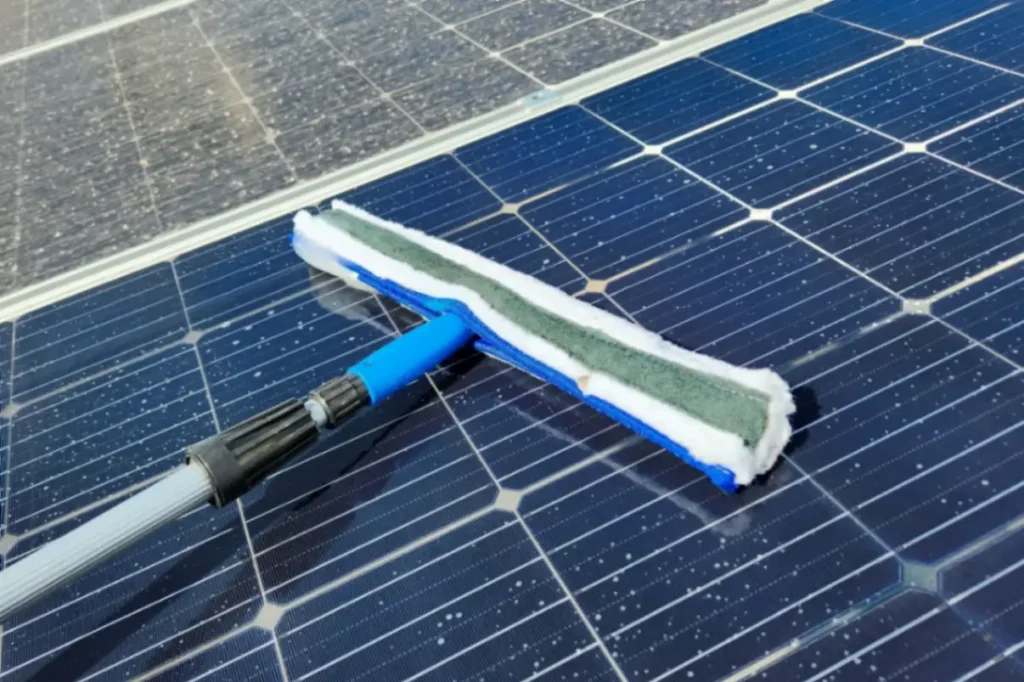
For accessible residential systems, basic cleaning may involve clean water and a soft, non-abrasive cleaning tool. Avoid aggressive scrubbing that could scratch the panel surface.
It is also wise to avoid unnecessary pressure or harsh cleaning agents. Solar panels are electrical equipment, so homeowners should follow manufacturer guidance regarding water use and system shutdown procedures.
Choose the Right Time
Cleaning panels during very hot conditions can create unnecessary challenges. Water can evaporate quickly, potentially leaving mineral deposits behind.
A cooler part of the day can make the process easier. Homeowners should also avoid working on wet, slippery roofs where there is a risk of falling.
When Professional Solar Cleaning Makes Sense
Not every solar panel system is easy or safe for a homeowner to clean. Roof height, panel placement, steep slopes, and difficult access can turn a simple maintenance task into a safety concern.
Professional cleaners can have the appropriate equipment and experience to reach panels without unnecessary risk. They can also identify visible concerns that may deserve further inspection.
Situations That May Require Professional Help
Professional service may be appropriate when:
- Panels are installed on a steep roof.
- The system is difficult to reach safely.
- Heavy or stubborn deposits have accumulated.
- There is extensive bird activity.
- The homeowner lacks suitable cleaning equipment.
- The panels are part of a large or complex installation.
- The manufacturer recommends specialized maintenance.
Hiring a qualified service can be especially useful when cleaning needs to be combined with a broader visual inspection.
Mistakes to Avoid When Cleaning Solar Panels
A few simple mistakes can turn routine maintenance into an unnecessary repair expense. The most important rule is to treat the panel surface gently.
Avoid abrasive brushes, rough materials, and aggressive scrubbing. These approaches can potentially damage the surface instead of improving it.
Do Not Ignore Safety
Roof work presents a greater risk than cleaning equipment at ground level. A homeowner should never take unnecessary chances simply to save the cost of professional service.
If reaching the panels requires climbing onto a steep or unstable roof, professional cleaning is a sensible alternative.
Avoid Harsh Chemicals
Strong household cleaners are not automatically suitable for photovoltaic panels. Some products may leave residue or interact poorly with panel surfaces.
Following the manufacturer’s instructions is the safest starting point. When in doubt, a professional can recommend an appropriate cleaning approach.
Solar Cleaning as Part of Preventive Maintenance
Solar cleaning works best when it is treated as one part of overall system care. Homeowners should not rely on cleaning alone to maintain a solar installation.
Periodic monitoring of energy production can help reveal unusual changes. Visual inspections can identify physical concerns, while professional maintenance can address electrical or mechanical issues that ordinary cleaning cannot solve.
A useful maintenance routine may include:
- Inspecting the panels for visible dirt and debris.
- Checking whether nearby trees are creating excessive shade.
- Monitoring system performance.
- Cleaning the surface when buildup becomes noticeable.
- Looking for cracks, stains, or physical damage.
- Scheduling professional inspections when necessary.
- Keeping records of maintenance and unusual performance changes.
This approach helps homeowners treat their solar investment as long-term equipment rather than something that can simply be installed and forgotten.
How Clean Panels Support Long-Term Value
Solar panels represent a significant investment for many homeowners. Maintaining them properly can help preserve their usefulness over the long term.
Clean surfaces can support unobstructed sunlight exposure, while regular inspections can help identify maintenance concerns earlier. Although cleaning cannot stop normal equipment aging, it can reduce the chance that simple neglect becomes an avoidable problem.
Good maintenance also gives homeowners greater visibility into the condition of their system. That information can be valuable when evaluating energy production, planning repairs, or preparing for future upgrades.
Combine Cleaning With Other Maintenance
A complete solar care strategy may include:
- Panel surface inspections
- Performance monitoring
- Inverter checks
- Electrical inspections by qualified professionals
- Roof and mounting assessments
- Vegetation management
- Professional servicing when needed
This broader approach is more effective than assuming clean glass alone guarantees optimal system performance.
Practical Tips for Homeowners
Maintaining solar panels does not have to become complicated. A few practical habits can make the process easier.
First, observe the panels from a safe location and look for visible buildup. If dirt is clearly accumulating, check the manufacturer’s recommendations before choosing a cleaning method.
Second, pay attention to seasonal changes. Pollen, falling leaves, dry weather, and increased bird activity may create periods when panels need more attention.
Finally, monitor system performance. If electricity production changes unexpectedly, cleaning may be one factor to consider, but it should not automatically be assumed to be the cause. Shading, equipment faults, weather, and other conditions can also affect output.
Conclusion
Clean solar panels are easier to inspect, maintain, and keep in good working condition. While regular solar cleaning cannot prevent normal aging, it can help manage dirt and debris that interfere with sunlight exposure and make maintenance problems harder to identify. A sensible routine combines gentle cleaning, safe inspections, performance monitoring, and professional service when necessary. Homeowners should also follow their panel manufacturer’s care recommendations rather than using aggressive methods. By treating cleaning as part of preventive maintenance, property owners can protect their investment, support consistent system performance, and help their solar equipment remain useful for many years.
FAQs
1. Does solar cleaning really improve panel performance?
Cleaning can improve sunlight access when dirt, dust, bird droppings, or other debris are obstructing the panel surface. The actual effect varies according to the amount and type of buildup, weather conditions, panel angle, and system design.
2. Can dirty solar panels be permanently damaged?
Ordinary dirt does not automatically cause permanent damage. However, prolonged accumulation of certain materials can create maintenance problems and may make it harder to notice physical damage. Regular inspections help identify concerns earlier.
3. How often should residential solar panels be cleaned?
The ideal frequency depends on local conditions. Dusty environments, nearby trees, heavy pollen, bird activity, and dry weather may increase cleaning needs, while regular rainfall may reduce the need for manual cleaning.
4. Can I clean solar panels myself?
Accessible panels may be suitable for careful homeowner cleaning when the manufacturer permits it. However, roof safety should always come first. Difficult-to-reach or steeply mounted panels are better handled by qualified professionals.
5. What should I avoid when cleaning solar panels?
Avoid abrasive brushes, rough materials, excessive pressure, and unsuitable harsh chemicals. Follow the manufacturer’s maintenance instructions and use gentle cleaning methods appropriate for the panel surface.