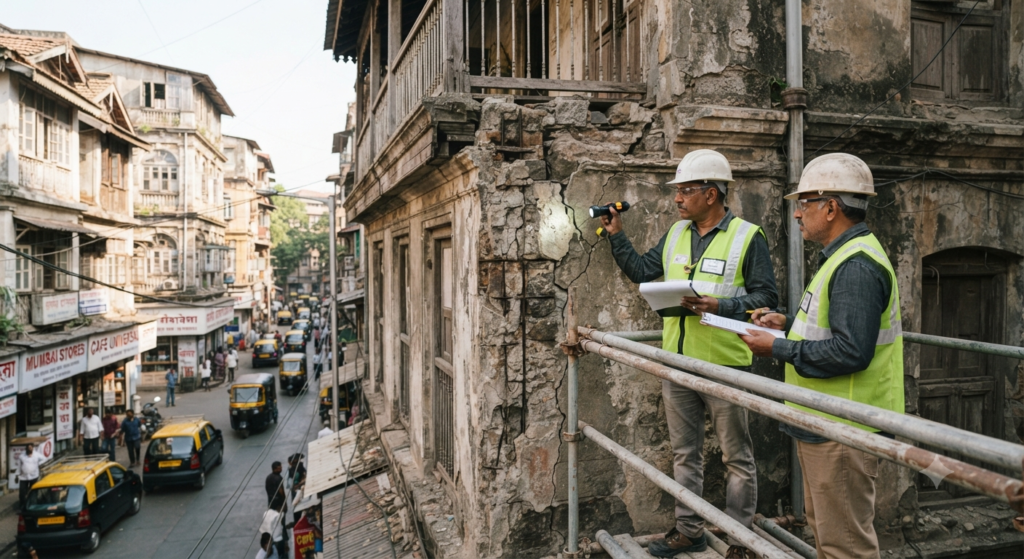
Old buildings often carry years of history, but their structural condition can change over time. Exposure to moisture, corrosion, repeated repairs, changing loads, poor maintenance, and natural aging can gradually affect the strength and durability of a structure. While some problems may appear minor, hidden deterioration can sometimes develop within concrete, reinforcement, beams, columns, slabs, and other structural components.
This is why involving a structural engineer in Mumbai can be important when an older building shows signs of deterioration or when major repairs, renovation, or redevelopment are being considered. A professional assessment can help property owners and housing societies understand the existing condition of the structure and determine suitable measures for maintaining safety and long-term performance.
Understanding the Challenges of Old Buildings
Buildings are exposed to different environmental and operational conditions throughout their service life. In Mumbai, coastal weather, humidity, rainfall, and moisture exposure can contribute to deterioration, particularly when maintenance is delayed.
Common issues found in aging buildings include:
- Cracks in beams, columns, slabs, or walls
- Reinforcement corrosion
- Concrete deterioration and spalling
- Water seepage and leakage
- Dampness and moisture-related damage
- Honeycombing and poor-quality concrete
- Reduced durability of structural elements
- Damage caused by unauthorized alterations
- Changes in building usage or loading conditions
Some of these problems can be identified visually, while others may require technical investigation. A professional structural engineer in Mumbai helps distinguish superficial defects from issues that may affect structural performance.
Why Professional Structural Assessment Matters
An old building should not be assessed only on its appearance. A structural engineer in Mumbai can help assess hidden deterioration within concrete or reinforcement. A structure may look reasonably maintained while having hidden deterioration within concrete or reinforcement. Conversely, some visible cracks may be non-structural and may not represent a serious safety concern.
A qualified professional can examine the building’s condition, review available drawings and previous repair records, inspect visible defects, and recommend further investigation where necessary. This provides property owners with a more informed understanding of the building instead of relying on assumptions.
For housing societies, this process can also help with planning maintenance budgets, repair priorities, and future structural work.
Identifying Cracks, Corrosion and Concrete Deterioration
Cracks are among the most noticeable signs of building deterioration. However, their significance depends on factors such as location, size, pattern, depth, and possible cause.
For example, cracks may develop because of shrinkage, thermal movement, water penetration, settlement, corrosion, overloading, or other factors. A professional assessment helps determine whether a crack requires simple maintenance or further structural investigation.
Corrosion of reinforcement is another major concern in older reinforced-concrete buildings. When steel reinforcement corrodes, it can expand and create pressure inside the surrounding concrete. Over time, this may result in cracking, spalling, and loss of concrete cover.
Role of NDT Testing in Older Buildings
Visual inspection alone cannot reveal every problem. Non-destructive testing, commonly known as NDT, can provide additional information about certain properties and conditions of structural materials without causing significant damage to the building.
Depending on the project requirements, testing may include methods such as:
- Rebound hammer testing
- Ultrasonic pulse velocity testing
- Cover meter testing
- Other appropriate non-destructive or limited-destructive investigations
These tests can help professionals evaluate concrete quality, identify areas requiring further investigation, and support technical assessment.
NDT results should not normally be considered in isolation. They are more useful when interpreted alongside visual observations, available structural drawings, building history, site conditions, and other relevant information.
Importance of Structural Audits for Aging Buildings
A structural audit provides a systematic approach to understanding the condition of an existing building. It can be particularly valuable for older residential societies, commercial properties, and other structures that have experienced years of use.
During an assessment, professionals may review the building’s age, construction characteristics, visible deterioration, previous repairs, alterations, and other relevant factors. The findings can then be used to recommend appropriate repair, rehabilitation, strengthening, maintenance, or further investigation.
For older buildings, periodic assessment can also help identify deterioration before it becomes more difficult or expensive to address.
How a Structural Engineer Supports Building Repairs
A professional may help determine:
- The extent and cause of deterioration
- Whether concrete repair is required
- Whether reinforcement needs treatment
- Whether structural strengthening is necessary
- Which repair materials and methods are appropriate
- What areas should be monitored after repair
- Whether additional investigation is required
This approach helps ensure that repair decisions are based on the actual condition of the building.
Gopinath Nambiar & Associates provides structural engineering services covering structural audits, NDT testing, building repairs, rehabilitation, structural strengthening, and related technical assessments for different types of buildings in Mumbai.
Structural Strengthening and Rehabilitation
Some older buildings may require more than routine repairs. Changes in usage, increased loads, deterioration, design deficiencies, or long-term damage can create a need for structural strengthening.
Strengthening solutions depend on the condition and requirements of the structure. Possible approaches may involve strengthening individual structural elements, improving load-carrying capacity, repairing damaged concrete, or implementing other technically appropriate measures.
Rehabilitation takes a broader view. It may combine repair, strengthening, durability improvement, and other measures intended to restore or improve the building’s performance.
The correct solution should be determined through professional assessment by a structural engineer in Mumbai rather than applying the same repair method to every building.
Why Mumbai Buildings Require Special Attention
Mumbai’s climate and dense urban environment create particular challenges for building maintenance. High humidity, heavy monsoon rainfall, water exposure, and coastal conditions can contribute to deterioration over time.
Older buildings may also have experienced multiple renovations, plumbing modifications, changes in internal layouts, or other alterations. If these changes affect structural elements or loading conditions, professional evaluation becomes especially important.
A structural engineer in Mumbai with experience in existing buildings can help property owners understand these local and project-specific considerations when assessing an aging structure.
When Should You Consult a Professional?
Property owners and housing societies should consider professional structural evaluation when they notice significant cracks, exposed or corroded reinforcement, concrete spalling, persistent water-related deterioration, unusual deflection, or other changes in the building’s condition.
Professional advice can also be valuable before:
- Major renovation work
- Structural alterations
- Building redevelopment
- Significant changes in occupancy or usage
- Major repair projects
- Structural strengthening
- Purchasing or evaluating an older property
Early assessment can help identify problems and support better decisions about maintenance and future investment.
Choosing the Right Structural Professional
Selecting an experienced professional is important because structural assessment involves technical judgment and an understanding of existing buildings.
Before appointing a consultant, property owners can consider factors such as:
- Relevant structural engineering experience
- Experience with older buildings
- Knowledge of structural audits and testing
- Understanding of repair and rehabilitation
- Experience with structural strengthening
- Professional credentials and applicable registrations
- Ability to provide clear technical recommendations
- Experience with residential, commercial, or industrial structures
Gopinath Nambiar & Associates offers structural consultancy solutions for building assessments, structural audits, NDT testing, repairs, rehabilitation, strengthening, and project management requirements.
Conclusion
Old buildings require regular attention because structural deterioration can develop gradually and may not always be visible. Cracks, corrosion, concrete deterioration, water damage, aging materials, and alterations can all affect a building’s long-term performance.
Working with a professional structural engineer in Mumbai can help property owners and housing societies understand the actual condition of their buildings and make informed decisions about inspection, repair, rehabilitation, strengthening, and maintenance.
A professional assessment does not simply identify existing problems; it can also help establish a practical path toward maintaining the building’s safety, durability, and functionality for the future.
FAQs
Q1. Why do old buildings need a structural engineer?
Old buildings can develop hidden deterioration, reinforcement corrosion, concrete damage, cracks, and other issues over time. A structural professional can assess these conditions and recommend suitable measures.
Q2. When should an old building undergo a structural assessment?
An assessment may be appropriate when a building shows significant cracks, corrosion, concrete deterioration, water-related damage, unusual structural changes, or before major renovation, repair, strengthening, or redevelopment.
Q3. Can NDT testing be used for old buildings?
Yes. NDT methods such as rebound hammer, ultrasonic pulse velocity, and cover meter testing can provide useful information about certain structural and material conditions without causing significant damage.
Q4. Is structural strengthening always required for an old building?
No. Strengthening depends on the actual condition, structural requirements, loading conditions, deterioration, and intended future use. A professional assessment should determine whether strengthening is necessary.
Q5. How can a structural professional help housing societies?
A professional can help housing societies assess building conditions, identify defects, evaluate repair requirements, recommend testing, plan rehabilitation or strengthening, and support informed decisions about long-term building maintenance.