Floor cranes provide a practical and flexible solution for lifting and positioning heavy materials in factories, workshops, warehouses, and maintenance facilities. T
Introduction
Floor cranes are important material handling equipment used for lifting, moving, and positioning heavy loads in industrial environments. They provide a practical solution for businesses that need to handle machinery, components, engines, tools, and other heavy materials without depending entirely on manual lifting.
In manufacturing plants, engineering workshops, warehouses, automobile facilities, and maintenance areas, moving heavy components can be challenging. A suitable floor crane can make these operations easier by providing controlled lifting and improved load handling.
Unlike large permanent overhead lifting systems, many floor cranes are designed for flexible operation at different workstations. Their compact construction and mobility make them useful where floor space, accessibility, and operational flexibility are important.
What Are Floor Cranes?
Floor cranes are lifting machines designed to operate at floor level for handling heavy materials and equipment. Depending on the design, they may use hydraulic, manual, electric, or other lifting mechanisms.
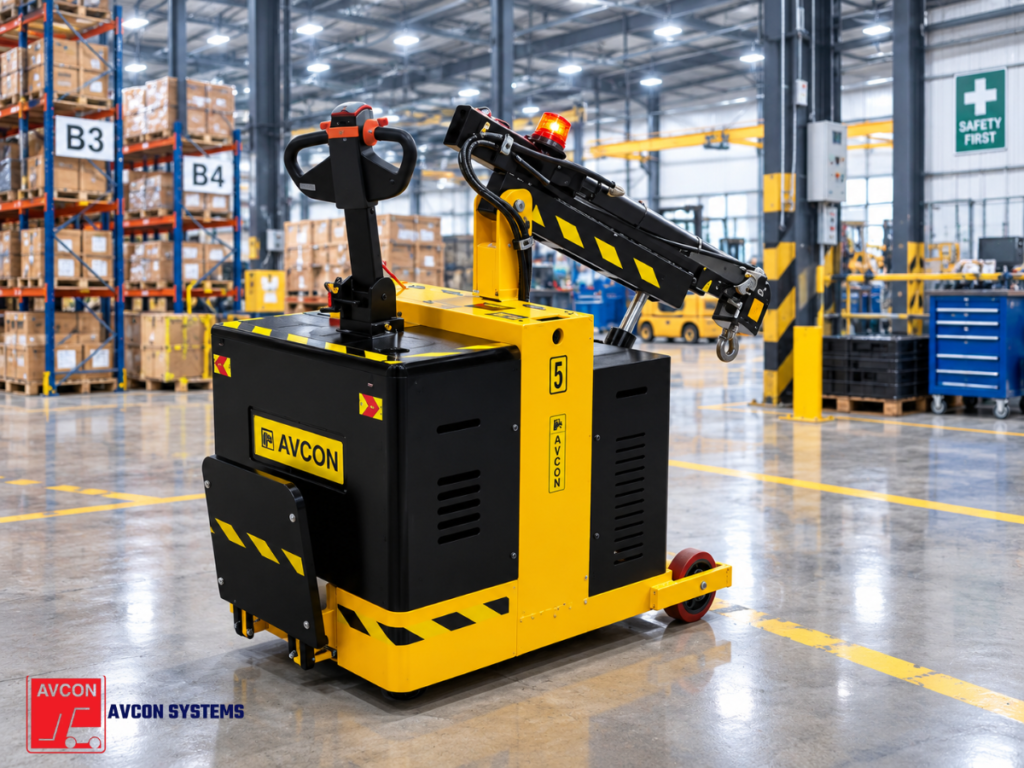
A typical floor crane may include a structural frame, boom, lifting hook, wheels or casters, hydraulic cylinder or lifting mechanism, and supporting components. The design allows operators to position the crane near the load and raise it to the required height.
The exact configuration depends on the application, required lifting capacity, working environment, and movement requirements.
How Do Floor Cranes Work?
The operating principle of floor cranes depends on the type of crane. Hydraulic models use hydraulic pressure to raise and lower the boom, while other models may use manual or powered lifting mechanisms.
During operation, the crane is positioned near the load. The load is securely connected to the lifting hook or approved lifting attachment. The operator then raises the load using the crane’s lifting mechanism and moves or positions it as required.
Safe operation requires the load to remain within the rated capacity of the crane. Operators should follow the manufacturer’s instructions and applicable workplace safety procedures.
Common Types of Floor Cranes
Different industrial applications require different lifting configurations. Some commonly used types include:
1. Hydraulic Floor Cranes
Hydraulic floor cranes use hydraulic power to lift heavy loads. They are commonly used in workshops, maintenance departments, factories, and engineering facilities.
Their hydraulic mechanism can provide controlled lifting with reduced manual effort, making them suitable for handling heavy machinery and components.
2. Mobile Floor Cranes
Mobile floor cranes are designed with wheels or casters that allow them to be moved between work areas. They are useful when lifting requirements exist at multiple locations within a facility.
3. Manual Floor Cranes
Manual floor cranes are operated without an electric power source. They can be useful for applications where lifting frequency is moderate and simple operation is preferred.
4. Electric Floor Cranes
Electric floor cranes use an electric-powered mechanism to assist with lifting operations. They can be suitable for facilities where frequent lifting is required and reducing manual effort is a priority.
Applications of Floor Cranes
Floor cranes are used across a wide range of industries. Common applications include:
- Manufacturing plants
- Engineering workshops
- Automobile service facilities
- Machinery maintenance
- Warehouses
- Fabrication units
- Assembly plants
- Industrial repair areas
- Machine installation
- Equipment handling
- Maintenance workshops
For example, an engineering workshop may need to remove a heavy motor from a machine for servicing. Instead of relying on several workers to manually move the component, a suitable floor crane can provide mechanical assistance.
Automobile workshops can also use floor cranes to handle engines, transmissions, motors, and other heavy components during maintenance and repair activities.
Benefits of Floor Cranes
Choosing the right floor crane can provide several benefits for industrial operations.
Reduced Manual Handling
Heavy components can be difficult and unsafe to move manually. Floor cranes provide mechanical lifting assistance, helping reduce excessive physical effort.
Improved Workplace Safety
Appropriate lifting equipment can reduce the risks associated with manually lifting heavy materials. Proper crane selection, operation, and maintenance are essential for safe handling.
Better Productivity
When heavy loads can be lifted and positioned efficiently, workers can complete maintenance, assembly, and handling tasks more effectively.
Flexible Operation
Mobile floor crane designs can be moved between different workstations, making them useful for facilities with changing lifting requirements.
Compact Solution
Many floor cranes are designed to operate in relatively confined areas. This can make them suitable for workshops and industrial environments where installing a large permanent crane system is not practical.
Cost-Effective Handling
For certain applications, a floor crane can provide an economical lifting solution without requiring a complete overhead crane installation.
Floor Cranes for Industrial Material Handling
Modern industries require efficient material handling systems to keep production and maintenance activities running smoothly. Floor cranes can support these requirements by helping workers lift and position heavy components.
In a manufacturing environment, they may be used to move machine parts, tools, dies, motors, pumps, and other equipment. In maintenance departments, they can assist with removing and installing heavy components.
The versatility of floor cranes makes them useful across different industrial sectors. However, the equipment should always be selected based on the actual lifting requirements of the workplace.
How to Choose the Right Floor Crane
Selecting the correct crane is important for both performance and safety. Consider the following factors before purchasing.
Lifting Capacity
Determine the maximum weight that needs to be lifted. Select a crane with an appropriate rated capacity for the intended loads.
Lifting Height
Check the required lifting height. The crane should be capable of reaching the necessary height without compromising safe operation.
Boom Reach
The horizontal reach of the boom determines how far the crane can position a load from its base. Choose a suitable reach based on the workspace and application.
Mobility
If the crane needs to be moved between workstations, consider wheel configuration, maneuverability, and available floor space.
Working Environment
Evaluate the surface condition, aisle width, available clearance, and surrounding equipment before selecting the crane.
Operating Frequency
The frequency of lifting operations can influence whether a manual, hydraulic, or powered crane is more appropriate.
Safety Features
Safety should always be a priority. Consider structural stability, load-control mechanisms, lifting components, and other safety provisions appropriate for the application.
Maintenance of Floor Cranes
Regular maintenance helps maintain reliable crane performance and supports safe operation. Maintenance requirements vary according to the crane type and manufacturer.
Operators should regularly inspect the structural frame, boom, wheels, lifting hook, hydraulic components, fasteners, and other load-bearing parts.
For hydraulic models, hydraulic hoses, connections, cylinders, and fluid levels should be checked according to the manufacturer’s recommendations.
Any signs of damage, hydraulic leakage, excessive wear, unusual movement, or component failure should be investigated before the equipment is used again.
Safety Tips for Using Floor Cranes
Safe operation is essential whenever heavy loads are lifted. Important practices include:
- Never exceed the crane’s rated lifting capacity.
- Inspect the equipment before operation.
- Ensure the load is properly secured.
- Keep unauthorized personnel away from the lifting area.
- Operate the crane according to manufacturer instructions.
- Keep the load stable during movement.
- Avoid sudden or uncontrolled movements.
- Use suitable lifting accessories and attachments.
- Keep the operating surface clear.
- Schedule regular inspections and maintenance.
Proper operator training is also important. Employees should understand the crane’s controls, rated capacity, limitations, and safe operating procedures.
Why Choose Quality Floor Cranes?
The reliability of lifting equipment is particularly important in industrial environments. A quality floor crane should be designed for its intended application and manufactured using suitable materials and components.
Businesses should consider the manufacturer’s experience, product specifications, technical support, customization capabilities, maintenance support, and availability of spare parts when making a purchase.
For specialized requirements, manufacturers may also provide customized lifting solutions based on load capacity, dimensions, lifting height, workspace, and application.
Conclusion
Floor cranes provide a practical and flexible solution for lifting and positioning heavy materials in factories, workshops, warehouses, and maintenance facilities. Their ability to reduce manual handling, improve load movement, and support efficient industrial operations makes them valuable material handling equipment.
From hydraulic and manual designs to mobile and electric configurations, different types of floor cranes are available for different applications. Selecting the correct model requires careful consideration of lifting capacity, height, boom reach, mobility, working environment, and operating frequency.
With proper selection, regular inspection, maintenance, and trained operation, floor cranes can become an important part of a safe and efficient industrial material handling system.