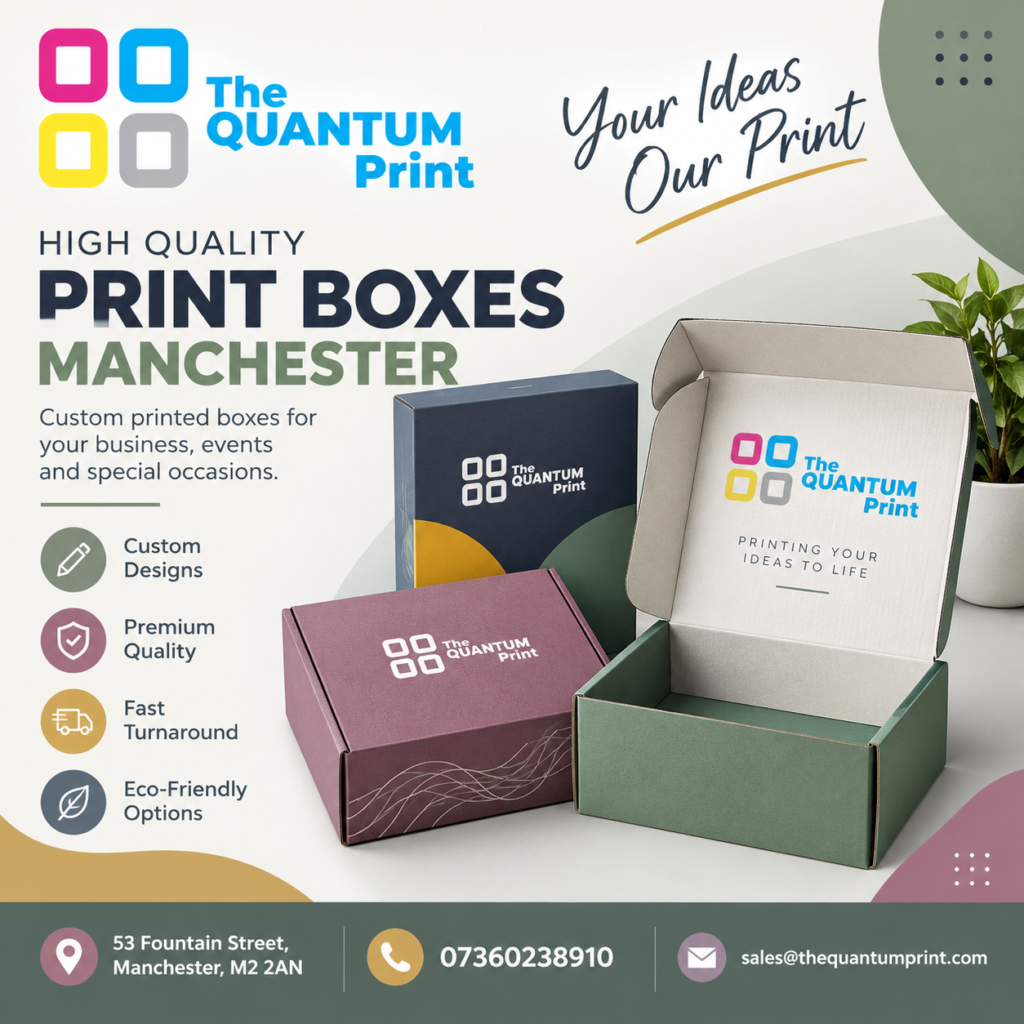
Packaging is often the first physical interaction a customer has with a product. A well-designed box can protect its contents, communicate important information, and create a more consistent brand experience. For businesses across retail, e-commerce, food, cosmetics, and specialist products, choosing suitable printed packaging requires more than simply selecting colours and adding a logo.
The growing demand for branded packaging has made the print box UK market increasingly diverse. Businesses can now choose from different board materials, structures, finishes, printing methods, and box styles depending on their product and budget. Understanding these options helps companies make practical packaging decisions without compromising functionality.
Why Printed Boxes Matter for Modern Businesses
A printed box can perform several functions at the same time. It can provide physical protection while also communicating brand identity and product information.
For e-commerce businesses, packaging is particularly important because customers often see the box before they use the product. Clear branding, professional graphics, and suitable structural design can contribute to a more memorable unboxing experience.
Printed packaging can also be useful for:
- Retail products displayed on shelves
- Subscription boxes and e-commerce orders
- Cosmetics and personal-care products
- Food and bakery products
- Gifts and promotional items
- Small electronics and accessories
- Handmade and specialist products
The most effective packaging balances appearance with practical requirements such as strength, storage, transportation, assembly, and recyclability.

Choosing the Right Print Box Design
Before businesses buy printed boxes, they should establish the packaging requirements rather than starting with artwork alone. Box dimensions, product weight, handling conditions, and shipping requirements can all influence the final specification.
A useful planning checklist includes:
- Product dimensions: The box should provide enough space without excessive empty areas.
- Board material: Different products may require different levels of rigidity and protection.
- Box structure: Folding cartons, mailer boxes, rigid boxes, and other formats serve different purposes.
- Artwork: Logos, typography, product information, and graphics should remain clear at the chosen box size.
- Finishing: Options such as matt or gloss coatings can change the appearance and feel of packaging.
- Sustainability: Recyclable and responsibly sourced materials may support environmental objectives.
Testing a prototype or sample before a larger production run can help identify problems with dimensions, folds, artwork positioning, or structural strength.
Print Box Options for Manchester and Across the UK
Businesses searching for a print box Manchester supplier may have very different requirements from companies operating elsewhere in the UK. Local businesses may need smaller production quantities, rapid turnaround, or packaging suitable for local retail distribution. Larger e-commerce companies may instead prioritise consistency, scalability, and shipping performance.
Regardless of location, the specification should be based on the product rather than simply the appearance of the finished box.
For example, a lightweight retail product may work well with a folding carton, while an item travelling through parcel networks may require a stronger mailer-style structure. Fragile products may also need internal inserts or additional protection.
When comparing suppliers, businesses should consider:
- Available box styles and sizes
- Printing capabilities
- Material options
- Minimum order quantities
- Sampling and proofing procedures
- Finishing choices
- Production consistency
- Delivery arrangements
The Quantum Print is one example of a UK packaging provider offering printed box solutions for businesses that need branded packaging. Its dedicated print box packaging information can also help businesses understand the types of options available before finalising specifications.
Common Problems and How to Avoid Them
One common packaging mistake is designing the artwork before confirming the physical box structure. A design that looks correct on a flat screen may not work as expected after folding. Important text can end up too close to creases, edges, or glued areas.

Another issue is selecting packaging based entirely on appearance. A visually impressive box may still be unsuitable if it is too weak, oversized, difficult to assemble, or inefficient to transport.
Businesses can reduce these risks by:
- Requesting a physical sample where appropriate
- Checking artwork against printer specifications
- Confirming internal and external dimensions
- Allowing for safe product clearance
- Testing packaging for handling and shipping
- Reviewing material and recycling requirements
- Confirming quantities before production
Colour consistency is another consideration for businesses with established branding. Using appropriate artwork files, colour specifications, and proofing processes can help maintain a consistent visual identity across different packaging batches.
Trends Influencing Printed Packaging
Packaging design continues to move towards cleaner layouts, purposeful branding, and more sustainable material choices. Many businesses are reducing unnecessary packaging while using printed surfaces more effectively to communicate product information.
Minimalist designs are popular because they can make packaging easier to understand while reducing visual clutter. At the same time, personalised and digitally printed packaging has made it more practical for some businesses to produce shorter runs or targeted packaging variations.
E-commerce is another major influence. Boxes increasingly need to function efficiently during storage, picking, shipping, delivery, and unboxing. This has increased interest in packaging structures that are easy to assemble and appropriately sized for their products.

Final Considerations
Selecting a print box UK solution should be treated as both a design and operational decision. The right packaging needs to protect the product, communicate essential information, support brand recognition, and perform reliably through storage and transportation.
Rather than choosing a box solely because it looks attractive, businesses should consider dimensions, material, construction, printing requirements, sustainability, and intended use. Careful planning and sample testing can prevent expensive production problems and help create packaging that works effectively from the warehouse to the customer’s hands.
Whether a business operates in Manchester or elsewhere in the UK, understanding these fundamentals makes it easier to specify and buy printed boxes that are practical, consistent, and appropriate for the product.
Read More :
- https://vxengine.ru/blogs/2973/How-the-Right-Cardboard-Packaging-Supports-Modern-E-Commerce
https://mingolive.com/blogs/12481/How-Custom-Packaging-Helps-Small-Businesses-Build-a-Stronger-Brand
https://pencraftednews.com/https-www-thequantumprint-com-dropper-bottle-packaging-labels/
https://kissmegames.com/how-small-businesses-can-choose-the-right-packaging-boxes-in-the-uk/
https://yinutri.com/how-professional-box-printing-supports-modern-uk-packaging/
https://yinutri.com/how-professional-box-printing-supports-modern-uk-packaging/
https://wikinewsportal.com/https-www-thequantumprint-com-custom-boxes-london-uk/
https://wikinewsportal.com/https-www-thequantumprint-com-box-packaging-medicine-packaging-boxes/