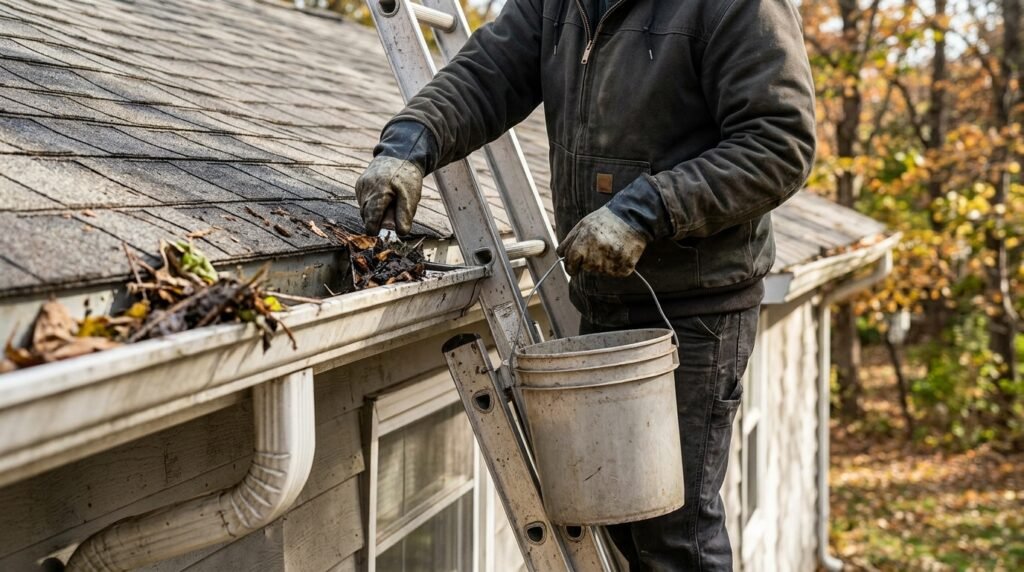
Why Regular Gutter Cleaning Matters for Roof Drainage Today
Regularly clearing gutters helps rainwater flow away from the roof and building. Leaves, twigs, dirt and other debris can block the channels and downpipes, causing water to overflow. Gutter cleaning keeps drainage paths open, helps reduce moisture problems around the roof and walls, and makes it easier to spot damage before it becomes more serious.
Gutters often collect debris gradually, so blockages may go unnoticed until heavy rain arrives. A simple maintenance routine can reduce this risk and help protect the property from avoidable water damage.
How Blocked Gutters Disrupt Roof Drainage
Gutters collect rainwater running off the roof and guide it towards downpipes. When leaves, moss and dirt build up, water may struggle to reach the outlets. This can cause overflowing along the roof edge and leave walls, paths or garden areas wetter than usual. Regular gutter maintenance keeps the drainage route clearer and helps water move away from vulnerable parts of the property.
The signs of a blockage are not always obvious during dry weather. Water marks beneath the gutter, plants growing inside the channel and water spilling over during rain may indicate a problem. In colder conditions, trapped water can also freeze. Checking the gutters after autumn leaf fall and severe weather helps homeowners spot issues before they affect the wider drainage system.
Why Regular Cleaning Helps Protect Your Home
Residential gutter cleaning removes leaves, twigs and other material that can collect inside roof drainage channels. Keeping these areas clear helps reduce overflow and limits the amount of standing water around the roofline. It also gives homeowners an opportunity to notice loose brackets, cracks or sagging sections. Finding these issues early may prevent a minor repair from becoming a larger maintenance concern.
Water that repeatedly spills near walls or the foundations may contribute to damp conditions, staining or soil erosion. Clearing gutters does not solve every drainage problem, but it removes one common cause of poor rainwater flow. Gutter Cleaning is especially useful after nearby trees shed leaves, as debris can collect quickly in channels and outlets even when the roof looks clear from the ground.
Effective Ways to Remove Gutter Debris and Blockages
Gutter debris removal should address both the main channel and the points where water exits. Leaves and twigs may be visible from the ground, but compacted dirt and moss can remain around corners or downpipe openings. A proper inspection checks whether water has a clear route through the system. Homeowners should avoid climbing ladders without suitable training and equipment, particularly where roofs are steep or access is uneven.
Gutter blockage removal may require clearing packed material from an outlet or checking a downpipe for an obstruction. Simply removing the leaves from the top may not resolve a deeper blockage. After the debris is cleared, the drainage route should be checked safely to confirm that water can pass through. If the gutter is damaged, poorly aligned or repeatedly blocked, a qualified professional can assess the cause.
Building a Practical Rainwater Drainage Maintenance Routine
Rainwater drainage cleaning works best when it follows the property’s surroundings and seasonal conditions. Homes near mature trees may need more frequent checks than properties with little nearby vegetation. Autumn is a common time for leaf build-up, while storms can bring down twigs and other debris at any point in the year. A regular schedule helps prevent long gaps between inspections and reduces the chance of unnoticed blockages.
Good gutter maintenance involves more than removing debris. Check for leaking joints, loose fixings, sagging sections and signs that water is not draining correctly. Downpipes should remain clear, and water should discharge away from areas where it could collect against the building. If problems return soon after cleaning, professional advice may identify a faulty connection, unsuitable gutter slope or another underlying cause.
Conclusion
Clear gutters help rainwater leave the roof safely instead of spilling over blocked channels. Removing debris, checking downpipes and watching for damage can reduce common drainage problems throughout the year. Gutter Cleaning should form part of a practical home maintenance routine, especially after heavy leaf fall or storms. Regular checks also make it easier to identify repairs early and keep the drainage system working as intended.
FAQs
1. How often should gutters be cleaned?
Many homes benefit from checks at least twice a year, often in spring and autumn. Properties near trees or exposed to frequent storms may need more frequent attention.
2. What are the signs of blocked gutters?
Common signs include overflowing water during rain, visible leaves, plants growing in the channels, sagging sections and damp marks beneath the roofline.
3. Can blocked gutters cause damp walls?
Yes, overflowing rainwater may repeatedly wet exterior walls and contribute to moisture problems. However, damp can have other causes that may need separate inspection.
4. Should downpipes be checked during gutter cleaning?
Yes. Downpipes carry collected water away from the gutters. An obstruction inside a downpipe may prevent drainage even when the main channels look clear.
5. Is professional gutter cleaning worth considering?
Professional help is useful when gutters are difficult to reach, the roof is steep or damage is suspected. Trained workers can assess the system while following suitable safety practices.