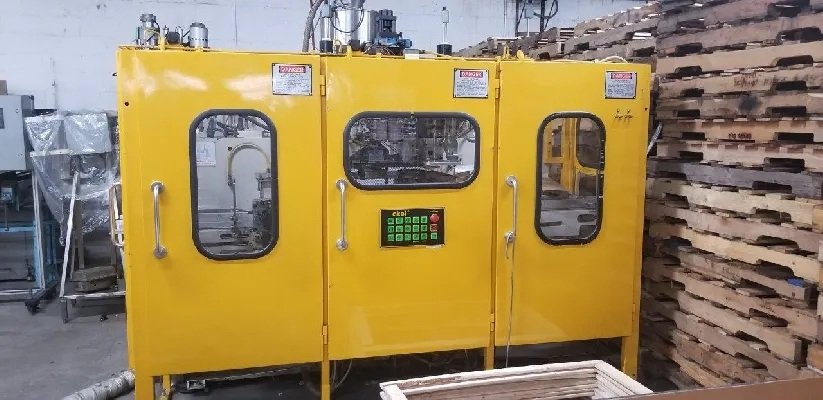
Horizontal injection molding machines are widely used to manufacture plastic components for industries such as automotive, consumer products, electronics, packaging, and industrial equipment.
One reason for their widespread use is their ability to process many thermoplastic materials. However, not every machine is suitable for every material. The correct choice depends on the plastic’s processing requirements, the machine’s capabilities, and the design of the mold.
Understanding these factors helps manufacturers select equipment that meets their production and product-quality requirements.
What Types of Plastics Can a Horizontal Injection Molding Machine Process?
Many horizontal injection molding machines can process common thermoplastics, provided their injection units, temperature controls, screw designs, and other components are suitable for the material.
1. Polypropylene (PP)
Polypropylene is commonly used for containers, household products, automotive components, and various industrial parts.
Manufacturers value it for its relatively low density, chemical resistance, and versatility. The specific grade must be selected according to the product’s mechanical, thermal, and regulatory requirements.
2. Polyethylene (PE)
Polyethylene is used in a range of molded products, including caps, closures, containers, and industrial components.
Different grades offer different combinations of flexibility, impact resistance, and stiffness. Processing requirements depend on the grade and the component design.
3. Acrylonitrile Butadiene Styrene (ABS)
ABS is often selected for housings, enclosures, consumer products, and components that need a balance of toughness and surface finish.
Processing conditions must be appropriate for the particular grade. Some grades also require careful moisture control before molding.
4. Polystyrene (PS)
Polystyrene is used for various consumer, packaging, and general-purpose molded components.
Its properties depend on the grade. General-purpose and impact-modified polystyrene have different performance characteristics and are not interchangeable in every application.
5. Polycarbonate (PC)
Polycarbonate is used for applications that require impact resistance and, in some grades, optical clarity.
It typically requires close control of processing temperatures and moisture content. The machine must be capable of meeting the material’s processing requirements.
6. Nylon (Polyamide)
Nylon is commonly used for gears, bushings, fasteners, and engineering components that require mechanical strength and wear resistance.
Moisture control is particularly important for many nylon grades because absorbed moisture can affect processing and finished-part properties.
7. Thermoplastic Elastomers (TPE)
Thermoplastic elastomers are used for flexible components such as grips, seals, soft-touch parts, and protective elements.
Their processing requirements vary by formulation. Manufacturers should confirm that the material is compatible with the machine and mold configuration.
Can One Machine Process Different Plastic Materials?
Yes, a suitable injection molding machine may process multiple materials over its service life. However, changing materials may require adjustments to processing parameters, cleaning procedures, and sometimes the machine configuration.
Important considerations include:
- Temperature range: The barrel and nozzle must support the material’s processing temperatures.
- Screw and barrel compatibility: Abrasive, corrosive, or high-temperature materials may require specialized components.
- Moisture sensitivity: Certain materials require drying before processing.
- Material flow: Different melt-flow characteristics can affect filling pressure, injection speed, and cycle time.
- Cleaning and purging: Material changes may require appropriate purging procedures to avoid contamination or degradation.
- Mold compatibility: The mold’s design, venting, cooling, and gating must suit the selected material.
A machine that can process one common thermoplastic should not automatically be assumed suitable for every engineering resin or specialty compound.
What About Reinforced and High-Temperature Plastics?
Some injection molding applications use glass-fiber-reinforced materials, flame-retardant compounds, or engineering plastics designed for higher temperatures.
These materials may require additional attention to screw and barrel wear, corrosion resistance, processing temperatures, and material handling.
Before processing reinforced or specialty compounds, manufacturers should confirm that the machine’s components and specifications are suitable for the material. The mold and auxiliary equipment may also require specific capabilities.
How Do You Choose the Right Machine for Your Material?
When selecting a machine, begin by identifying the exact material grade and the finished component’s requirements.
Then evaluate the following:
- Material processing window: Confirm the required barrel, nozzle, and melt temperatures.
- Injection capacity: Ensure the machine can deliver the required shot size for the part and runner system.
- Clamping force: Verify that the machine can keep the mold closed under the required processing conditions.
- Screw and barrel design: Check compatibility with the resin and any reinforcing additives.
- Mold dimensions: Confirm platen size, tie-bar spacing, mold height, and opening requirements.
- Auxiliary equipment: Determine whether dryers, loaders, temperature controllers, or other equipment are required.
- Production goals: Consider cycle time, part quality, material waste, and expected output.
Is a Used Machine Suitable for Different Materials?
A used machine may be suitable for processing several materials if its condition and technical specifications meet the application requirements.
However, buyers should inspect the screw, barrel, nozzle, temperature-control system, and other material-contact components. Previous use may also affect the equipment’s suitability for a new application.
Before purchasing, identify the materials you intend to process and confirm compatibility with the specific machine. This is particularly important when moving from a general-purpose resin to an abrasive, corrosive, or high-temperature material.
Find Equipment for Your Plastic Manufacturing Requirements
Choosing an injection molding machine requires matching its capabilities to the material, mold, and final product. Evaluating these factors before purchasing can help reduce compatibility issues and support consistent production.
Hunter Plastics helps manufacturers source used plastic processing machinery for different industrial applications. Reviewing your material requirements, production volume, and machine specifications can help narrow down suitable equipment options.
Final takeaway: Horizontal injection molding machines can process a wide variety of thermoplastics, but the correct machine depends on the resin grade, required processing conditions, mold design, and production goals. Confirm compatibility before committing to a machine or changing materials.