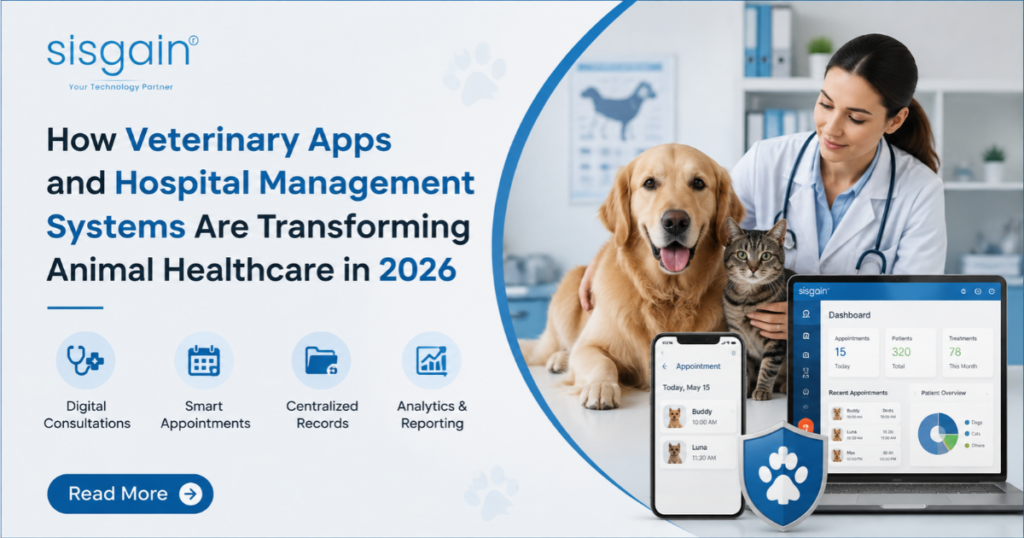
Across the United States, veterinary clinics and animal hospitals are quietly reshaping how care is delivered. Mobile apps let pet owners book visits and track vaccinations from their phones. Cloud-based records give clinicians faster access to patient histories. Artificial intelligence (AI) tools help teams sort through growing volumes of clinical data, and connected hospital systems tie these pieces together.
This shift responds to real problems. Many practices still deal with fragmented medical records, appointment delays, repetitive manual paperwork, and little visibility into a patient’s health between visits. Each gap costs staff time and can weaken continuity of care.
This article argues that integrated veterinary applications and hospital management systems, implemented responsibly and with professional oversight, can improve coordination, operational efficiency, and the quality of ongoing care.
Understanding Veterinary Apps and Hospital Management Systems
What Are Veterinary Mobile Applications?
Veterinary mobile apps are tools that connect pet owners with their clinic. Common functions include appointment booking, vaccination reminders, prescription refills, teleconsultations, and pet health tracking. Owners can log observations such as appetite or activity changes, while veterinary professionals can share instructions, test summaries, and follow-up notes. When designed well, the app becomes a shared channel for relevant health information rather than another inbox to monitor.
What Are Veterinary Hospital Management Systems?
A hospital management system is centralized software that coordinates the operational backbone of a facility: patient records, appointments, billing, laboratory workflows, pharmacy stock, staff schedules, and day-to-day administration. It is useful to separate two categories. Clinic-focused practice management tools usually cover front-desk and records functions for a single site. Broader hospital platforms extend to departments such as diagnostics, specialty services, inpatient care, and multi-location reporting.
Why Integration Matters in 2026
Standalone tools create information silos. A reminder app that cannot read the medical record, or a billing system that does not know what was prescribed, forces staff to re-enter data and invites errors. Integration reduces duplicate entry and keeps everyone looking at the same facts. It also demands secure data exchange between mobile apps, electronic medical records, diagnostic systems, and administrative platforms, so that information flows only to the people and systems that should have it.
Key Ways Veterinary Apps Are Transforming Animal Healthcare
Convenient Appointments and Digital Communication
Online booking, automated reminders, and follow-up notifications make routine interactions simpler for owners and staff alike. A text reminder the day before a visit, or a prompt to reschedule a missed appointment, can reduce no-shows and free front-desk teams from long phone queues. Post-visit messages that confirm medication instructions also help owners feel supported after they leave the clinic.
Digital Pet Health Records
Vaccination histories, allergies, medication lists, diagnostic reports, and treatment summaries are far more useful when they are organized and accessible. A veterinarian reviewing a patient who is new to the practice, or who has seen several providers, can understand the background quickly and coordinate follow-up care with fewer gaps. Owners benefit too, since they can retrieve records when traveling, boarding a pet, or visiting a specialist.
Veterinary Telehealth and Remote Consultations
Video consultations, post-treatment check-ins, and virtual triage can help in several situations: reviewing a healing incision, adjusting a medication plan, or helping an owner decide how urgently a pet needs to be seen. Still, remote communication has limits. Many conditions require hands-on examination, imaging, or laboratory testing, and a screen cannot replace those. The most responsible telehealth models treat virtual care as a complement to in-person visits.
Personalized Care for Pet Owners
Apps can deliver preventive-care reminders matched to a pet’s age and history, medication schedules, educational resources, and prompts for chronic-condition follow-ups. This supports responsible pet ownership by keeping important tasks visible. It does not replace professional judgment, and good apps make that clear by directing owners to their veterinary team for any clinical concern.
How Veterinary Practice Management Software Improves Clinic Efficiency
Automating Administrative Workflows
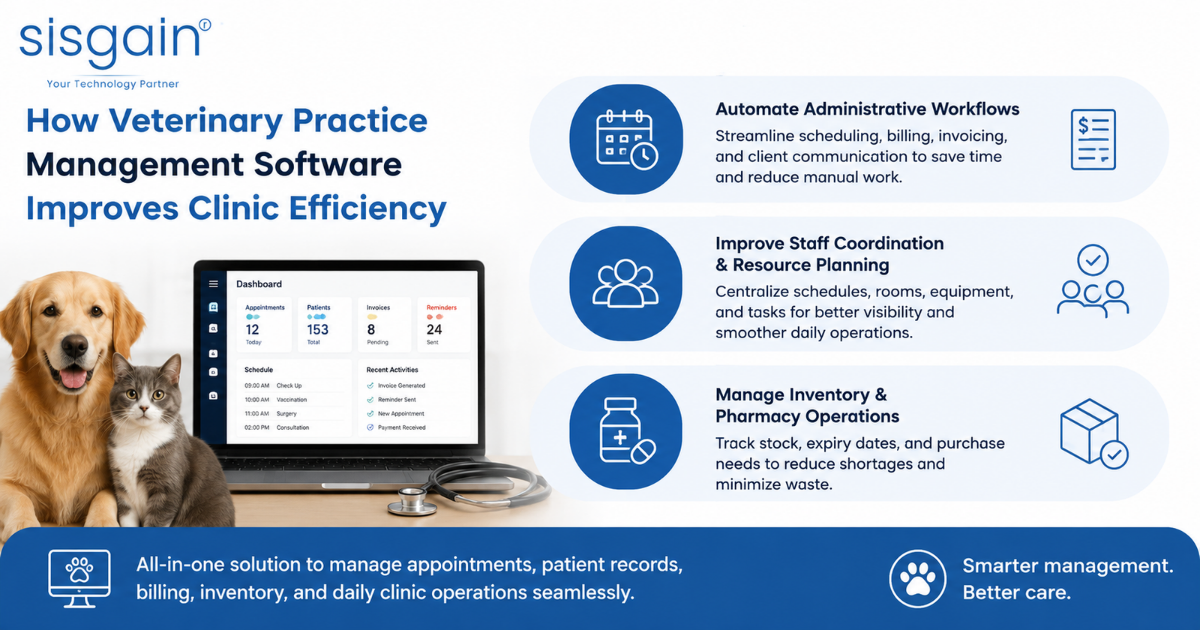
Scheduling, billing, invoicing, and client communication consume a large share of clinic time. Digital systems streamline these tasks by generating invoices from recorded services, filling open appointment slots, and sending routine messages automatically. The potential benefit is less repetitive work for staff, which leaves more attention for patients and clients.
Improving Staff Coordination and Resource Planning
A busy hospital juggles people, rooms, and equipment at once. Centralized dashboards can show staff schedules, consultation room use, equipment availability, and assigned tasks in one view. Teams can see who is handling which case, which treatment room is free, and what is waiting on results, which makes daily handoffs smoother.
Managing Inventory and Veterinary Pharmacy Operations
Stock tracking, expiry-date alerts, purchase planning, and medication inventory records give clinics better visibility into what they have and what they will need. That visibility can help reduce avoidable stock shortages and waste, particularly for time-sensitive medications and vaccines.
For many clinics, the practical starting point is veterinary practice management software that links scheduling, patient records, billing, and daily clinic workflows in one environment, so that a change made in one area is reflected everywhere else.
The Role of AI and Predictive Analytics in Veterinary Healthcare
AI-Assisted Clinical Decision Support
AI tools may help organize clinical information, highlight patterns across records, and support diagnostic workflows, for instance by summarizing a long history or flagging an unusual lab trend. These outputs are suggestions. They require professional review, and they should never independently determine a diagnosis or treatment.
Predictive Analytics for Preventive Care
Historical records and relevant clinical data can help teams identify potential risks, monitor trends, and flag patients who need follow-up. Realistic examples include recurring symptoms across several visits, missed preventive appointments, and changes in monitored health indicators. A system that surfaces these signals lets staff reach out sooner, though the decision about what to do remains clinical.
Responsible AI Adoption
Sound adoption starts with data quality, because models trained or run on incomplete records produce unreliable results. Teams should understand each tool’s limitations, keep humans in the loop, expect transparency about how outputs are generated, and look for appropriate validation. Before an AI feature enters clinical workflows, veterinary teams should evaluate whether it is reliable and suitable for their patients, species mix, and processes.
Remote Patient Monitoring Solutions for Continuous Animal Care
Wearable Devices and Connected Health Sensors
Selected wearables and connected sensors can capture activity, temperature, heart rate, or other indicators, depending on the device and species. Readings are only meaningful in context: a high heart rate in an excited dog differs from the same number in a recovering patient. Interpretation belongs to the veterinary team, informed by the animal’s clinical picture.
Supporting Postoperative and Chronic Care
Remote monitoring can help teams track recovery, medication adherence, mobility changes, and selected chronic conditions without requiring a visit for every check. When alerts are configured appropriately, they can prompt timely professional assessment if a trend moves in the wrong direction.
Integrating Monitoring Data With Clinical Records
Monitoring data becomes far more valuable when combined with patient histories and treatment plans. Practices should plan for data accuracy, device compatibility, alert fatigue, and clear escalation procedures that define who responds, how quickly, and what happens next. Well-designed remote patient monitoring solutions can support follow-up care and give veterinary teams additional information between appointments, provided they are tied into the same record the clinicians already use.
Hospital Management Software Development and System Integration
Building a Connected Veterinary Hospital Platform
A unified platform can connect appointments, electronic records, diagnostics, billing, pharmacy inventory, and patient communication. Integration requirements should be settled before development begins, since retrofitting connections later is slower and more expensive. Mapping real workflows first, from check-in to discharge, keeps the build grounded in how the hospital actually operates.
Organizations that want a tailored system often turn to hospital management software development to design and implement integrated platforms around their own clinical and administrative processes.
Cloud-Based Architecture and Scalability
Cloud hosting offers secure access from multiple locations, role-based permissions, strong availability, backup strategies, and room to grow. Multi-location organizations may benefit from centralized reporting and shared workflows, which make it easier to apply consistent standards across sites.
Interoperability With Existing Systems
Few hospitals start from a blank slate. New platforms usually need to work with laboratory information systems, diagnostic equipment, payment platforms, and third-party veterinary apps. That calls for documented APIs, data validation, and reliable synchronization so that records match across every connected tool.
Electronic Medical Records, Data Security, and Privacy
Why Veterinary EMR Systems Matter
Electronic medical records organize examinations, diagnoses, laboratory results, prescriptions, and treatment histories in one place. Structured records support continuity of care and more consistent documentation, which matters when several clinicians contribute to a single patient’s care.
Protecting Sensitive Client and Clinical Information
Veterinary records contain animal health details and also personal information about pet owners, such as contact data and payment information. Protection involves encryption, access controls, multifactor authentication, audit logs, secure backups, and careful vendor risk assessment. Regular staff training matters just as much as technical safeguards.
Choosing the Right EMR Development Partner
When building or modernizing a records platform, look for veterinary workflow expertise, proven integration capabilities, security testing practices, a clear migration plan, and ongoing maintenance support. An experienced EMR software development company should be able to explain how it handles each of these in practical terms, not only in a sales deck.
Real-World Use Cases in US Veterinary Clinics and Animal Hospitals
The following scenarios are illustrative examples, not customer results.
Small and independent clinics. Digital scheduling, automated reminders, and centralized patient records can simplify routine operations for a small team that covers many roles.
Multi-location hospital networks. Standardized workflows, centralized reporting, and shared records where appropriate give leaders visibility across sites and help patients who move between locations.
Emergency and specialty hospitals. Rapid access to available clinical histories, diagnostic results, and treatment documentation can support coordinated care when time is short and several clinicians are involved.
Postoperative and long-term monitoring. Monitoring devices combined with structured follow-up workflows can support recovery and ongoing management for selected patients.
Challenges of Implementing Veterinary Technology in 2026
Implementation Costs and Staff Training
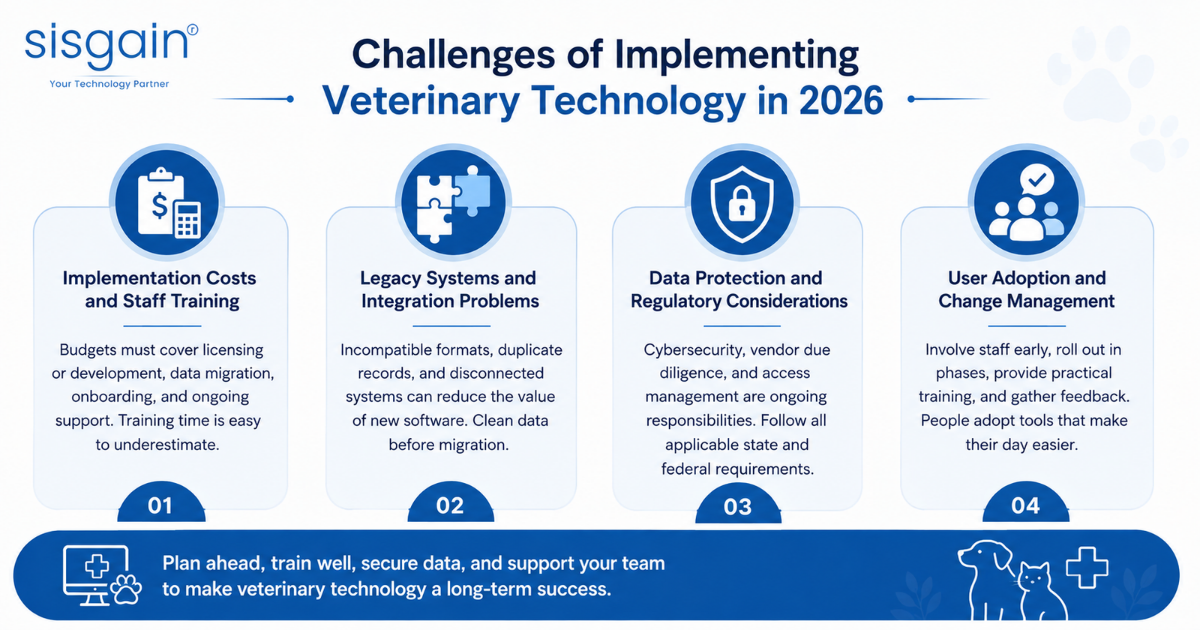
Budgets must cover licensing or development costs, data migration, onboarding, and continuing technical support. Training time is easy to underestimate.
Legacy Systems and Integration Problems
Incompatible formats, duplicate records, and disconnected systems can erode the value of any new application. Cleaning data before migration saves headaches later.
Data Protection and Regulatory Considerations
Cybersecurity, vendor due diligence, and access management are ongoing responsibilities. Practices should also review the state and federal requirements that apply to them.
User Adoption and Change Management
Involve staff early, roll out in phases, provide practical training, and collect regular feedback. People adopt tools that make their day easier, so listen to what is not working.
Best Practices for Choosing and Implementing Veterinary Software
- Define business objectives and clinical workflow requirements before selecting a platform.
- Evaluate usability for veterinarians, technicians, administrative teams, and pet owners.
- Prioritize integration, security, mobile accessibility, scalability, and vendor support.
- Test data migration and critical workflows before deployment.
- Train staff and establish clear procedures for outages, alerts, and data access.
- Track meaningful indicators such as appointment attendance, administrative workload, record completeness, and follow-up completion.
Conclusion: The Future of Connected Animal Healthcare
Apps, hospital platforms, AI-assisted workflows, and remote monitoring are most powerful when they work together: owners stay engaged, staff spend less time on paperwork, and clinicians see a fuller picture of each patient. Success depends on usability, reliable integration, cybersecurity, and veterinary oversight at every step.
Clinic and hospital administrators can begin by reviewing current workflows, identifying where information gets stuck, and choosing improvements that fit their teams. From there, exploring veterinary software development and system integration options becomes a more informed conversation.
Frequently Asked Questions
1. What are veterinary apps used for?
They support appointment booking, pet health records, vaccination reminders, clinic communication, and selected telehealth services.
2. How does veterinary practice management software help clinics?
It organizes scheduling, patient records, billing, inventory, and routine administrative workflows, which reduces repetitive manual work.
3. Can AI improve animal healthcare?
AI can assist with analyzing information, recognizing patterns, and supporting selected clinical workflows. Veterinary professionals must validate and interpret its outputs.
4. What are remote patient monitoring solutions in veterinary medicine?
They combine connected devices and digital platforms to track selected health indicators and support follow-up care between visits.
5. Is veterinary telemedicine available throughout the United States?
Not uniformly. Permitted services depend on federal and state rules, including requirements around the veterinarian-client-patient relationship (VCPR).
6. How can veterinary hospitals protect electronic medical records?
Use access controls, encryption, secure backups, audit logs, staff training, and careful vendor selection.
7. What should clinics consider when developing a veterinary hospital management system?
Consider workflow requirements, interoperability, security, scalability, staff usability, implementation costs, and long-term maintenance.