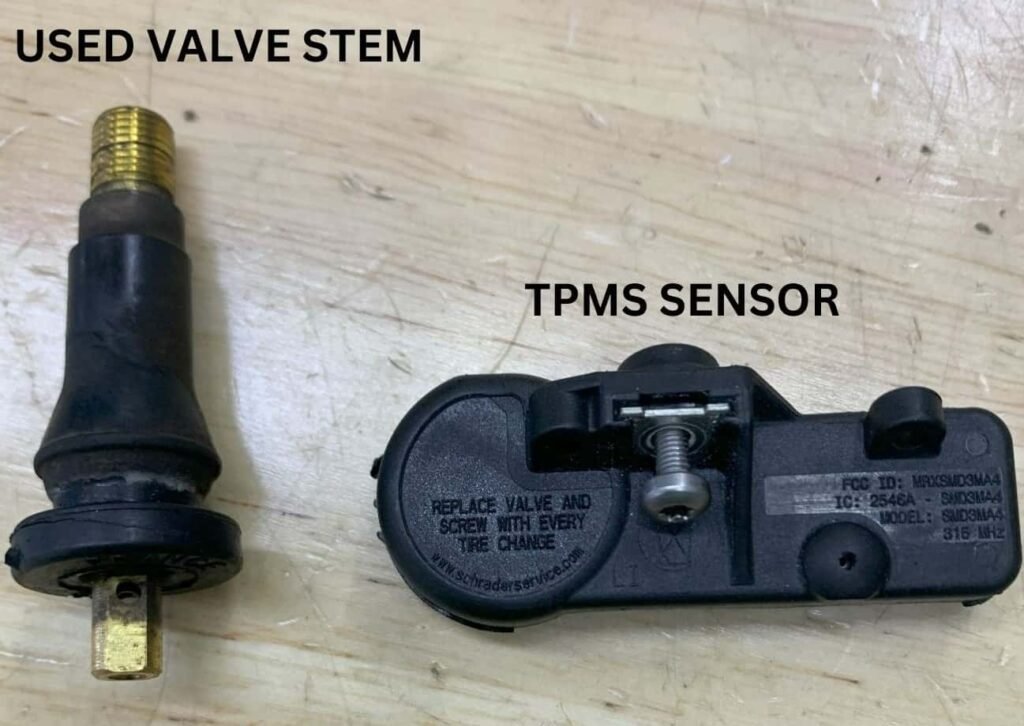
Modern vehicles are fitted with a range of advanced safety features which make driving both safer and more enjoyable. The Tyre Pressure Monitoring System (TPMS) is an excellent example, offering drivers the reassurance that they have the correct pressure in their tyres. Where TPMS sensors fail completely, replacement can be a necessary task to restore the system to working condition.
At Adams Tyre Specialists, we know how important your tyres are to you and your wider safety, so we’ve created this guide to TPMS sensors, when TPMS sensor replacement is required and why tyre maintenance plays such a pivotal role in the ongoing performance and safety of your vehicle.
TPMS Sensors: What Are They?
A TPMS is essentially an electronic system which allows your vehicle to monitor the air pressure in your tyres and alert you when the pressure differs from the manufacturer specification. Depending on the vehicle, TPMS monitoring can be either direct or indirect.
Direct monitoring operates with TPMS sensors fitted to the wheels to measure the pressure within the tyre.
Indirect monitoring works by using the vehicle’s existing speed sensors to detect differences between wheels caused by low pressure
Understanding the difference will allow you to identify the TPMS system in your vehicle and any special requirements for TPMS sensor replacement.
TPMS Sensor Replacement: When Should You Think About It?
TPMS sensors are fitted to operate safely and effectively for a long period of time, but like all electronics, they are prone to faults developing over time. Being able to identify the symptoms of a failing TPMS sensor will enable you to get the TPMS sensor replacement arranged before any further inconvenience occurs.
1. The Warning Light Is On
If you’ve checked your tyre pressures and the recommended pressure is correct but the TPMS warning light remains on, it could be an indication of a faulty TPMS sensor.
The exact cause should be highlighted during diagnosis by an experienced TPMS sensor replacement technician, but it is always possible that there is a compatibility issue, a communication issue or a problem with the TPMS itself.
2. The Warning Light Is Flashing
In some cases, a flashing TPMS warning light means something has gone wrong with the TPMS and not your tyre pressure. Check the vehicle handbook to see if flashing is normal and if it isn’t, have the TPMS sensor replacement process looked into.
3. The TPMS Indicates The Wrong Pressure
If the TPMS is displaying the wrong pressure or no pressure at all for a given wheel, there is likely to be a faulty TPMS sensor. As before, there may be other contributing factors but there is an issue somewhere with the TPMS and TPMS sensor replacement is an option to investigate further.
4. The TPMS Sensor Battery Has Died
Many TPMS sensors are direct, meaning they use a battery to power the sensor. If the battery has died in your TPMS sensor, it will need to be replaced as part of the TPMS sensor replacement process.
5. The TPMS Sensor Was Damaged
During any tyre fitting procedure, TPMS sensors can be damaged through mishandling. As part of the TPMS sensor replacement process, new sensors should be fitted using the appropriate TPMS sensor fitting procedure which should avoid further damage to the affected sensors.
TPMS Sensor Replacement: Why It Is So Vital
A TPMS provides an added layer of protection and safety for your vehicle by detecting dangerous pressure levels. Tyre pressure has a huge impact on the performance of your vehicle and incorrect pressure can cause issues such as excessive heat, uneven tyre wear and reduced safety. A TPMS provides an added warning to assist you in maintaining the correct pressure.
By replacing a faulty TPMS sensor, you can restore the functionality of a direct TPMS providing the additional protection mentioned above. It is important to remember that a TPMS is only a guide and should not be the sole determinant of tyre pressure – manual checks should still take place.
TPMS Sensor Replacement: What Happens During The Process?
TPMS sensor replacement is a complex procedure and can have different requirements depending on whether your vehicle has a direct or indirect TPMS. With that said, a typical TPMS sensor replacement process for a direct TPMS would see the following steps carried out:
1. Inspection And Diagnosis Of The Fault
A qualified technician will investigate the initial complaint and identify the root cause. This will see them checking the TPMS warning light and scanning the TPMS system for any fault codes, identifying whether the fault lies in the tyre pressure, the TPMS system itself or a TPMS sensor.
2. Inspection Of The Wheel And Sensor
Having identified that a TPMS sensor is to blame, the affected wheel(s) can be inspected to identify the extent of the damage and prepare for TPMS sensor replacement.
3. TPMS Sensor Replacement
A suitable TPMS sensor can now be fitted in accordance with the requirements of your vehicle, including any TPMS sensor replacement kits or TPMS sensor valves which may also have been damaged.
4. Programming Or Relearning The Sensor
Certain vehicles require that the new TPMS sensor be programmed or relearnt by the vehicle TPMS system, a process which can vary greatly from one manufacturer to the next.
5. Testing After TPMS Sensor Replacement
After TPMS sensor replacement, a system test can be carried out to check the replacement sensor is communicating correctly and the TPMS warning light is operating as it should.
Not all vehicles have TPMS sensors which can be replaced so it is important to check TPMS sensor replacement requirements before any work begins.
TPMS Sensor Replacement: How Much Will It Cost?
The cost of TPMS sensor replacement can vary considerably depending on the exact requirements of your vehicle, including the TPMS system fitted and the sensors themselves along with any TPMS sensor programming required. Some TPMS sensors are relatively straightforward while others can be more complex, requiring special TPMS tools.
Other additional TPMS sensor replacement costs may be incurred if wheel balancing, tyre fitting, TPMS sensor replacement kits or further investigation is required.
It is important to get a clear breakdown of costs before TPMS sensor replacement work begins, including the price for: the TPMS sensor; any TPMS sensor replacement kits or valves; TPMS sensor programming and TPMS sensor fitting.
It is important to consider value for money when TPMS sensor replacement is required instead of focusing on the cheapest option, including selecting a suitable TPMS sensor for your requirements.
TPMS Sensor Replacement: How Can I Maintain My TPMS Sensors?
Maintaining your TPMS sensors is a great way to spot potential problems early and help avert larger or more expensive issues later.
Regularly check your tyre pressures when they are cold
Make sure they are inflated to the recommended pressure, as found in your vehicle handbook or on the vehicle itself
Always check for any cuts, cracks, bulges or uneven wear on your tyres
Have your tyres inspected if the TPMS warning light is on or flashing
Instruct any tyre technician that your vehicle is fitted with TPMS sensors
Follow the instructions in your vehicle handbook when refitting tyres or adjusting pressures, including TPMS sensor programming
By following this simple TPMS maintenance guide, you can keep your tyres and TPMS system in first class condition.
TPMS Sensor Replacement: Choose Adams Tyre Specialists
Keeping your tyres in first class condition is an important part of looking after your vehicle. Wherever you are experiencing TPMS warning light issues or strange TPMS readings, identifying the symptoms and getting TPMS sensor replacement advice is the first step towards getting these issues resolved.
Adams Tyre Specialists is a name you can trust when looking into TPMS maintenance and TPMS replacement in general. Contact the team at Adams Tyre Specialists to find out more about TPMS sensor replacement options, availability and pricing for your vehicle.
Conclusion
TPMS sensor replacement can be required where TPMS sensors are damaged, the sensor battery has failed or the TPMS system is no longer operating as intended. Recognising the signs of TPMS failure and getting TPMS sensor replacement advice are key to restoring the protection and added safety of a TPMS.
With regular tyre pressure checks, TPMS inspection and maintenance and TPMS sensor replacement where necessary, you can enjoy the added protection of a TPMS while maintaining the safety of your vehicle.
For TPMS maintenance advice, TPMS inspection options or TPMS sensor replacement, contact Adams Tyre Specialists and ask about the TPMS sensor replacement process for your vehicle.