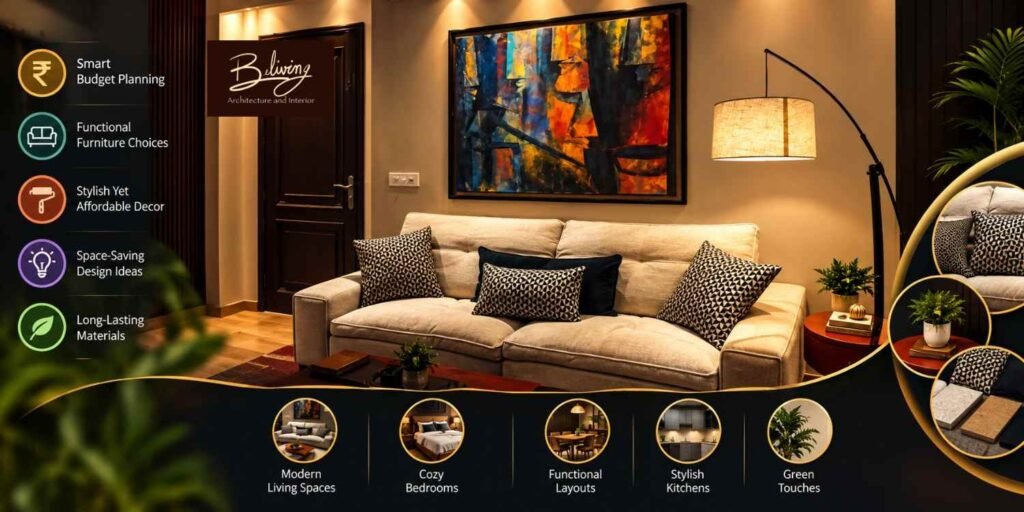
Designing the interiors of a house is not limited to the choice of furniture, colors, and decoration. When people are considering the Best Interior Designers in Gurgaon they must be aware of the cost factors involved and plan their project accordingly.
In 2026, the well-planned interior design of a house should be able to blend together the personal preferences with functionality and financial aspects. Beliving Interior is one such company that can be considered for personalized interior designing.
Be it a new flat in Gurgaon, an old house, or an independent property, proper planning can go a long way in saving money and making your investments worthwhile.
How Much Does Interior Design Cost in Gurgaon in 2026?
Cost of interior design is dependent upon factors such as the size of the property, number of rooms, specifications of materials, furniture needs, and the degree of renovation work required. An ordinary house that requires wardrobes and kitchen cabinets would obviously have different planning costs from that of an upscale house with more furniture needs.
The below listed figures are rough estimates for residential interior design projects in Gurgaon. Real costs would, however, vary depending on other factors.
- Simple interiors: Around ₹3-5 lakh for basic furnishings and simple storage.
- Medium interiors: Around ₹5-10 lakh for a typical residential project, having a modular kitchen, wardrobe, and some changes to the living room.
- Luxury interiors: Around ₹10-20 lakh for more elaborate cabinetry, higher quality finishes, decorative lights, and other furniture.
- Premium interiors: Over ₹20 lakh for projects involving custom furniture, premium quality finishes, and customizations.
These costs are not set rates for the market or quotations. The full estimate will help determine if design costs, fixtures, loose furniture, taxes, civil works, electricity changes, and fittings are included.
For instance, an apartment that has just been handed over in Sector 57 would have to have a kitchen, wardrobes, and essential furniture. An old apartment in Sector 14 could also have plumbing repairs, flooring, and electrical changes.
What Factors Influence Your Interior Design Budget?
By knowing the different cost elements, you can be able to budget your finances in the best way possible. Instead of selecting features based on how they look, select features based on their functionality and other factors.
Property Size and Space Planning
Size determines the number of pieces of furniture, cabinets, lights, and finishings that a house will need. The floor space alone is not the determining factor because complicated designs and extensive customization will increase production costs.
In a small flat, the best design would be to use flexible furniture together with ceiling-high storage units, but the same would not be applicable in a large house.
Materials and Finishes
Material selection can significantly affect the final quotation. Laminates, veneers, acrylic finishes, natural stone, and engineered surfaces differ in appearance, cost, maintenance, and durability.
For frequently used areas such as kitchens and wardrobes, prioritise surfaces that are easy to clean and suitable for daily use. Premium finishes can be reserved for selected focal points rather than used throughout the entire property.
Furniture and Storage Requirements
Custom-made furniture can take advantage of unusual corners and irregular shapes of rooms. However, custom making could result in increased expenses. Before finalizing on the design, one should verify interior arrangements, kitchen drawer arrangements, and storage needs in every room.
For families living in high-rise apartments along Golf Course Extension Road, efficient storage and effective circulation paths have much more importance than the decorative fixtures.
Labour and Site Conditions
Labour costs depend on installation complexity, the number of trades involved, and the condition of the property. Renovations may require additional surface preparation, waterproofing, debris removal, or electrical and plumbing repairs.
Beliving Interior can be explored when comparing personalised design approaches, but homeowners should verify the actual services offered and request a written, itemised quotation before appointing any provider.
How to Create a Smart Interior Budget Without Sacrificing Quality
A sensible budget involves spending that will enhance the quality of comfort, functionality, and durability. It is not about opting for the most economical item to incorporate in every aspect but to make sure that the spending does not add unnecessary costs.
Prioritise Essential Work First
List the work required to make the property functional before selecting decorative upgrades. Kitchen storage, wardrobes, essential furniture, suitable lighting, and necessary repairs should generally receive priority.
Once these requirements are covered, consider accent walls, decorative ceilings, premium finishes, and additional accessories according to the remaining budget.
Compare Quotations Carefully
Two offers could be identical but deal with different materials and services. While one contractor offers installation, branded hardware, and finishing, the other could fail to mention any of these or offer them at a lower cost.
Request for documentation on thickness of the boards, types of finish, types of hardware, costs of installation, and other relevant information. This will give you a better basis for selecting a designer than just comparing the headline prices.
Retain Existing Features Where Possible
If the flooring, doors, plumbing, or electrical systems remain in good condition, retaining them may reduce renovation expenses. Repainting walls, updating selected light fittings, and replacing specific furniture pieces can refresh a home without a complete overhaul.
However, avoid compromising on essential repairs. Damaged wiring, leaking plumbing, and moisture-affected cabinetry should be addressed before new furniture and finishes are installed.
Reserve Money for Unexpected Expenses
The budget should have between 10% to 15% of the funds saved as a contingency fund in case of unplanned repairs and alterations in specifications or prices. Old buildings need to allocate more of the budget because the state of their structure might be hard to predict.
Do not use the whole budget in furnishing and decorating finishes before preparation of the site.
Best Interior Designers in Gurgaon: How to Choose the Right Professional
Selecting an interior designer is not only about looking at pretty pictures in the portfolio. It is important to evaluate the designer’s design process, communication skills, technical knowledge, material suggestions, and execution of the project.
Review Relevant Experience
Seek out completed projects which are similar to yours in terms of size, design, and functionality. For example, when choosing the Best Interior Designers in Gurgaon take into account their experience with similar designs; one who has dealt with small apartments may have a great idea of practical storage, whereas an independent house may need coordination.
Find out how past projects have handled the aspects of lighting, movement between rooms, maintenance, and budget constraints. Practical answers will allow you to judge the designer’s priorities.
Confirm the Scope of Services
Some professionals provide design concepts, drawings, and material recommendations, while others also coordinate procurement, furniture manufacturing, installation, and site execution.
Before engaging Beliving Interior or another provider, confirm which services are actually included in the proposed package. Establish who will supervise the site, communicate progress, approve materials, and resolve installation issues.
Check Payment Terms and Documentation
A written agreement should define the scope of work, material specifications, estimated timelines, payment milestones, exclusions, and procedures for approving changes. It should also explain how defects, delays, and warranty claims will be handled.
Avoid making large payments without understanding the stage of work they cover. Payments linked to defined milestones can improve accountability and make project progress easier to track.
Step-by-Step Interior Design and Execution Process
A methodical approach assists homeowners in making an informed decision before costs arise. Although each project is different, there are some common stages involved in the majority of interior home projects.
Step 1: Consultation and Site Assessment
This is done by first discussing how the family wants their household activities to take place, the use of rooms, storage needs, aesthetics, and budget. This is followed by measuring the site and assessing its existing conditions to determine what can be practically done.
For example, the family in Sector 50 could have the need for more space in the kitchen, more storage space in wardrobes, and a study area.
Step 2: Space Planning and Design Development
The designer develops layouts showing furniture placement, storage arrangements, circulation routes, and the relationship between different areas. Material palettes and design concepts help homeowners understand the proposed appearance before final selections are made.
Beliving Interior can be considered while exploring design approaches that reflect individual preferences. Ensure the proposed layout addresses practical requirements alongside colour schemes and decorative details.
Step 3: Detailed Drawings and Cost Approval
Following the approval of the concept, the design drawings show how the design will be put into place. This can include such things as the measurements for the cabinetry, electrical points, lighting, ceiling details, and materials to use.
Get an updated quotation with the new design. After manufacture and/or installation commences, any changes can cause extra costs, so clarify as much as you can in writing.
Step 4: Procurement and Site Preparation
The site is prepared before materials and furniture are installed. This may involve civil repairs, plumbing, electrical work, waterproofing, surface preparation, and coordination with different contractors.
Check that delivered materials match the approved specifications. Coordinating procurement with site readiness helps reduce delays, unnecessary storage, and the risk of damage.
Step 5: Installation and Quality Checks
Installation of furniture, wardrobes, cabinets, lighting, and finishing touches is done as per the approved schedule. Inspection reveals faulty sizes, defective surfaces, improper fittings, and incomplete tasks before the handover process.
Test the drawers, hinges, electric fittings, and all other installations. Highlight areas that need corrections and draw up an agreement with the team involved.
Step 6: Final Handover and Maintenance
The final walkthrough should identify incomplete work and confirm that agreed corrections have been completed. Request relevant product information, warranty documents, and maintenance instructions for surfaces, hardware, and installed fittings.
Beliving Interior’s suitability should be assessed against its actual project scope, service commitments, and deliverables rather than assumptions about what every interior design package includes.
Commercial Interior Designers in Delhi: Planning Functional Workspaces
A commercial interior design is different from a residential one since it has to accommodate business functions, employee productivity, movement of customers, and working environment requirements. This could involve designs of receptions, meeting places, workstations, storage facilities, acoustics, and electrical works, depending on the type of business.
In their search for Commercial Interior Designers in Delhi business people should consider function plans, specifications, timing, and any other compliance issues. They should find out whether the quote covers all items such as furniture, electricals, installations, and coordination.
For example, a business that operates in South Delhi may need to improve its meeting room privacy and workstations and have adequate lighting with minimal interruption to day-to-day business activities. By planning these issues ahead of execution, businesses can be able to plan for costs and coordination better.
It is advisable for businesses to have budgeting separate from residential ones due to differences in technical considerations.
A Short Conversation About Budget-Friendly Interiors
Homeowner: I would like a beautiful home, but at the same time, I have to manage my costs.
Designer: We will begin by figuring out what your basic needs are and fixing a budget that suits you.
Homeowner: Will the design be according to my taste too?
Designer: Yes. The Best Interior Designers in Gurgaon should ensure that the design and planning complement each other; you can check out Beliving Interior for that.
Best Farm House Interior Designers in Delhi: Budget and Design Priorities
The interior designs of the farmhouse are associated with bigger spaces, guest rooms, leisure areas, connectivity to the outdoors, and extra maintenance needs. The design should take into account the usage of the property that could include family weekends, permanent residency, or guest hosting.
When one needs to find the Best Farm House Interior Designers in Delhi he/she should consider their familiarity with stand-alone houses, indoor-outdoor movement, durability, natural ventilation, and space allocation. The materials should depend on the property’s exposure to sunshine, dust, and water, when applicable.
For instance, if the farmhouse is situated in Chhatarpur, then the property might require shaded patio furniture, durable flooring, and spatial planning that links the living area to the garden. Kitchen and guest area planning would also be useful for hosting families.
The designer Beliving Interior might be considered depending on the available services of the company. Prior to hiring it, one has to compare scope, previous projects, budget and execution of the company.
Common Interior Budget Mistakes to Avoid
Many cost overruns happen because homeowners overlook exclusions, change specifications late, or make decisions without understanding the full execution process. A few simple checks can help you manage the project more effectively.
- Ignoring quotation exclusions: Confirm whether appliances, transport, taxes, loose furniture, and civil work are included.
- Changing designs midway: Finalise important dimensions, layouts, and finishes before production wherever possible.
- Choosing materials by appearance alone: Consider durability, maintenance, repairability, and replacement costs.
- Skipping site inspections: Review progress at agreed milestones instead of waiting until installation is complete.
- Accepting unclear timelines: Request a schedule covering design approvals, procurement, manufacturing, and installation.
When comparing Beliving Interior with other providers, use the same project brief and specifications for each quotation. This makes differences in pricing, deliverables, and service commitments easier to identify.
Summary
Interior design that is smart in 2026 starts with the setting of priorities, budget estimations, right materials, and a proper execution plan. Owners of property will be able to make informed decisions through proper quotations, storage plans, and sufficient money to cover unforeseen expenses.
Whether you are remodeling your apartment, designing a workspace or a farmhouse, the goal is to have a place that stays functional and appealing even after the handover. Check out the services offered by Beliving Interior, match them to your needs, and finalize the scope, timeline, and budget before any work starts.
Some Important Questions
1. What is a reasonable budget for a 2BHK interior in Gurgaon in 2026?
A budget of ₹3-10 lakhs would be suitable for some 2BHK projects depending on the extent of work, materials used, and customization involved. Civil works, high-quality finish, appliances, and furniture would contribute to the total cost.
Ask for a detailed estimate based on your floor plan to determine your budget.
2. How can I reduce interior design costs without compromising quality?
Focus on necessary furniture, keep existing useful details, evaluate materials to be used, and refrain from unnecessary customization. Prioritize quality hardware and common surfaces while making decoration a bit more flexible.
Having some contingency reserve will assist in handling unanticipated repairs without any compromise to other parts.
3. How long does a residential interior project take?
A simple apartment project can be completed within 6-12 weeks after design approval, depending on the nature of the project, availability of materials, manufacture, and the site. More complex renovation and customization projects may require more time.
It is advisable to ask for a schedule for your specific project.
4. What should I check before hiring an interior designer?
Check out the completed projects, the range of services, the material requirements, payment schedule, time frame, and warranties. Verify whether the designer is only offering design services or both design and execution services.
Be frank about your budget and seek written permission for any cost/delivery changes.
5. How do I choose between residential, commercial, and farmhouse interior specialists?
Consider based on the main function of the property and the technicalities involved. For residential projects, comfort and lifestyle should be prioritized while commercial properties need efficiency. The farmhouse may demand more extensive planning of the indoor and outdoor area. Check if the provider has enough experience in that aspect before entering into a contract.
About us –
Official Mobile No. – +91 9871678798