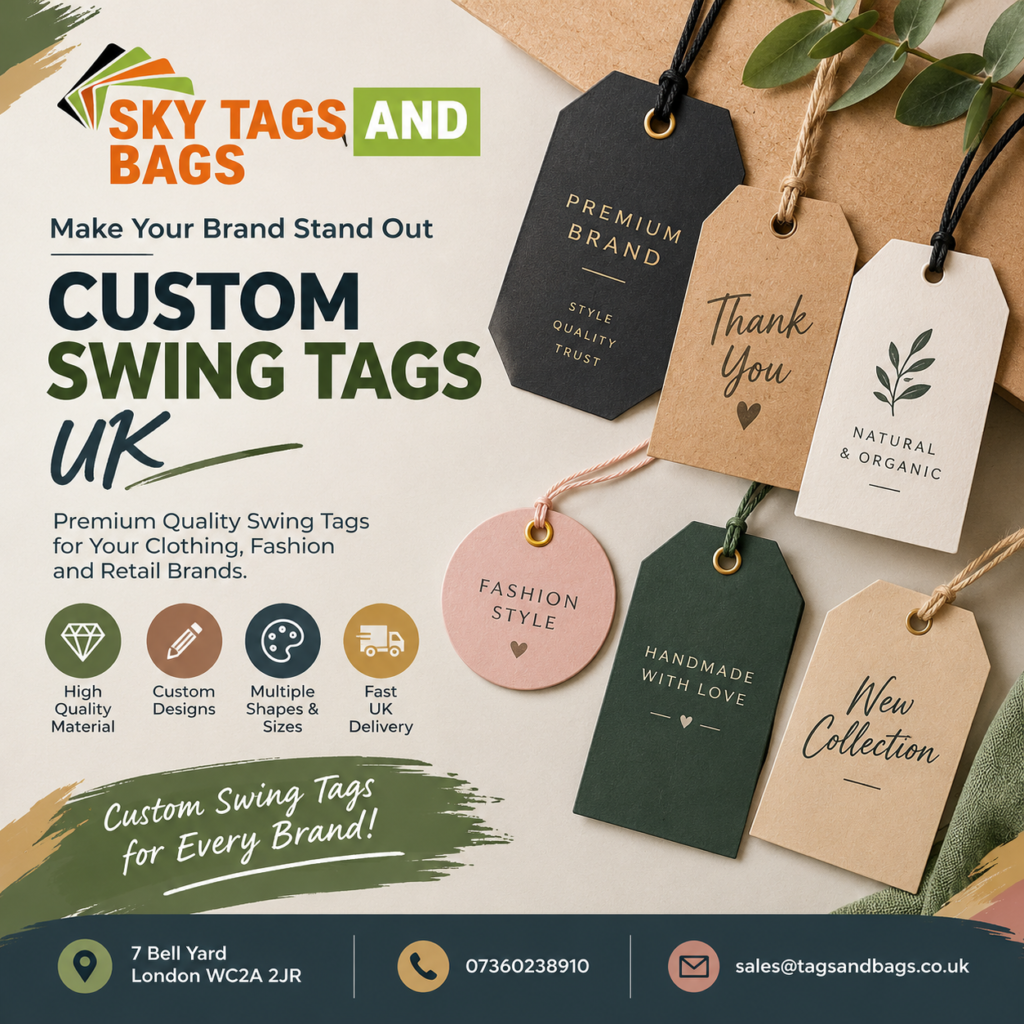
In today’s competitive retail and e-commerce environment, packaging plays an important role in product identification, presentation, and customer experience. Small details, such as labels, swing tags, and product information cards, can help businesses communicate essential information while maintaining a consistent visual identity. For fashion retailers, accessory brands, and packaging suppliers, well-designed tags can also make products easier to organise and distinguish.
Businesses exploring custom tags UK options should consider how tag materials, printing methods, shapes, and information placement influence both practicality and appearance. Choosing an appropriate tag design can support everyday retail operations while ensuring that products remain clearly identifiable throughout storage, display, and delivery.
Understanding the Role of Custom Tags in Retail
Tags serve several purposes beyond displaying a product name or price. They can communicate brand details, product specifications, care instructions, and other information that customers may need before making a purchase.

For clothing and accessories, tags are commonly attached using string, ribbon, or plastic fasteners. For handbags and reusable shopping bags, they may display material information, manufacturing details, product codes, or care recommendations.
Well-planned custom tags for bags can be particularly useful for businesses selling products in different sizes, colours, styles, or material variations. Clear labelling helps staff identify individual products quickly and reduces confusion when managing stock.
Tags can also support a consistent presentation across physical shops, online orders, trade events, and wholesale deliveries. When the same visual elements and information hierarchy are used across product ranges, customers can recognise related products more easily.
Choosing Suitable Materials and Printing Methods
The material used for a tag affects its durability, appearance, cost, and suitability for different products. Businesses should consider the conditions in which tags will be handled, stored, displayed, and transported before selecting a material.
Common options include:
- Uncoated paper: Suitable for simple designs, handwritten information, and a natural appearance.
- Coated cardstock: Provides a smoother surface for colourful graphics, product photography, and detailed branding.
- Kraft paper: Often selected for its understated, natural appearance and compatibility with minimalist packaging.
- Textured or specialty paper: Can introduce tactile detail for premium accessories and carefully presented products.
Printing methods should match the design and expected production volume. Digital printing can be practical for shorter runs or designs requiring variable information, while other commercial printing processes may suit larger quantities.
Businesses should also consider hole reinforcement, attachment methods, and tag thickness. A tag that is too thin may bend during transport, while an unsuitable attachment can damage delicate fabric or bag handles. Testing a sample before approving a large production run helps identify these issues early.

Designing Tags for Clear Information and Brand Consistency
Effective tag design begins with understanding what customers and retail staff need to know. Including too much information can make a small tag difficult to read, whereas an overly minimal design may leave important details unclear.
A practical design should prioritise the most relevant information, such as:
- Brand or product name.
- Product code, size, or colour where applicable.
- Price or barcode when required by the retailer.
- Material composition or care instructions when relevant.
- Website or contact details, if useful to the customer.
Typography should remain legible at the final printed size. Strong contrast between text and background improves readability, while consistent spacing prevents the design from appearing crowded.
Retailers should also ensure that tags complement their wider packaging. Matching selected colours, typography, and graphic elements across bags, labels, and product cards can create a more cohesive presentation without requiring every packaging component to look identical.
Businesses researching best custom tags UK suppliers should prepare print-ready artwork, confirm finished dimensions, and check that barcodes remain readable after printing. These practical steps can reduce production errors and avoid delays when products are ready for distribution.

Common Challenges and Practical Solutions
One common challenge is choosing a tag that looks attractive but performs poorly during handling. Glossy finishes may suit certain designs, but they can produce glare under bright retail lighting. Similarly, very small text may look acceptable on a computer screen but become difficult to read when printed.
To prevent these problems, businesses should review physical proofs under realistic lighting conditions and test attachment methods on the actual products.
Another challenge is balancing visual quality with production budgets. Ordering large quantities may reduce the unit cost, but it can create waste if a product design, price, or barcode changes. For businesses with frequently updated collections, smaller print runs may provide greater flexibility.
Sustainability is another consideration. Retailers can investigate responsibly sourced paper, recyclable materials, and minimal finishing options where appropriate. However, recyclability depends on the complete construction of the tag, including coatings, laminates, metallic finishes, and attached components.

Clear communication with suppliers about material specifications, quantities, finishing requirements, and delivery schedules can help businesses avoid misunderstandings and maintain consistent production standards.
How Tags Support E-commerce and Packaging Operations
In e-commerce, product identification becomes especially important because orders move through several stages, from inventory storage to picking, packing, dispatch, and delivery. Clearly printed product codes and other relevant details can help warehouse teams distinguish similar items and reduce fulfilment mistakes.
Tags can also connect physical products with digital information. A QR code, for example, may direct customers to care guidance, product specifications, or additional information, provided the code is tested and the destination remains accessible.
For businesses comparing available formats, Tags and Bags provides a relevant example of a UK supplier specialising in custom tags for bags. Reviewing product dimensions, material choices, and finishing options can help retailers determine which specifications align with their operational requirements.

The most effective approach is to treat tags as part of the wider packaging system rather than as an isolated decorative element. Their design should support product presentation, information accuracy, and practical handling at every stage.
Conclusion
Well-designed tags contribute to product identification, organised retail operations, and a consistent customer experience. Selecting suitable materials, maintaining readable typography, checking attachment methods, and planning production quantities can help businesses avoid common packaging problems.
For retailers and e-commerce businesses, the key is to balance appearance with function. By assessing real product requirements and testing designs before full production, businesses can create tags that communicate useful information, support efficient handling, and complement their overall packaging strategy.
Contact Us : https://www.tagsandbags.co.uk/contact-us/
About Us : https://www.tagsandbags.co.uk/about-us/
Website Link : https://www.tagsandbags.co.uk/