Every wedding, concert, construction project, and community festival needs restrooms. Planners and contractors almost never think about them until the last minute, and that steady, unglamorous demand is what makes portable bathroom rental an appealing business. The startup model is simple to understand, the service is easy to explain, and customers come back because events keep happening.
Still, “simple” does not mean “easy.” A profitable rental company depends on good planning, sensible equipment choices, careful compliance, and reliable service. This guide walks through each step of starting a portable bathroom rentals business in the United States, from research to your first booking and beyond.
Why Portable Bathroom Rental Can Be a Strong Business Opportunity
Portable bathroom rental serve customers who cannot operate without them. A construction site may be required to provide sanitation for workers. An outdoor wedding venue may have no plumbing for a large guest list. A city festival cannot open its gates without restrooms. Because the need is tied to the event or the project, the service is rarely optional.
Several features make the model attractive:
- Repeat customers. Contractors, event planners, and venues often need restrooms again and again.
- Multiple revenue streams. You can serve construction, special events, weddings, and public gatherings with the same core operation.
- Room to specialize. You can compete on price with standard units or on experience with higher-end options.
- Scalable growth. You can start with a small fleet and add units as bookings grow.
The business also has real challenges: equipment costs, waste handling, scheduling logistics, and seasonal demand swings in some regions. Understanding both sides before you invest is the first step toward profit.
Start With Market Research and a Clear Niche
Before you buy anything, find out what your local market already offers and where it falls short.
Study Your Local Demand
Look at what is happening in your service area. Is there steady construction activity? A busy wedding and event season? Fairgrounds, parks, or venues that host large gatherings? Demand looks very different in a growing suburb than in a rural county or a tourism-heavy region.
Call a few existing providers and ask for quotes as if you were a customer. Note their prices, delivery windows, available unit types, and how quickly they respond. This tells you what the baseline looks like and where you could stand out.
Choose Your Customer Segment
New operators often try to serve everyone and end up serving no one well. Consider which segment fits your resources:
- Construction and job sites: Longer rental periods, steady recurring service, and price-sensitive customers.
- Events and festivals: Shorter rentals, higher delivery and pickup intensity, and heavy weekend demand.
- Weddings and private celebrations: Customers who care about appearance, comfort, and presentation, and who may pay more for it.
- Municipal and public projects: Often require bidding and strict compliance paperwork.
Your choice shapes everything that follows, including your equipment, pricing, marketing, and staffing.
Decide Between Standard Units and Luxury Trailers
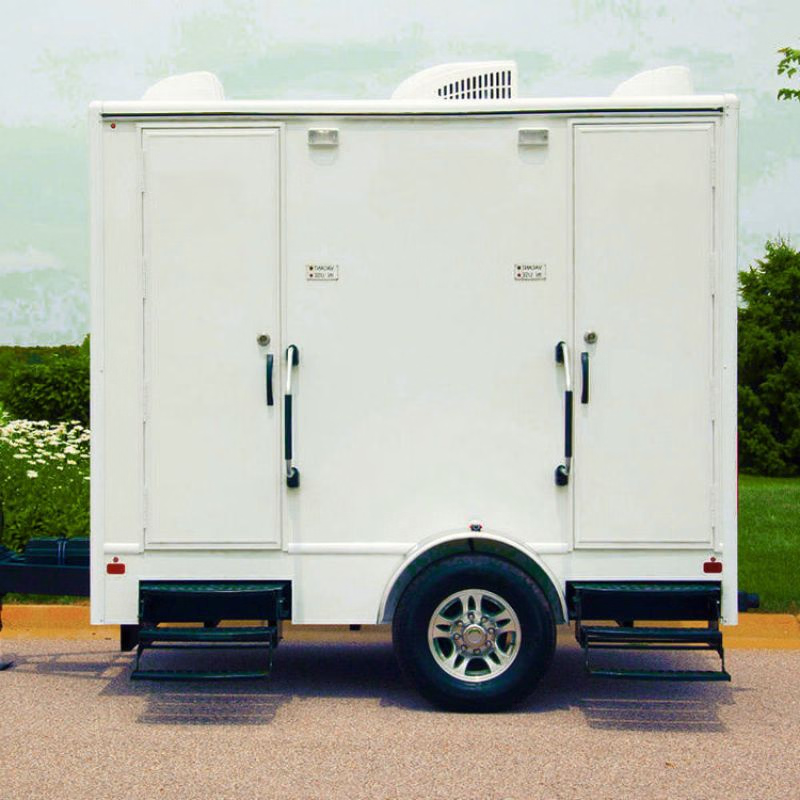
The portable bathroom market has two broad tiers. Standard single-stall units are compact and economical, and they are the backbone of construction and large public events. Restroom trailers sit at the other end. They offer multiple stalls, a more finished interior, and a more comfortable guest experience.
Some local businesses have built their whole identity around the upscale end of the market. CenCal Luxury Restrooms, for example, presents itself as a Clovis and Fresno, California provider of luxury restroom trailer rentals for weddings, concerts, outdoor events, and construction sites. According to its website, the company offers a standard 3-stall non-ADA unit, an ADA-compliant unit with a ramp, and a combo package that includes both, with daily, weekly, or monthly rental options. That kind of focused offering shows how a new operator might define a clear niche instead of competing as just another generic provider.
Write a Business Plan and Understand Your Startup Costs
A business plan does not need to be long, but it should answer a few practical questions: Who are your customers? What will you rent? What will it cost to operate? How will you price? When will you break even?
Typical Startup Cost Categories
Costs vary widely depending on whether you buy new or used equipment, how many units you start with, and what your state requires. Rather than guess at exact numbers, build your budget from these categories and get real quotes for each:
- Portable bathroom units or restroom trailers
- A truck or tow vehicle capable of safely hauling your equipment
- A service vehicle or pump equipment if you plan to handle your own servicing
- Cleaning supplies, restocking inventory, and safety gear
- Business registration, licenses, and permits
- Commercial insurance
- A website, phone line, and basic booking system
- Marketing and branding
- Reserve cash for repairs, fuel, and slow months
Keep a Cash Reserve
Many new rental companies get into trouble not because demand is weak but because cash runs short between purchases and payments. Plan for a few months of operating expenses so a slow season or an unexpected repair does not stall the business.
Handle Licensing, Permits, and Legal Requirements
Regulations differ by state, county, and city, so treat this section as a checklist of questions to answer locally rather than a complete legal guide. Speak with a business attorney or your local agencies before you launch.
Business Formation and Registration
Choose a structure such as an LLC or corporation, register your business name, and obtain an Employer Identification Number (EIN) from the IRS. An LLC is a common choice because it can help separate personal and business liability, but an attorney or accountant can tell you what fits your situation.
Waste Hauling and Disposal Rules
This is the most important compliance area. Portable restroom waste must be transported and disposed of properly. Many areas have rules about who can haul waste, what permits or registrations are required, and which facilities accept it. Contact your state environmental or health agency and your local wastewater authority early. Know exactly where you will dispose of waste before you buy a single unit.
Accessibility Requirements
Public events and certain job sites may need accessible restroom options. ADA-compliant units are designed for wheelchair users, with more room to maneuver. Having at least one accessible option in your fleet makes you more useful to event planners who need to meet accessibility obligations. It also widens your customer base.
Insurance
Talk to a commercial insurance agent about general liability, commercial auto, and coverage for your equipment. Event clients and venues frequently ask rental vendors for proof of insurance before signing a contract, so having it ready speeds up bookings.
Build Your Fleet Wisely
Your equipment is your business. Buying smart at the beginning saves money and protects your reputation.
Start Small, Then Scale
You do not need a large fleet on day one. A small, well-maintained inventory that you can deliver, service, and clean reliably is better than a big fleet you cannot manage. Add units as bookings and cash flow justify it.
New Versus Used Equipment
Used units can reduce startup costs, but inspect them carefully for cracks, worn doors, damaged locks, and odor problems that never fully go away. New equipment costs more but may need fewer repairs and looks better to customers. Either way, ask suppliers about warranties, parts availability, and how the unit holds up in your local climate.
Match Features to Your Market
If you serve construction, durability and easy servicing matter most. If you serve weddings and upscale events, interior comfort, lighting, and a clean, polished look matter more. Features like climate control, separate men’s and women’s sections, and sound systems can help a premium provider stand apart. For reference, CenCal Luxury Restrooms highlights climate-controlled comfort, separate facilities for men and women, and a Bluetooth music feature mentioned by one of its customers.
Plan for Storage and Maintenance
You will need a secure place to park, clean, and repair your equipment between rentals. Check zoning rules before you sign a lease or use a property for storage. Build a regular inspection routine so small problems get fixed before a customer finds them.
Compare Your Rental Options
Different unit types suit different customers, and understanding the tradeoffs helps you decide what to buy first.
| Unit Type | Best For | Strengths | Considerations |
|---|---|---|---|
| Standard single-stall portable bathroom | Construction sites, large public events | Economical, easy to place in many locations, simple to service | Basic comfort, less appealing for upscale events |
| ADA-compliant unit | Public events, venues, job sites requiring accessibility | Wheelchair-accessible, broadens customer base | Larger footprint, higher cost, needs level placement |
| Multi-stall restroom trailer | Weddings, corporate events, concerts | Better guest experience, more capacity per delivery | Needs towing capability, more space, higher investment |
| Combo package (standard plus accessible) | Mixed-guest events, job sites | One booking covers different needs | Requires inventory of both unit types |
Choosing a mix based on the customers you want to serve, instead of buying whatever is cheapest, tends to produce better margins over time.
Set Pricing That Protects Your Profit
Pricing is where many new rental businesses lose money. Charging too little attracts customers but erodes your margins. Charging too much without a clear value story loses bookings.
Know Your True Costs
Before setting any price, calculate your cost per rental: delivery fuel, labor, servicing, cleaning supplies, equipment wear, insurance, and overhead. Add the cost of cleaning and restocking if units are serviced on a schedule. Then decide on a margin that keeps the business sustainable.
Build a Flexible Pricing Structure
Consider how you will charge:
- Rental duration: Daily, weekly, and monthly rates, since construction customers usually need long-term service and event customers need short rentals.
- Delivery and pickup fees: Especially for longer distances or difficult access.
- Servicing frequency: Extra cleanings for long rentals or high-traffic events.
- Add-ons: Handwashing stations, extra supplies, or premium features.
Be transparent. Customers appreciate clear quotes, and unexpected charges hurt trust. Some providers, including CenCal Luxury Restrooms, direct visitors to unit-specific pricing pages so customers can see options before they book. That kind of clarity can shorten the sales process.
Market Your Portable Bathroom Rental Business
Having great equipment means little if nobody knows you exist. Marketing for this type of business works best when it is local, practical, and trust-focused.
Get Your Online Presence Right
Most customers search online when they need a rental. Build a simple, professional website that clearly lists your services, service area, and how to request a quote. Make your phone number easy to find. Claim your Google Business Profile and keep your hours and service area accurate.
Use location-based wording naturally on your pages, such as “portable bathroom rental in [your city or county],” so you show up when nearby customers search. Photos of your actual equipment help far more than stock images.
Build Relationships With Referral Sources
Many of your best customers will not find you on search engines. They will be referred by people already working in the industry:
- Wedding venues and planners
- Caterers, rental companies, and tent providers
- General contractors and site supervisors
- Festival organizers and community event coordinators
- Local government and parks departments
A friendly introduction, a clear price sheet, and a reputation for showing up on time go a long way with these groups.
Collect and Use Reviews
Positive reviews carry real weight in a service business. Ask satisfied customers to leave feedback, and respond professionally to any complaint. Testimonials that mention punctual delivery, cleanliness, and professionalism are especially persuasive because they address the concerns customers worry about most.
Deliver Reliable Service That Earns Repeat Business
Operations decide whether a rental company survives. Event planners and contractors remember reliability above almost everything else.
Focus on the Basics
Show up when you promise. Deliver clean units. Set them up in the right place. Pick them up on schedule. These sound obvious, but they are the details customers reward and competitors often miss. An event planner who gets a punctual delivery and a spotless unit will rebook you and recommend you.
Keep Clear Communication
Confirm delivery windows, access instructions, and placement details before the event. Ask about ground conditions, power or water needs if relevant, and any special accessibility requirements. A short pre-event call prevents most last-minute surprises.
Maintain Cleanliness Standards
Whether you serve a job site or a wedding, cleanliness drives satisfaction. Create a checklist for inspecting, cleaning, and restocking every unit before and after each rental. Train anyone who works for you to follow it every time.
Manage Growth and Avoid Common Mistakes
Once you have steady bookings, the goal shifts from surviving to scaling carefully.
Common Mistakes to Avoid
- Underpricing to win jobs: Low prices can fill your calendar while draining your profits.
- Ignoring compliance: Skipping permits or waste regulations can lead to fines or shutdowns.
- Overbuying early: Idle equipment costs money in storage, insurance, and maintenance.
- Weak scheduling: Double-booking or late delivery damages your reputation quickly.
- Neglecting maintenance: Damaged or dirty units cost you customers.
Scale With Data
Track which customer types, units, and seasons bring the most profit. If wedding season brings your best margins, consider adding more upscale units. If construction customers provide steady monthly income, invest in more standard and accessible units. Let your own numbers guide expansion instead of guesswork.
Is a Portable Bathroom Rental Business Right for You?
This business suits people who are organized, comfortable with hands-on work, and willing to put in early mornings and weekend hours. It rewards dependability more than flashy marketing. If you enjoy logistics, local networking, and running a service business, it can be a solid path to building something durable.
Success depends on preparation. Research your market, choose a niche, follow every legal requirement, buy equipment you can maintain, price for profit, and treat every delivery as a chance to earn the next booking.
Conclusion
Starting a profitable portable bathroom rentals business takes more than buying a few units and listing them online. The companies that grow are the ones that understand their local market, comply with waste and licensing rules, choose equipment that fits their customers, price carefully, and deliver clean, on-time service. Whether you begin with standard units for job sites or build a more upscale offering for weddings and events, a clear niche and consistent reliability are what turn a startup into a business people recommend.
If you are still weighing your options, study how established local providers present their services and what customers say about them. For anyone planning an event in the Clovis or Fresno, California area, CenCal Luxury Restrooms offers luxury restroom trailers worth exploring at cencalluxuryrestrooms.com, and their service pages are a useful example of how a focused rental business can present its options clearly.