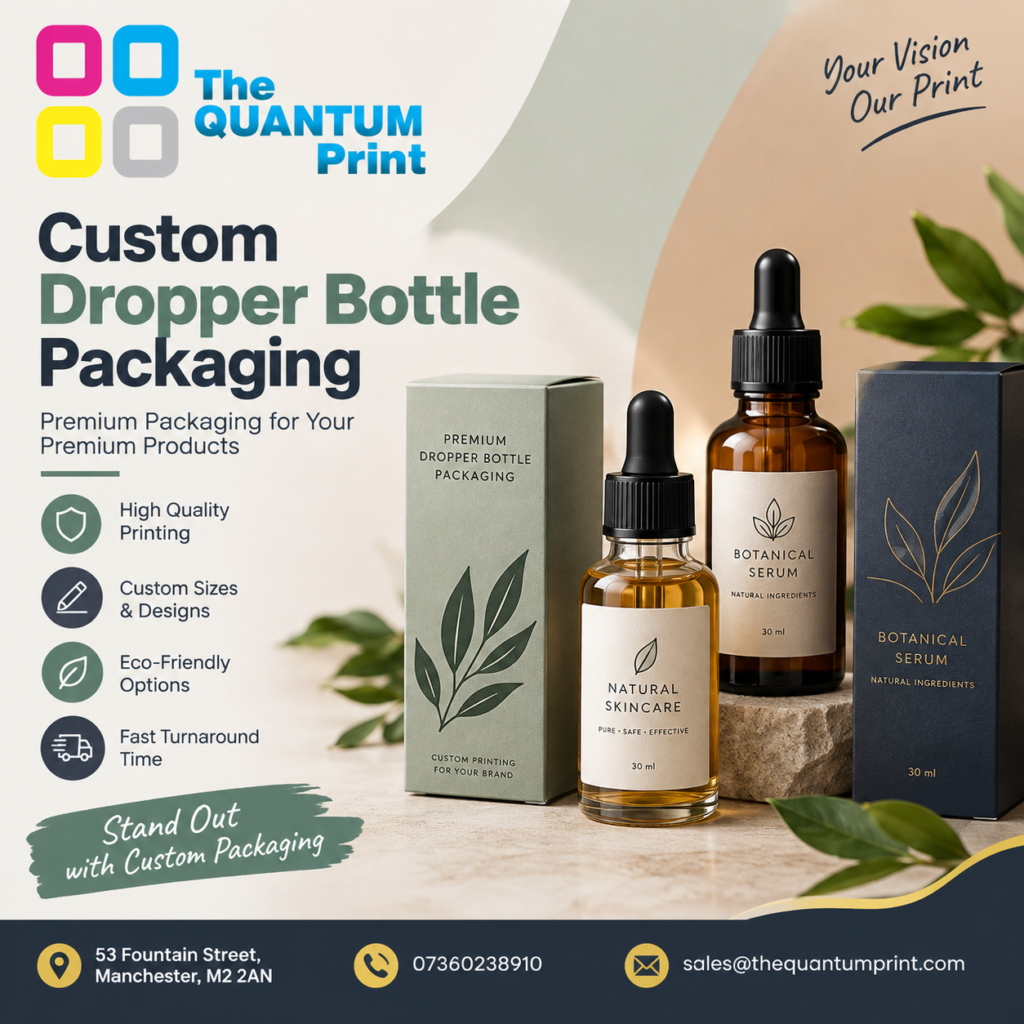
Dropper bottles are widely used across the cosmetics, skincare, essential oil, wellness and pharmaceutical industries. Their ability to dispense small, controlled amounts of liquid makes them suitable for products such as facial serums, concentrated oils, tinctures and liquid treatments. However, choosing the right bottle is only one part of successful product presentation. Packaging design, label quality and product information also influence usability, protection and consumer confidence.
Well-planned dropper bottle packaging combines practical functionality with clear communication. Businesses must consider the bottle material, dispensing mechanism, label durability and storage conditions to create packaging that meets the needs of both retailers and end users.

Understanding the Different Types of Dropper Bottle Packaging
Dropper bottles are available in several materials and configurations. The most appropriate option depends on the product’s chemical composition, intended use and storage requirements.
Glass bottles are frequently used for essential oils, cosmetic serums and concentrated formulations. Amber and cobalt-blue glass can help reduce exposure to certain wavelengths of light, although the level of protection depends on the material and product requirements. Clear glass, meanwhile, allows customers to see the contents, which can be useful for products where appearance is important.
Plastic bottles offer advantages such as lower weight and reduced risk of breakage. They may be suitable for travel-sized products and certain personal care applications. However, compatibility testing is essential because some formulations can interact with particular plastics.
The dropper assembly also deserves attention. Pipettes, rubber bulbs, screw caps and tamper-evident closures must work together to provide reliable dispensing and minimise leakage.
When selecting packaging, businesses should evaluate:
- Material compatibility: Confirm that the bottle and closure are suitable for the formulation.
- Dispensing accuracy: Ensure the dropper delivers an appropriate amount of liquid.
- Leak resistance: Test closures during storage, transport and handling.
- Light protection: Consider whether the product requires protection from light exposure.
- User convenience: Choose a design that is easy to open, handle and dispense.
These considerations help reduce packaging failures and improve the overall customer experience.

Why Dropper Bottle Labels Matter
Packaging communicates essential product information before a customer opens the bottle. Labels identify the product, explain its intended use and provide details that help customers make informed decisions.
High-quality dropper bottle labels should balance readability, durability and visual appeal. Because dropper bottles often have narrow cylindrical surfaces, label dimensions and material selection require careful planning. A label that is too large may wrinkle or overlap, while one that is too small may leave insufficient room for important information.
Before finalising a design, businesses should consider the following factors:
Label dimensions and shape: Measure the bottle’s printable area, taking account of curves, seams and closure positions. A properly sized label can improve alignment and prevent lifting at the edges.
Material selection: Paper labels may suit products stored in dry conditions, while synthetic materials can offer greater resistance to moisture, oils and handling. The best option depends on the environment in which the product will be stored and used.
Adhesive performance: The adhesive should bond effectively to the bottle surface. Glass, textured plastic and certain coated containers may require different adhesive specifications.
Typography and contrast: Product names, usage instructions and other essential details should remain legible at a small size. Strong contrast and simple typography can improve readability.
Print finish: Matte, gloss and other finishing options influence the label’s appearance. The choice should complement the brand identity without reducing the legibility of small text.
A useful approach is to test printed samples on the actual bottle before approving a full production run. This can reveal problems with alignment, adhesion, ink resistance and readability that may not be obvious on a computer screen.

Current Trends in Cosmetic and Wellness Packaging
Packaging trends increasingly reflect consumer expectations around convenience, transparency and environmental responsibility. These developments are particularly relevant to skincare, aromatherapy and wellness products sold through online retailers and specialist shops.
Minimalist designs remain useful because they provide a clear visual hierarchy. Restrained colour palettes, simple typography and carefully organised information can help customers identify products quickly. However, minimalism should not come at the expense of essential product details.
Another important development is the growing interest in recyclable materials and reduced packaging waste. Glass containers may be reusable or recyclable where suitable collection facilities exist, while certain plastic formats can offer transport-efficiency benefits because of their lower weight. Actual environmental performance depends on the complete packaging system, including material production, transport and local recycling infrastructure.
Refillable packaging is another option for selected product categories. Before introducing a refill system, businesses should assess hygiene, compatibility, dispensing performance and the practicality of cleaning or replacing components.
Digital retail has also increased the importance of packaging that photographs well. Clear product names, consistent branding and readable labels can help customers recognise items in online listings. Since buyers cannot physically inspect a product before ordering, accurate descriptions and images should complement the information printed on the container.

Common Packaging Challenges and How to Solve Them
Even carefully designed packaging can develop problems if it is not tested under realistic conditions.
Labels peeling or wrinkling: This can occur when the adhesive is unsuitable for the bottle surface or when labels are applied incorrectly. Test different label materials and adhesives, and establish a consistent application process.
Ink smudging or fading: Oils, moisture, friction and cleaning products can affect printed surfaces. Select compatible inks and finishes, then test samples against the conditions expected during normal use.
Leakage during shipping: Temperature changes, vibration and pressure can expose weaknesses in closures. Conduct transport and leakage tests using the finished bottle, dropper and cap rather than testing components separately.
Overcrowded product information: Small containers offer limited label space. Prioritise clear product identification and required information, and consider an appropriate secondary label or outer carton when more space is needed.
Inconsistent branding: Differences in colour, typography and label placement can make product ranges look disjointed. Maintain shared design guidelines and approve production samples before manufacturing at scale.

For UK businesses, product-specific legal and labelling requirements should also be checked before packaging is approved. Cosmetics, medicines and other regulated products may have different requirements regarding ingredients, warnings, responsible business details and product claims. Requirements depend on the product category, and packaging should be reviewed accordingly.
Choosing a Practical Label and Packaging Solution
Selecting suitable packaging involves more than comparing bottle shapes or visual finishes. Businesses should begin by defining the product’s storage needs, intended audience, distribution method and regulatory requirements. They can then assess materials, closure performance, label dimensions and printing specifications against those criteria.
For example, a facial serum sold online may require a light-protective bottle, a reliable dropper and a moisture-resistant label. An essential oil product may need particular attention to formulation compatibility and closure performance. A small wellness product sold in retail stores may benefit from a compact design that preserves readable product information.
Businesses researching specialist printing options can review resources such as The Quantum Print’s dropper bottle packaging labels page to understand the types of label solutions available.
Before placing a large order, request samples, check artwork dimensions and test the complete packaging under realistic conditions. These steps can help identify problems early, reduce waste and support consistent product presentation.

Conclusion
Effective dropper bottle packaging brings together product protection, dispensing functionality, durable labelling and clear communication. The right combination depends on the formulation, storage environment, target market and applicable regulations.
By testing bottle materials, selecting suitable adhesives, maintaining readable designs and checking finished products before production, businesses can avoid common packaging problems. Thoughtful packaging does more than improve shelf appeal: it helps customers understand a product, supports safe and appropriate use, and creates a consistent experience across retail and e-commerce channels.
Contact Us : https://www.thequantumprint.com/contact-us/
About Us : https://www.thequantumprint.com/about-us/
Website Link : https://www.thequantumprint.com/