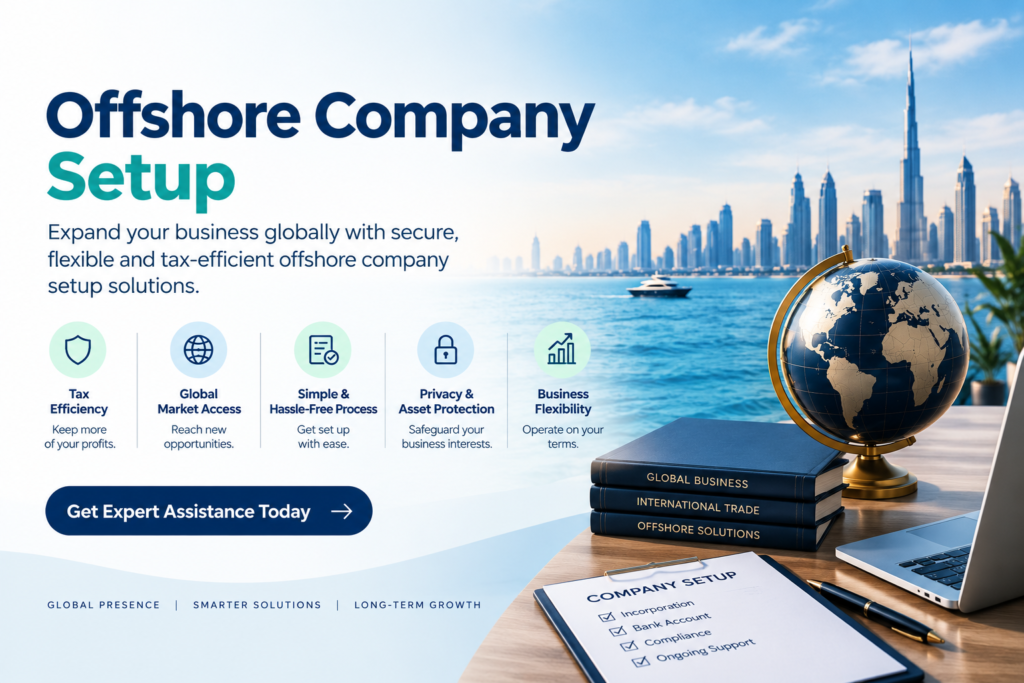
Dubai is a popular destination for international investors who want to establish a business presence in the UAE and manage international operations. Its strategic location, developed financial infrastructure, investor-friendly environment, and access to global markets make it attractive for entrepreneurs, holding companies, and international business owners. Setting up an offshore company can be a suitable option for investors who want to hold assets, manage investments, own shares in other businesses, or conduct permitted international activities without operating a traditional local business.
For foreign investors, understanding the legal structure, registration process, documentation, and ongoing compliance requirements is essential before making a decision. Offshore Company Setup offers a potential route for structuring international investments, holding assets, and managing cross-border business interests. However, an offshore company is different from a mainland or free zone company, and its permitted activities, banking options, and access to the UAE market depend on the applicable jurisdiction and regulations.
What Is an Offshore Company in Dubai?
An offshore company is a legal business entity generally established for international business activities, investment holding, and asset ownership. In Dubai, offshore structures are commonly considered by investors who want to hold shares, own eligible assets, manage international transactions, or create a holding structure for other companies.
Dubai-based offshore structures are commonly associated with jurisdictions such as JAFZA Offshore, while Ras Al Khaimah International Corporate Centre (RAK ICC) is another UAE offshore registration jurisdiction. Each jurisdiction has its own rules, registration procedures, and requirements.
An offshore company generally does not provide the same operational rights as a mainland company or a free zone company. Investors should confirm whether their intended activities are permitted before choosing a structure.
How Can a Foreign Investor Set Up an Offshore Company?
The process involves several steps, from selecting the right jurisdiction to completing registration and meeting compliance requirements.
1. Choose the Right Offshore Jurisdiction
The first step is to compare available offshore jurisdictions based on your business objectives. Consider the type of assets you intend to hold, the nature of your international transactions, ownership requirements, documentation, fees, and banking needs.
JAFZA Offshore and RAK ICC may be relevant options, depending on the proposed structure. Foreign investors should review the applicable rules and confirm that the selected jurisdiction supports their intended activities.
2. Decide on the Company Structure
Determine the company’s proposed name, shareholders, directors, and ownership arrangements. Depending on the jurisdiction, a company may be established with foreign shareholders, subject to the applicable registration rules.
You should also define the company’s purpose, such as holding shares in other companies, managing eligible investments, or owning permitted assets. A clear business purpose can help the registration process and support later banking or compliance reviews.
3. Prepare the Required Documents
Foreign investors typically need to prepare identification and company information for the registration application. Requirements vary by jurisdiction and by whether the shareholder is an individual or an existing corporate entity.
Commonly requested documents include passport copies, proof of residential address, shareholder and director details, proposed company names, and information about the intended business activities. Corporate shareholders may need incorporation documents, constitutional documents, board resolutions, and ownership information.
Documents may require certification, notarisation, or legalisation depending on their origin and the relevant authority’s rules.
4. Submit the Application Through the Appropriate Channel
After preparing the documents, submit the application through the relevant registered agent or authorised registration channel, as required by the chosen jurisdiction. The application is reviewed to confirm that the proposed company and its owners satisfy the applicable requirements.
The authority or agent may request additional information, clarification of the company’s purpose, or further documents before approving the application.
5. Receive the Incorporation Documents
Once approved, the company receives the applicable incorporation documents, which may include a certificate of incorporation and constitutional records. Keep these documents securely because they may be needed for banking applications, investment transactions, ownership verification, and future compliance checks.
6. Explore Corporate Banking and Compliance
Company incorporation does not guarantee approval for a corporate bank account. Banks independently assess the company’s business model, source of funds, ownership, expected transactions, and supporting documentation.
Investors should also review their tax obligations in the UAE and their country of tax residence. Offshore incorporation does not automatically eliminate tax liabilities or reporting duties. Depending on the circumstances, corporate tax rules, economic substance requirements where applicable, beneficial ownership reporting, and international information-sharing obligations may need to be considered.
What Are the Benefits of an Offshore Company?
An offshore structure may offer flexibility for international investment and ownership arrangements. It can help investors hold eligible assets, organise shares in other businesses, and separate certain business interests within a defined legal structure.
For international entrepreneurs, offshore incorporation may also provide a framework for cross-border transactions and succession or investment planning. The actual benefits depend on the jurisdiction, the company’s activities, and the investor’s legal and tax circumstances.
Investors should not assume that an offshore company automatically provides tax exemption, confidentiality from lawful authorities, or unrestricted access to the UAE market. Professional advice can help determine whether this structure is appropriate.
How Much Does Offshore Company Setup Cost in Dubai?
The total cost depends on the chosen jurisdiction, registration and agent fees, document certification, additional services, and ongoing renewal obligations. Optional services may include assistance with corporate documentation, compliance, and banking preparation.
Rather than relying on a single advertised package price, investors should request an itemised quotation covering initial registration, annual renewal, registered agent services, document preparation, and any additional fees relevant to their circumstances. Confirm the current charges directly with the relevant jurisdiction or authorised service provider before proceeding.
How Takween Advisory Can Help
Takween Advisory can assist foreign investors in understanding offshore company formation options in the UAE and preparing for the registration process. Support may include evaluating suitable structures, explaining documentation requirements, coordinating registration-related services, and identifying compliance considerations.
Before proceeding, investors should explain their intended activities, ownership structure, investment goals, and banking requirements. This helps establish whether an offshore company is suitable or whether a mainland or free zone structure would better support their plans.
Frequently Asked Questions
Can a foreigner own 100% of an offshore company in Dubai?
Foreign investors can generally own offshore companies, including structures that permit full foreign ownership, subject to the selected jurisdiction’s rules and eligibility requirements. Confirm the applicable conditions before applying.
What documents are required to register an offshore company in Dubai?
Common requirements include passport copies, proof of address, shareholder and director details, proposed company names, and business purpose information. Corporate shareholders may need additional company records and ownership documents.
How long does offshore company registration take in Dubai?
The timeframe varies depending on the jurisdiction, completeness of the application, document verification, and any additional compliance checks. Confirm the expected processing time with the relevant registration provider.
Can an offshore company open a UAE bank account?
An offshore company may apply for a UAE corporate bank account, but approval is not guaranteed. Banks conduct independent due diligence and assess the business purpose, source of funds, ownership, and expected transactions.
Can an offshore company conduct business in the UAE?
An offshore company generally cannot operate freely as a local UAE business in the same way as a mainland company. Permitted activities and restrictions depend on the jurisdiction and applicable laws. Investors planning local operations should evaluate the appropriate licensing options.
Is an offshore company in Dubai tax-free?
Not automatically. Tax treatment depends on the company’s activities, applicable UAE tax rules, and the tax laws of other relevant countries. Investors should obtain professional tax advice before relying on any expected tax benefits.
Is an offshore company suitable for holding Dubai property?
Property ownership may be possible through certain offshore structures, subject to the relevant land department’s rules, the property’s location, and the company’s eligibility. Confirm the requirements before purchasing or transferring property.
What is the difference between an offshore and a free zone company?
An offshore company is generally designed for international holding and investment purposes, while a free zone company is licensed for specified business activities under the relevant free zone authority. The right choice depends on whether the investor needs operational business facilities, local market access, or an international holding structure.
Conclusion
Setting up an offshore company in Dubai as a foreign investor requires careful planning, the selection of a suitable jurisdiction, accurate documentation, and an understanding of banking, tax, and compliance obligations. By evaluating the available options and defining your objectives clearly, you can choose a structure that supports your international investment plans. Takween Advisory can help you understand the registration process and explore the available UAE business setup options before you make a decision.