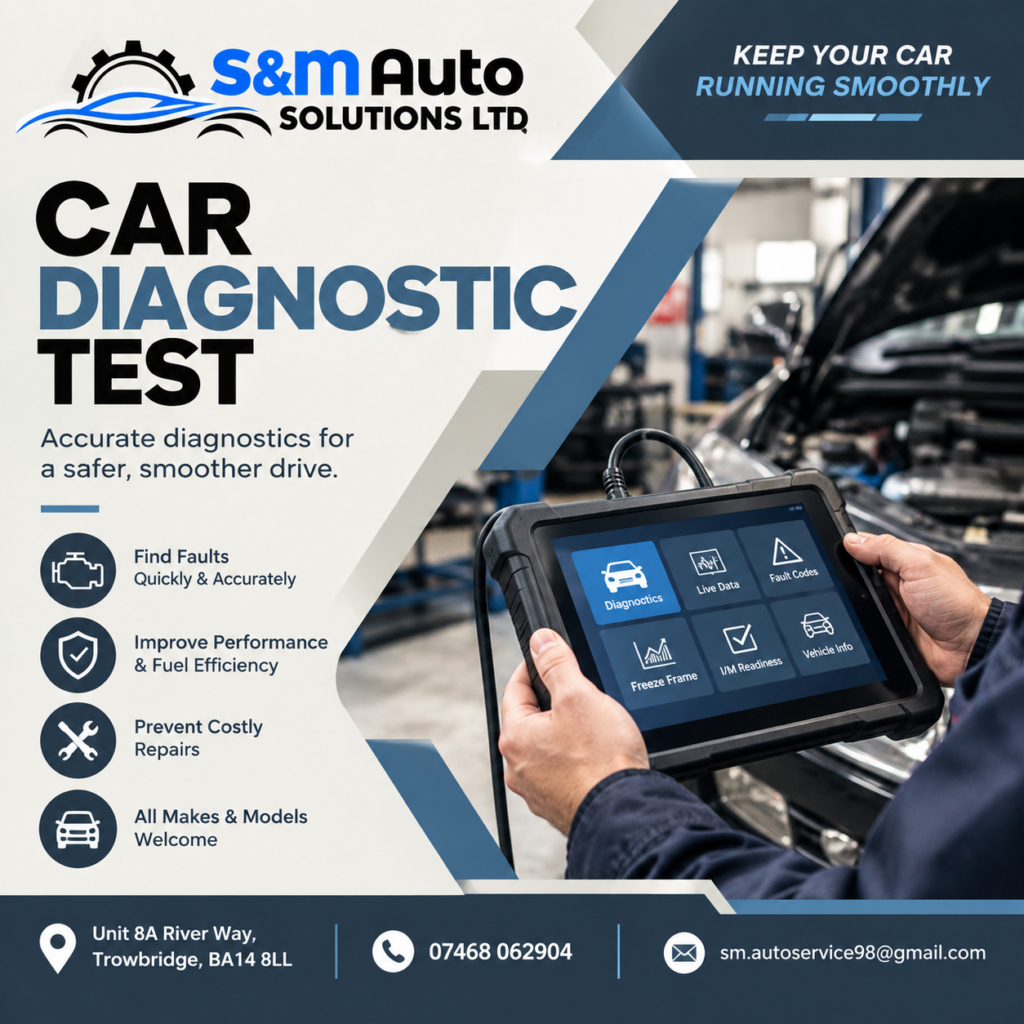
Modern vehicles are becoming increasingly sophisticated, with electronic control units, onboard sensors, advanced driver assistance systems, and computer-managed engine functions playing essential roles in everyday driving. As automotive technology continues to evolve towards 2026 and 2027, identifying vehicle problems accurately is becoming just as important as carrying out the correct repairs. A car diagnostic test helps drivers and technicians understand what may be happening beneath the bonnet without relying solely on guesswork or replacing parts unnecessarily.
For motorists across the United Kingdom, diagnostic testing offers a practical way to investigate warning lights, performance issues, unusual fuel consumption, and electronic faults. Understanding how the process works can help vehicle owners make informed maintenance decisions, improve reliability, and address developing problems before they become more expensive to resolve.

How Car Diagnostic Testing Works in Modern Vehicles
A vehicle diagnostic test involves connecting compatible diagnostic equipment to a car’s onboard diagnostic system. In many modern vehicles, this connection allows technicians to retrieve fault codes, review available sensor information, and identify systems that may require further investigation.
When a warning light appears on the dashboard, the vehicle’s computer may have stored a diagnostic trouble code. This code provides a starting point for identifying a potential problem, although it does not always identify the exact component that has failed.
For example, an engine warning light could relate to an oxygen sensor, an emissions issue, an ignition fault, or another problem affecting engine management. A qualified technician interprets the code alongside the vehicle’s symptoms, service history, and relevant test results.
A comprehensive diagnostic process may include:
- Reading and interpreting stored fault codes.
- Checking live data from relevant sensors.
- Investigating engine performance and emissions-related faults.
- Examining electrical connections and sensor operation.
- Clearing codes when appropriate after the underlying issue has been addressed.
- Carrying out additional tests to confirm the suspected cause.
This combination of electronic analysis and practical inspection helps distinguish between a reported symptom and its actual cause.
Why Diagnostic Testing Is Important in 2026/2027
The automotive industry is moving towards greater electrification, connected technology, and increasingly complex vehicle electronics. These developments are changing how maintenance and repair work is approached.
Vehicles now rely on multiple interconnected systems, including engine management, transmission control, braking electronics, battery monitoring, and driver assistance technology. A fault in one area may affect another, making accurate diagnosis particularly valuable.

Three developments are especially relevant for vehicle owners.
Increasing electronic complexity: Modern cars contain numerous sensors and control modules. Diagnostic equipment helps technicians narrow down potential causes before beginning repairs.
The growth of hybrid and electric vehicles: Hybrid and electric vehicles use sophisticated battery management, power electronics, and high-voltage systems. Not every conventional OBD diagnostic tool can assess these systems fully, so vehicle-specific equipment and appropriately trained technicians are important.
Greater emphasis on preventative maintenance: Early investigation of warning lights and performance changes can help drivers identify developing issues. Although diagnostic testing cannot prevent every breakdown, it can support more informed maintenance decisions.
These trends make diagnostic testing an increasingly important part of responsible vehicle ownership rather than something reserved exclusively for cars that have already developed obvious faults.
When Should You Search for a Car Diagnostic Test Near Me?
Drivers often search for a car diagnostic test near me when a dashboard warning light appears or a vehicle begins behaving differently. However, several less obvious symptoms may also justify a professional assessment.
Common reasons to arrange diagnostic testing include:
- The engine management light remains illuminated.
- The engine misfires, struggles to start, or idles unevenly.
- Fuel consumption increases without an obvious explanation.
- Acceleration becomes inconsistent or engine performance declines.
- The vehicle experiences intermittent electrical problems.
- Transmission warning messages appear.
- Emissions-related problems develop before an MOT test.
The correct response depends on the symptoms. A steady engine warning light may require prompt investigation, while a flashing engine management light can indicate a serious fault, such as an active misfire that could damage the catalytic converter. In that situation, stop driving when safe and seek professional advice.
Red warning lights relating to oil pressure, engine overheating, or braking systems may require stopping as soon as it is safe to do so. A diagnostic appointment should never take priority over an immediate safety concern.
When choosing a local garage, motorists should consider whether it has equipment compatible with their vehicle, experience with the relevant systems, and a clear process for explaining findings and repair recommendations.

Car Diagnostic Test UK: Common Challenges and Practical Solutions
Across the car diagnostic test UK , one of the most common misconceptions about vehicle diagnostics is that reading a fault code automatically reveals which part needs replacing. In reality, a code identifies a detected condition or system fault, not necessarily a failed component.
For instance, a sensor-related code might result from damaged wiring, a poor electrical connection, an air leak, or a problem elsewhere in the system. Replacing the sensor without further checks may fail to resolve the issue.
Vehicle owners can make the process more effective by following a few practical steps:
- Record the symptoms: Note when the problem occurs, whether the engine is cold or warm, and whether the warning light is constant or intermittent.
- Provide service history: Previous repairs, recent battery replacement, and maintenance records may help technicians identify relevant causes.
- Request an explanation: Ask what the diagnostic findings mean and whether additional testing is needed before approving repairs.
- Discuss repair priorities: Understand which faults affect safety, reliability, emissions, or vehicle performance most urgently.
- Confirm the outcome: After repairs, appropriate verification can help establish whether the original problem has been resolved.
For motorists seeking information about local diagnostic services, S&M Auto Service provides details about its car diagnostic testing in Trowbridge through its website. Local service information can help drivers understand the type of assistance available when investigating vehicle faults.

Choosing a Reliable Diagnostic Service in Trowbridge
For drivers looking for a car diagnostic Trowbridge service, the quality of the investigation matters as much as the equipment used. A suitable garage should explain the difference between retrieving fault codes and completing a full diagnostic investigation.
Before arranging an appointment, consider asking whether the service covers your vehicle’s make and model, whether live-data analysis is available, and whether any additional testing is likely to be required. It is also useful to clarify whether the initial diagnostic assessment includes a written explanation of findings or whether further inspection is charged separately.
Not every fault can be identified during a brief electronic scan. Intermittent electrical issues, complex engine problems, and faults that appear only under specific driving conditions may require more time and specialist testing.
Clear communication helps prevent misunderstandings and supports better repair decisions.

Conclusion
As automotive technology advances through 2026 and 2027, diagnostic testing will remain an essential tool for understanding increasingly complex vehicle systems. It helps technicians investigate warning lights, narrow down possible faults, and make evidence-based repair recommendations.
For UK motorists, the most effective approach combines early attention to unusual symptoms, vehicle-compatible diagnostic equipment, skilled interpretation, and appropriate follow-up testing. Whether investigating an engine warning light or an intermittent electrical problem, understanding the purpose and limitations of vehicle diagnostics can help drivers maintain reliability, manage repair costs, and make safer decisions on the road.
Contact Us : https://www.smautoservice.co.uk/contact-us/
About Us : https://www.smautoservice.co.uk/about-us/
Website Link : https://www.smautoservice.co.uk/
Read More :
https://xuzpost.com/https-www-smautoservice-co-uk-clutch-repair-replacement-trowbridge-uk/