A burst pipe at 2 a.m. or a heavy spring storm can turn an ordinary house into a soaked, stressful mess within minutes. Water spreads fast, and what looks like a small puddle is often hiding a much bigger problem beneath floors and behind walls.
That is why emergency water damage restoration in Ranger, GA has become an important topic for homeowners and business owners alike. Knowing what happens during a water emergency, and why speed matters so much, can make the difference between a quick recovery and months of repairs.
This guide explains how water damage develops, what restoration professionals actually do, and what property owners in small north Georgia communities should keep in mind when the unexpected happens.
Why Water Damage Becomes an Emergency So Quickly
Water does not stay where it lands. It soaks into carpet padding, wicks up drywall, and seeps under baseboards. Within a few hours, a leak that started in one room can affect the space next door.
The first 24 to 48 hours are the most critical. During that window, materials like wood, drywall, and insulation absorb moisture rapidly. After that, mold can begin to grow, especially in warm, humid climates.
North Georgia fits that description for much of the year. Long, sticky summers create ideal conditions for mold. Then winter brings occasional hard freezes that crack pipes in crawl spaces, garages, and exterior walls.
Common Causes of Water Damage in Homes and Businesses
Most water emergencies fall into a few familiar categories. Plumbing failures top the list, including burst supply lines, leaking water heaters, and broken washing machine hoses.
Weather is another major factor. Severe thunderstorms can overwhelm gutters, push water through roof flashing, or flood low-lying areas around foundations. Rural properties with older drainage systems are especially vulnerable.
Appliance leaks and sewer backups round out the picture. A slow drip under a dishwasher might go unnoticed for weeks. A backed-up sewer line, on the other hand, announces itself immediately and creates serious health concerns.
Understanding the Different Types of Water
Not all water is equal. Restoration professionals generally follow industry standards that divide water into three categories based on contamination.
Clean water comes from sources like a broken supply line or overflowing sink. Gray water carries some contaminants, such as discharge from a dishwasher or washing machine. Black water is the most hazardous and includes sewage and floodwater from rivers or streams.
The category matters because it shapes the entire cleanup approach. Clean water damage can often be dried in place. Black water usually means removing porous materials entirely, along with thorough disinfection.
It is also worth knowing that clean water does not stay clean. If it sits for a day or two, it can degrade into a more contaminated category as bacteria multiply.
What Restoration Professionals Actually Do
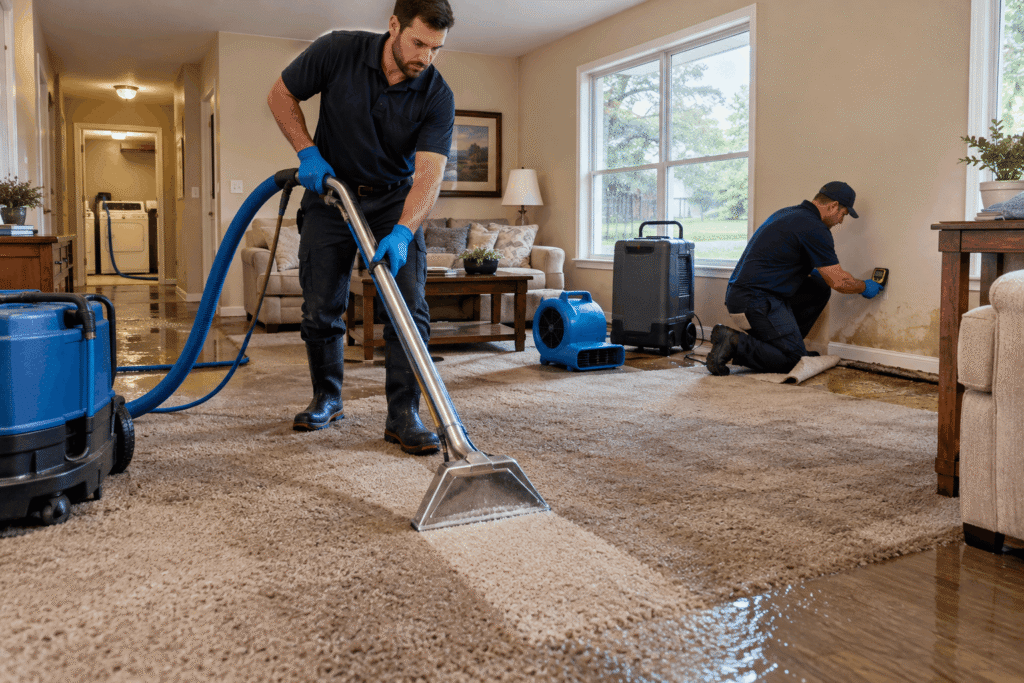
Many people picture water cleanup as a few fans and a wet vac. Professional emergency water damage restoration goes much deeper than that.
The process usually begins with a thorough inspection. Technicians use moisture meters and thermal imaging cameras to find water hiding inside walls, under flooring, and above ceilings. This step often reveals damage the property owner never suspected.
Next comes water extraction. Powerful truck-mounted or portable pumps remove standing water far faster than household equipment. The less water left behind, the shorter the drying time.
Drying and dehumidification follow. Industrial air movers and dehumidifiers work together to pull moisture out of building materials. Crews monitor progress daily, adjusting equipment until readings return to normal levels.
Finally, cleaning, sanitizing, and repairs bring the space back to its original condition. That may include replacing drywall, reinstalling flooring, or treating surfaces with antimicrobial products.
The Real Benefits of Acting Fast
The biggest advantage of quick action is simple: less damage. Materials that are dried promptly are often salvageable. Wait too long, and the same materials may need full replacement.
Fast response also helps prevent mold. Once mold takes hold, the cleanup becomes more complex and more expensive. It can also affect indoor air quality and trigger allergies or breathing problems.
There is a financial side, too. Many homeowners insurance policies expect property owners to take reasonable steps to limit further damage. Prompt mitigation and good documentation can make the claims process smoother.
And then there is peace of mind. Trained crews know what hidden damage looks like. That knowledge helps families and business owners avoid surprises like warped floors or musty odors months later.
How Businesses Face Different Challenges
Commercial properties deal with water damage on a larger scale. A leaking sprinkler line in a warehouse or a roof failure over a retail store can affect inventory, equipment, and daily operations all at once.
Downtime is often the biggest concern. Every day a business stays closed means lost revenue and frustrated customers. That is why many owners look for Commercial Restoration Solutions in Ranger, GA that can work around business hours or tackle large spaces quickly.
Commercial jobs may also involve complex building systems, multiple tenants, and stricter safety requirements. Restoration teams often coordinate with property managers, insurance adjusters, and contractors to keep everything on track.
Real-World Situations Property Owners Face
Consider a family returning from a winter weekend away. A pipe in the crawl space froze and split while they were gone. By the time they open the front door, the hardwood floors are cupping and the drywall near the kitchen feels soft.
In a case like this, professionals would extract the water, check the subfloor and crawl space for saturation, and set up drying equipment. Some flooring might be saved if moisture levels drop quickly enough.
Now picture a small office near the highway after a summer thunderstorm. Water came in through a damaged roof and soaked ceiling tiles, carpet, and a few desks. Employees need to get back to work within days, not weeks.
Situations like these are where Commercial Restoration Solutions in Ranger, GA become valuable. Crews might section off affected areas so staff can keep working elsewhere while drying continues.
A third example is quieter but just as common. A homeowner notices a faint musty smell in a bathroom. An inspection finds a slow leak behind the shower wall that has been dripping for months. Here, the work often includes mold remediation along with moisture removal.
Choosing a Restoration Provider Wisely
When water is pouring in, it is tempting to call the first number that comes up. Taking just a few minutes to ask the right questions can save trouble later.
Look for technicians with industry certifications, such as those from the IICRC. Ask about response times, whether the company works directly with insurance carriers, and how they document moisture readings during drying.
Local experience helps, too. Teams familiar with older homes, crawl spaces, and the regional climate tend to anticipate problems that outsiders might miss. In the Ranger area, providers like Voda Cleaning & Restoration are among the local options residents often compare alongside other regional firms.
Simple Habits That Reduce Risk
Prevention will never stop every emergency, but a few habits go a long way. Insulating exposed pipes before winter is one of the easiest ways to prevent freeze damage.
Checking appliance hoses once or twice a year, keeping gutters clear, and knowing where the main water shutoff valve is located can all limit damage when something goes wrong. Water leak sensors are also inexpensive and can alert owners before a small drip becomes a flood.
Final Thoughts
Water damage rarely gives warning, but understanding how it spreads and how professionals handle it helps property owners respond with confidence. Speed, proper drying, and attention to hidden moisture are what separate a full recovery from lingering problems.
For anyone who owns a home or business in this part of Gordon County, knowing the basics of emergency water damage restoration in Ranger, GA is a smart step. The best time to learn where your shutoff valve is and who to call is before you ever need either.
Frequently Asked Questions
How quickly should water damage be addressed?
Ideally within the first 24 to 48 hours. After that, materials absorb more moisture and mold growth becomes much more likely.
Does homeowners insurance cover water damage?
Most policies cover sudden and accidental damage, such as a burst pipe. Flooding from outside sources usually requires separate flood insurance, so it is worth reviewing your policy.
Can wet drywall and carpet be saved?
Sometimes. If the water is clean and drying starts quickly, many materials can be restored. Contaminated water or long delays often mean replacement is safer.
How long does the drying process take?
Most structural drying takes three to five days, depending on how much water was involved and the materials affected. Larger or commercial jobs may take longer.
Is it safe to stay in a home with water damage?
It depends on the source and extent. Clean water damage in one area may be manageable, but sewage backups, electrical hazards, or visible mold are good reasons to stay elsewhere until the space is treated.