When we discovered we were pregnant, we had an apartment in Mount Albert with two bedrooms. My “office” was the second bedroom, which just so happened to be where my desk was and where I kept the laundry. So, naturally, this is where the baby was going to sleep, and we had no idea how much we’d need to think about baby gear for small spaces.
A year down the line, we’ve discovered a thing or two. Mostly about what you don’t need. If you’re also short on space, here is what helped us.
Start With Less Than You Think
Stores and online lists will have you thinking you need it all from the start. You don’t. During the first few weeks, a newborn really just needs a safe place to sleep, something to wear, a way to feed and a way to travel.
So we took the small road. Instead of rushing and buying all of the essentials upfront, we got the necessities first, then waited to figure out what we would need down the road. That way, we saved cash and space!
The “one in, one out” rule
My husband invented this rule when our third baby shower gift arrived. For every new item that came in, something had to go out. It’s brutal, but it worked. Our hallway no longer resembled a storage room.
Choosing Baby Gear for Small Spaces
When there’s a square metre to spare, the best kit does more than one thing. This is what kept us using it in our place.
A cot that converts
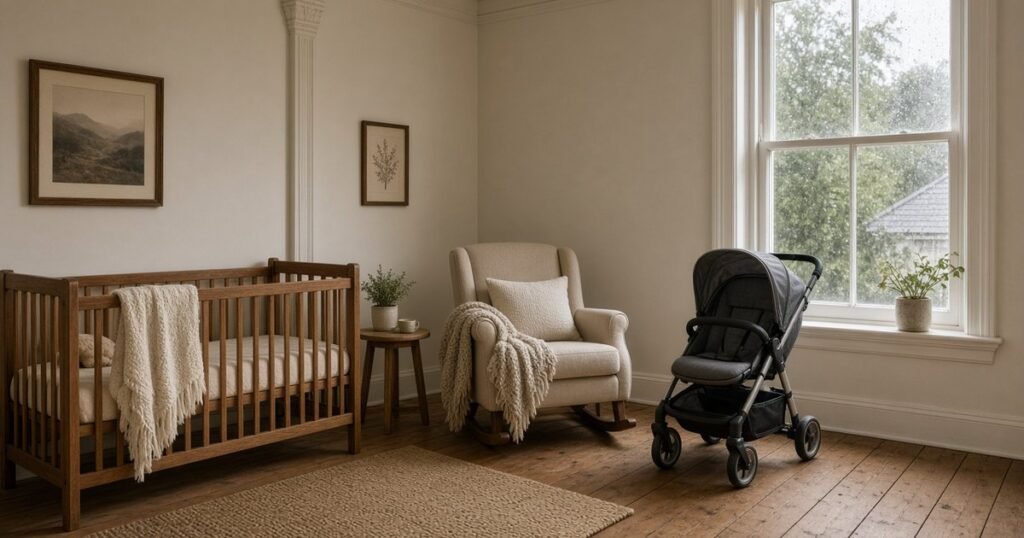
We opted for a cot that could be converted into a toddler bed. That way, we only had to fit in one bed setup. And we didn’t have to get a new one later on.
A change table on top of a drawer unit
We didn’t have a separate change table, but instead bought a change mat to place on top of a good set of solid drawers. Nappies were kept in the top drawer. Everything else went in the rest. It’s so simple. I recommend securing the set to the wall to avoid the furniture tip-over when babies start climbing.
A compact stroller
It was the killer. Our apartment is on a flight of stairs, no garage. We couldn’t leave our bulky pram downstairs, lugging it up and down was a pain every day.
Eventually, we switched to a pocket stroller for everyday use. It collapses to a manageable size that will sit nicely behind our front door. It’s lightweight enough to carry with a baby in your other arm up the stairs. Do buy for the recommended age of any stroller. Some lighter strollers will work better for an older baby – be sure to ask!
Storage Tricks That Actually Help
Storage is the area where small homes are really challenged. Here are some tips that proved useful:
- Over-the-door organisers for nappies, creams and wipes
- Under-bed boxes for clothes they’ll grow into
- Wall hooks For the nappy bag, baby carrier and jackets
- A small basket in the lounge For nappies, so you’re not running to the nursery every time
That last one really did change our lives. Babies are messy, all the time, and they definitely don’t care where you are.
What We Skipped (and Didn’t Miss)
There are few items we didn’t add, but here are some that didn’t really fit for us:
- A baby bath. We started by using a sink insert then graduated to the big bath and a seat.
- A bottle steriliser station. Worked fine for us in a microwave steam bag.
- A big play gym. A soft blanket on the ground served as a substitute.
- A nappy disposal bin. We just emptied a lidded bin daily.
Your list may differ. That’s OK. What you want to do is to keep questioning, “Do we really want this or just a nice to have for the sales pitch?”.
Sharing a Room With Baby
Our little one had been sleeping in a bassinet next to our bed for the first few months. Most people suggest sleeping in your room with your baby for the first few months so ask your midwife or see safe sleeping advice on the Plunket website. Either way, a small bassinet will sit next to most beds comfortably.
Simultaneously, the second bedroom gradually became a real nursery. But by the time our daughter moved into it, we had learned what she really needed.
Buying Second-Hand
We bought lots second hand, a pile of clothes, toys and a bouncer, it’s a good way to cut costs. I would be cautious with some items though. Car seats are best bought new or from someone you trust one hundred percent. Cot mattresses is another item that lots of parents will opt for new. Ask your midwife or Plunket nurse if you are unsure.
Keeping the Place Feeling Like Home
It can be easy for a small house to get overrun with baby things. Bright plastics for miles. Toys scattered about the whole place. So we decided on a couple of neutral colours for the larger equipment and stored the loud items in baskets. At the end of the day, everything was back in its place. 10 minutes tidying and the lounge felt like ours.
A Quick Room-by-Room Rundown
Here’s about where everything ended up in our unit, if that helps:
- Nursery: Cot, drawers with change mat, a small chair for night feeds
- Our room: bassinet for the first months
- Lounge: nappy basket, play blanket, bouncer
- Hallway: folded stroller and hooks for bags
- Bathroom: Sink insert and bath accessories
Nothing to brag about. But, still, everything had its place, and that made everything seem less chaotic.
Final Thoughts
Living tiny with a baby is totally possible. And in some ways, it’s easier. There’s less to maintain, less to purchase and there’s everything right at your fingertips at 3am.
The key is to buy equipment that works for your space and your lifestyle. Where possible, try to view items in the flesh before you buy. We took a good hour at NV Kids, a baby store in Auckland, cradling foldable strollers and asking questions. We managed to steer clear of buying items that wouldn’t have fit through our front door.
Tiny home, big love. That’s the point.