Search engine optimization continues to play an important role in helping businesses attract customers, build online visibility, and generate qualified leads. However, SEO is evolving as search engines introduce AI-powered experiences, user expectations change, and competition for organic traffic increases.
In 2027, businesses will need more than keyword placement and occasional blog publishing to remain competitive. A successful SEO strategy should combine useful content, technical performance, search intent, website authority, and a clear understanding of customer needs.
Whether you operate a small business, an e-commerce store, or a growing service company, the following ten SEO strategies can help strengthen your online presence and support sustainable growth.
1. Prioritize Search Intent Over Keyword Density
Keyword research remains a fundamental part of search engine optimization, but understanding why someone searches is just as important as identifying the words they use.
Search intent generally falls into informational, navigational, commercial, and transactional categories. Each represents a different stage of the customer’s decision-making process.
For example, someone searching for “what is technical SEO” probably wants an explanation, while a person searching for “technical SEO services” may be evaluating potential service providers.
Businesses should align each important page with its intended audience and purpose. Informational queries may be best addressed through educational articles, whereas commercial searches often require detailed service pages, comparisons, or case studies.
Instead of repeating keywords unnecessarily, use relevant terms naturally and provide the information users expect to find. This approach improves content relevance and creates a better experience for potential customers.
2. Create Helpful, Experience-Driven Content
Content quality will remain central to effective SEO in 2027. Publishing more articles does not automatically translate into higher rankings, particularly when those articles repeat information already available across competing websites.
Businesses should focus on creating content that demonstrates genuine expertise and provides something useful beyond a basic summary.
This may include original research, practical examples, expert commentary, customer case studies, detailed tutorials, and insights drawn from real business experience.
A strong content marketing strategy should also address the questions customers ask before making a purchase. For example, a software company could publish implementation guides, product comparisons, and troubleshooting resources that help prospective customers make informed decisions.
AI tools can assist with research, outlining, and editing, but content should undergo human review to ensure accuracy, originality, and relevance.
Google’s guidance emphasizes helpful, reliable, people-first content rather than material created primarily to manipulate search rankings.
3. Optimize for AI-Powered Search Experiences
Search experiences are expanding beyond traditional blue links. AI Overviews, conversational search tools, and generative search interfaces are changing how users discover information and evaluate potential solutions.
Businesses should therefore consider their visibility across both traditional search results and AI-powered discovery experiences.
The starting point is to maintain strong SEO fundamentals. Important pages should be crawlable, indexable, well organized, and supported by useful internal links.
Content should answer questions clearly, use descriptive headings, explain concepts accurately, and provide trustworthy information. Where appropriate, include original data, relevant examples, and credible references.
Answer Engine Optimization (AEO) and Generative Engine Optimization (GEO) can help teams think about how content is discovered and presented in AI-driven environments. However, there is no guaranteed formula for earning AI citations or mentions.
According to Google’s guidance on optimizing for generative AI features, established SEO practices and distinctive, valuable content remain important for visibility in Google’s AI search experiences.
4. Strengthen Technical SEO and Website Performance
A technically sound website helps search engines discover important pages and allows visitors to navigate the site more easily.
Technical SEO should be an ongoing priority rather than a task performed only when rankings decline.
Businesses should regularly review the following areas:
- Crawlability and indexability: Ensure important pages can be accessed and indexed appropriately.
- Website speed: Reduce unnecessary scripts, optimize images, and improve loading performance.
- Mobile usability: Make sure navigation, forms, and content work across different screen sizes.
- Internal linking: Connect related pages so users and search engines can discover relevant information.
- Duplicate content: Identify unnecessary duplicate URLs and resolve appropriate canonicalization issues.
- HTTPS security: Use secure connections throughout the website.
Google Search Console can help identify indexing problems, search performance trends, and certain technical issues. Regular site audits can reveal problems before they affect a significant portion of the website.
Technical improvements do not guarantee higher rankings, but they establish a stronger foundation for other SEO activities.
5. Build Topical Authority Through Content Clusters
Topical authority refers to a website’s ability to demonstrate substantial, relevant coverage of a subject. Rather than publishing disconnected articles, businesses can organize content around their core services and areas of expertise.
A content cluster typically consists of a comprehensive pillar page supported by related articles that explore specific subtopics.
For example, a digital marketing company might create a central guide to SEO, supported by articles covering keyword research, on-page optimization, technical SEO, local search, and link building.
Internal links connect these resources and help readers move naturally between related topics.
Before creating new content, businesses should review existing pages to identify coverage gaps, overlapping articles, and opportunities to improve outdated resources.
A well-planned content structure helps users find relevant information while demonstrating the website’s depth of coverage. However, simply publishing a large number of related pages does not guarantee topical authority or improved rankings.
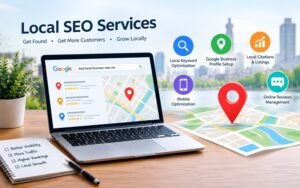
6. Invest in Local SEO and Business Listings
Local SEO is particularly valuable for businesses that serve customers within specific cities, regions, or service areas.
When people search for nearby services, local search results and Google Maps can help them discover relevant businesses. Maintaining accurate business information improves the quality of that experience.
Businesses should claim and update their Google Business Profile, verify contact details, maintain accurate operating hours, and select relevant business categories.
Genuine customer reviews can also help prospective customers evaluate a business. Companies should establish a consistent process for requesting feedback and responding professionally to reviews.
Location-specific website pages can be useful when they provide meaningful information about services available in each area. Creating nearly identical pages for numerous locations without adding real value should be avoided.
For businesses with a local customer base, local SEO should complement broader website optimization rather than operate as an isolated marketing activity.
7. Earn Relevant, High-Quality Backlinks
Backlinks remain an important consideration in SEO because links help search engines discover pages and understand relationships between websites.
However, businesses should prioritize relevant, editorially earned links instead of focusing solely on backlink quantity.
Effective link-building opportunities include contributing expert articles to reputable publications, publishing original research, developing useful industry resources, and building relationships with relevant organizations.
Digital PR can also help businesses earn coverage when they offer genuinely newsworthy insights, data, or expertise.
Guest posting can support brand visibility when articles are written for a publisher’s audience and provide meaningful information. Links should fit naturally within the content and follow the publisher’s editorial policies.
Avoid link schemes, mass-produced guest posts designed primarily to manipulate rankings, and paid links that pass ranking credit without appropriate qualification.
A sustainable link-building strategy focuses on credibility, topical relevance, and long-term relationships.
8. Improve On-Page SEO and Internal Linking
On-page SEO helps search engines and visitors understand what each page offers. It also helps businesses connect their content with relevant search queries.
Start by optimizing page titles, meta descriptions, headings, URLs, image alt text, and the main content of important pages.
Each page should have a clear purpose and a descriptive title that accurately represents its subject. Meta descriptions should summarize the page and give searchers a useful reason to visit, although they do not directly influence rankings as a standard ranking factor.
Internal linking is equally important. Relevant links from supporting articles to key service pages can help users discover solutions and understand how different resources relate to one another.
For example, a blog post explaining website speed could link to a relevant technical SEO service page where readers can learn about professional support.
Avoid excessive exact-match anchor text or adding links where they do not benefit the reader. The goal is to make navigation intuitive and content relationships clear.
9. Optimize for Conversions, Not Just Traffic
High organic traffic is not necessarily a sign of business success. If visitors do not find relevant information or take meaningful action, additional traffic may have limited commercial value.
Conversion-focused SEO connects search visibility with measurable business outcomes.
Businesses should ensure that landing pages clearly explain their offerings, communicate value, address customer concerns, and provide visible next steps.
Depending on the business model, useful conversion actions may include submitting a contact form, requesting a quotation, scheduling a consultation, or purchasing a product.
Review analytics data to understand which landing pages attract qualified visitors and which search queries generate meaningful engagement or leads.
Testing page layouts, calls to action, forms, and messaging can reveal opportunities to improve conversion rates.
SEO and conversion rate optimization should work together: attracting the right audience is important, but helping that audience make informed decisions is equally valuable.
10. Monitor SEO Performance and Update Your Strategy
SEO is an ongoing process that requires measurement, analysis, and adjustments.
Businesses should establish a baseline before implementing major changes and monitor performance consistently afterward.
Google Search Console provides information about search impressions, clicks, click-through rates, and average positions. Website analytics can help measure engagement, lead generation, and conversions.
Track metrics that align with business objectives instead of focusing exclusively on rankings or total traffic.
For example, an e-commerce business may prioritize organic revenue and product-page performance, while a B2B company may focus on qualified leads and consultation requests.
Review declining pages, investigate technical problems, update outdated information, and identify new content opportunities based on actual audience needs.
SEO results can take time, and search performance may fluctuate due to competition, algorithm changes, and shifts in user behavior. Regular evaluation helps businesses make informed decisions rather than reacting to every short-term change.
Conclusion
The most effective SEO strategies for 2027 will combine established optimization principles with an understanding of changing search experiences. Businesses should prioritize search intent, useful content, AI search visibility, technical SEO, topical coverage, local optimization, and relevant backlinks.
At the same time, they should focus on conversion performance and use reliable data to guide ongoing improvements.
SEO is not about finding shortcuts to the top of search results. It is about building a website that answers customer questions, communicates expertise, and makes it easy for people to discover relevant solutions.
Businesses that approach SEO as a long-term investment can build a stronger digital presence and create more sustainable opportunities for growth.